BMW Door Lock Actuator Failure: Symptoms & Fix Cost
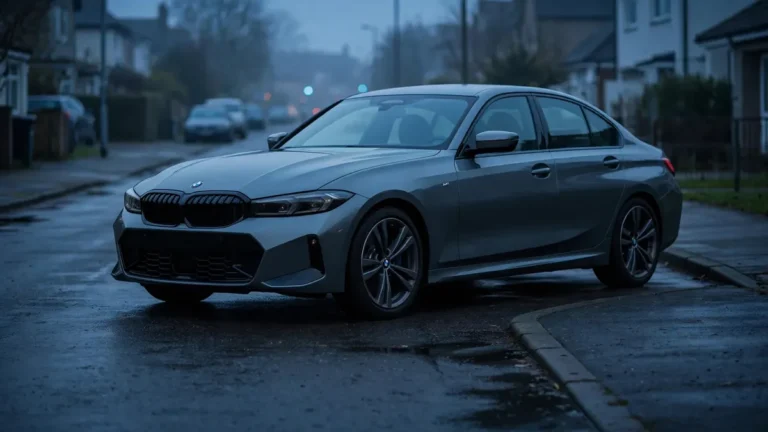
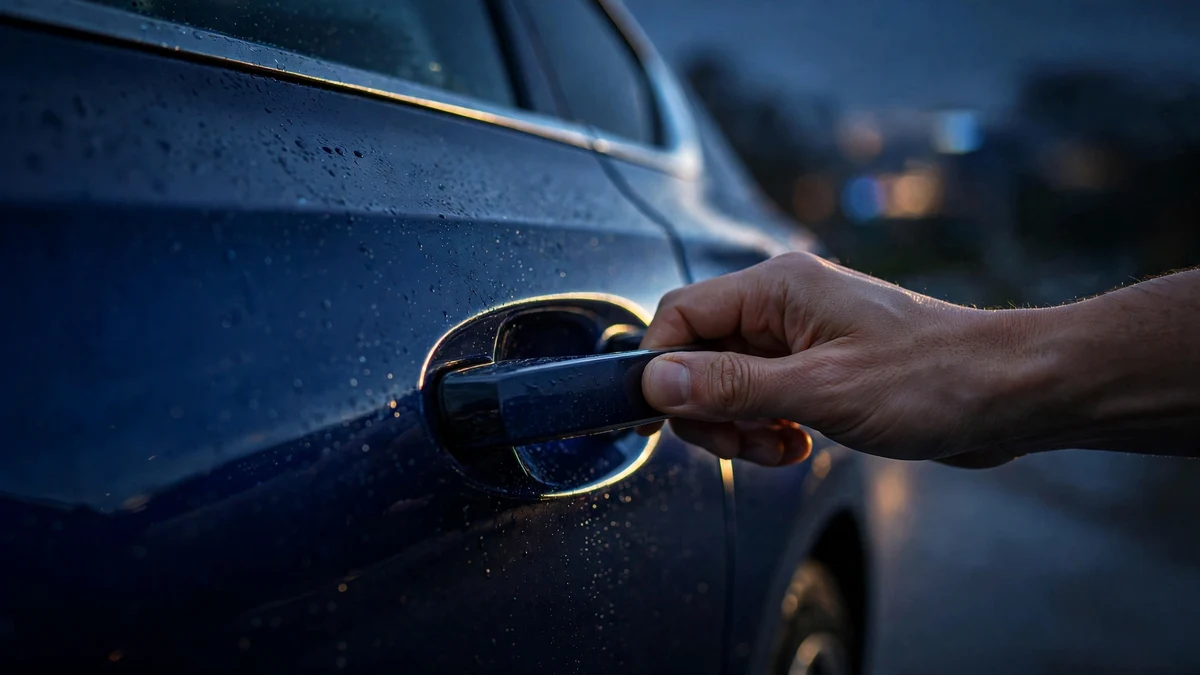
Your BMW 3 Series answers the key fob with a satisfying thunk from four doors — except one. The rear passenger door sits silent while the other three lock, or the driver’s door refuses to unlock until you fish out the metal key blade. No warning light, no iDrive message. That single dead door is one of the most common electrical gremlins across the E90, F30, and G20 generations, and the cause is almost always the same small part.
Short answer
If a single BMW 3 Series door won’t lock or unlock while the rest respond normally, the bmw door lock actuator in that door has most likely failed. The actuator is a small motor-and-gear unit built into each door latch that the central-locking system drives. When it fails, that one door ignores the fob and the center-lock button, while the mechanical key blade and interior handle usually still work. If all doors are dead, suspect a blown central-locking fuse first; if the fob is flaky on every door but the dash button works fine, suspect the fob battery. Expect roughly $92–$434 for the part alone, $485–$688 fitted at an independent shop, or $700–$1,400+ at a dealer.
In this guide
- What a door lock actuator actually does
- Symptoms of a failing BMW door lock actuator
- Symptom-to-cause quick reference
- Interactive: diagnose your door in 30 seconds
- The diagnosis decision tree
- Central-locking fuses by generation — and the 20A trap
- The E90 “double-pull” quirk explained
- BMW TSB SI B51 19 07: what it covers (and what it doesn’t)
- Replacement cost: parts, indie shop, and dealer
- DIY overview: replacing a door lock actuator
- Safety notes and when to let a pro handle it
- Frequently asked questions
What a door lock actuator actually does
Every BMW 3 Series door contains a latch assembly, and buried inside it is the door lock actuator: a small electric motor driving a set of plastic gears. The body electronics module (the JBE junction box on the E90, the BDC body domain controller on the F30/G20) powers each actuator when you press the fob or center-lock button, throwing the latch between locked and unlocked. It also reports position back — that’s how the car knows whether each door is actually secured.
There is one actuator per door, and each fails independently. That is the single most useful fact in this whole guide: the central-locking system drives four separate actuators on four separate circuits, so a failure in one door’s motor or gears leaves the other three behaving perfectly normally. BMW generally sells the replacement as the complete latch/actuator assembly for that door rather than the motor alone, which is why a “failed actuator” job is really a latch replacement job.
Actuators fail from worn plastic drive gears, tired motor brushes, moisture past a torn vapor barrier — and, on early E90s specifically, silicone contamination that makes the motor draw excessive current. None of these announce themselves in advance. One day the door just stops answering.
Symptoms of a failing BMW door lock actuator
The hallmarks:
- One door dead, the rest fine. Press lock on the fob and three doors thunk while one stays silent — or one door locks fine but won’t unlock. The problem is isolated to a single door in the overwhelming majority of cases.
- Grinding, buzzing, or a weak half-hearted clunk. A dying actuator motor often still tries: an unhealthy grinding or strained buzzing from inside the door, noticeably weaker or slower than the healthy doors.
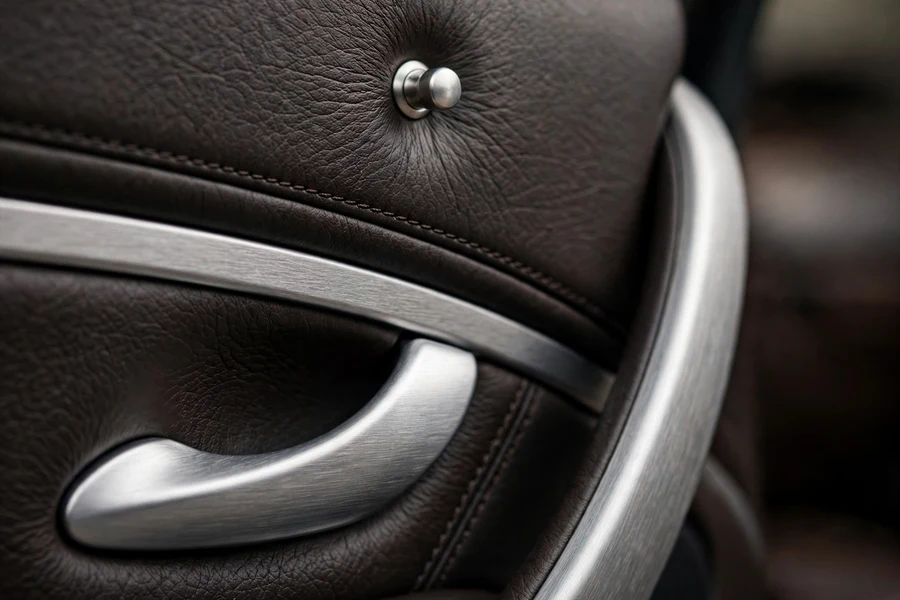
- The lock pin pops up, then falls back down. The classic F30 tell — pull the interior handle, the pin rises, then sinks straight back down as if the latch changed its mind.
- Locks one way but not the other. A door that locks with the fob but won’t unlock (or vice versa) has a motor working in only one direction, usually from worn brushes or a cracked gear.
- Intermittent at first, then permanent. Many owners report weeks of sometimes-working, sometimes-refusing before total failure. Heat can make it worse.
- Mechanical unlock still works. The key blade and the interior handle operate the latch through rods and cables, not the actuator motor. If the door opens fine from inside but ignores every electrical command, that’s actuator behavior — not a jam.
Symptom-to-cause quick reference
Match what your car is doing to the table below — the same logic a technician works through, so you don’t buy an actuator for a fuse problem or a fuse for a fob problem.
| Symptom | Most likely cause | Check first |
|---|---|---|
| One door won’t lock/unlock; rest work normally | Door lock actuator (that door’s latch assembly) | Listen at that door for grinding or silence while cycling locks |
| One door grinds/buzzes but eventually moves | Actuator motor or gears failing | Plan a replacement; it will get worse |
| Lock pin rises then falls back down (F30) | Actuator/latch assembly | Confirm it fails from both fob and dash button |
| All doors dead from fob and dash button | Blown central-locking fuse (E90: 57/73), then JBE/module | Fuse inspection behind glovebox |
| All doors intermittent from fob, fine from dash button | Key fob battery (or the fob itself) | Try the second key before anything else |
| Doors lock but interior double-pull won’t open | Double-locked (fob pressed twice) — normal behavior, not a failure | Press unlock on the fob once |
| Noises normal, one door just stopped responding | Actuator motor open-circuit, or connector/wiring | Check for fault codes; inspect door connector |
Interactive: diagnose your door in 30 seconds
Door lock symptom checker
1. How many doors are misbehaving?
2. Does the interior center-lock button move the bad door(s)?
3. When you cycle the locks, what do you hear at the bad door?
Quick triage aid only — a BMW-capable scanner can read body-module fault codes to confirm the diagnosis.
The diagnosis decision tree
The tool above encodes a decision tree covering nearly every 3 Series door-lock complaint. Here’s the logic behind each branch — it prevents the two costliest mistakes: replacing an actuator for a fuse problem, or feeding fuses to a dying actuator.
Branch 1: one door dead → actuator
Each door’s actuator is an independent unit on its own circuit. A fuse, fob, or body-module failure hits the system as a whole — it can’t kill exactly one door while three work perfectly. So one door ignoring every electrical command, grinding, or showing the lock-pin pop-and-drop is that door’s latch/actuator assembly until proven otherwise. Confirm it: command the locks from the fob, then the dash button. Same single door failing both times = isolated.
Branch 2: all doors dead → fuse, then body module
Every door ignoring both the fob and the interior center-lock button means the fault is upstream of the individual actuators: the shared power feed or the module driving it. On the E90, that’s the central-locking fuses behind the glovebox (fuses 57 or 73 by production date — see below). On the F30/G20, the same logic runs through the BDC body domain controller; read the diagram on your fuse box cover rather than trusting a forum post’s fuse number. Fuses good and everything still dead? The body module itself is the suspect, and that’s scan-tool territory.
Branch 3: dash button works, fob doesn’t → fob, not actuator
This is the bright-line rule worth memorizing: all doors intermittent from the fob but normal from the dash button = key fob problem; one door dead or grinding from both fob and button = actuator problem. The dash button bypasses the fob’s radio path, so it cleanly separates a fob issue from a door-hardware issue. Always try your second key before ordering parts — if the second key works normally, the first key’s battery or the key itself is the whole story.
Central-locking fuses by generation — and the 20A trap
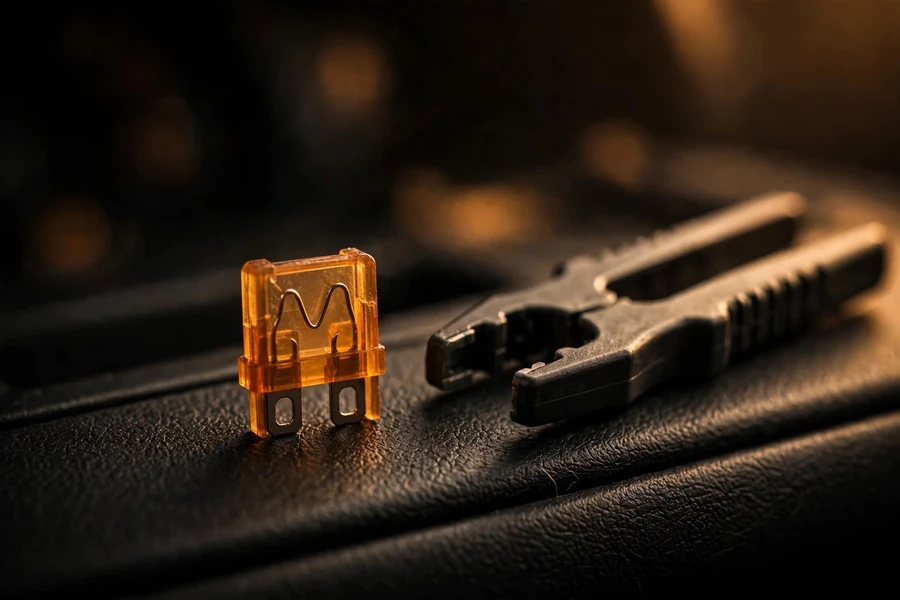
Check fuses before ordering parts. Five minutes, almost no cost, and on the E90 it’s the documented fix path for a whole family of symptoms. One caution: never install a higher-rated fuse than factory spec unless a BMW bulletin specifically authorizes it for your car. An oversized fuse protects nothing — it lets a failing actuator draw enough current to cook wiring or the body module instead of blowing cleanly.
E90 (2006–2011): fuses 57 and 73
On the E90, central locking is protected by 15A fuses in the junction box electronics (JBE) behind the glovebox — fuses 56 and 57 both serve central locking on early cars. BMW’s own service information (TSB SI B51 19 07) identifies fuse 57 on cars built up to 9/2007 and fuse 73 on cars built from 9/2007 as the fuse to inspect when doors won’t unlock from the fob or center button. A blown fuse here is rarely random: it usually means one actuator is drawing excessive current as it dies. Replace the fuse, cycle the locks ten times from the center button, and watch each door — a slow or noisy actuator during that test is your culprit. Note that thermal protection kicks in after roughly 15 successive lock cycles; if the system goes quiet mid-test, wait a couple of minutes and try again.
F30 (2012–2018) and G20 (2019+): don’t guess the fuse number
Fuse assignments changed with the BDC body domain controller and vary by model year and equipment. The honest advice: pull the fuse box cover behind the glovebox and read the printed diagram, looking for the central-locking / ZV entry. The diagnostic logic is unchanged — all doors dead points at the shared feed — but confirm the specific fuse on your own car rather than copying a number from a forum thread about a different model year.
The E90 “double-pull” quirk explained
Every E90 owner learns this from a confused passenger: to open a locked door from the inside, pull the interior handle twice — first pull unlocks, second opens. It’s normal BMW behavior by design, so a single accidental tug can’t open a door while driving.
What confuses people is the exception. Press the lock button on the key fob twice and the car engages double-lock (the “arrest” function): the doors deadbolt, and the interior handles can no longer unlock them at all — no amount of double-pulling will open the door from inside. That’s an anti-theft feature, but it looks exactly like a failed actuator if you trigger it accidentally. If the interior handles suddenly do nothing, press the unlock button on the fob once before assuming anything is broken.
A door that opens fine with the interior double-pull but ignores the fob and dash button still has a healthy mechanical latch path — the failure is electrical (actuator), not a jammed mechanism. A door that won’t open even with the handle pulled correctly may have a mechanical latch or cable problem instead.
BMW TSB SI B51 19 07: what it covers (and what it doesn’t)
There is exactly one factory technical bulletin that matters for this repair, and its scope is narrower than the forums sometimes suggest. BMW Service Information bulletin SI B51 19 07, “Doors Will Not Unlock Using the Key Fob or Central Locking Button,” applies to the E90 and E91 3 Series produced up to 11/2008 only — not the F30, G20, coupes, or convertibles. If your 2014 F30 has a dead actuator, this bulletin is interesting background, not your repair procedure.
What the bulletin says: one or more doors may refuse to unlock from the remote key or the center-lock button (key blade and interior handle still work), typically with fault codes A6D4 and A6D5 stored in the junction box electronics. The cause is a blown fuse in the JBE, driven by either an actuator drawing excessive current — commonly attributed to silicone contamination — or an intermittent but acceptable spike just above 15A. The correction: inspect fuse 57 (up to 9/2007 production) or fuse 73 (from 9/2007), replace a blown 15A fuse with a 20A fuse, cycle the locks ten times while watching for slow or noisy actuators, and replace the offending actuator only if it’s drawing excessive current. The bulletin also warns: never spray any silicone products into the latch. If a front-door actuator is faulty, BMW specifies replacing both front latches as a kit; a faulty rear actuator gets a single-latch replacement. The full text of SI B51 19 07 is mirrored here.
Two takeaways. First, the 20A fuse swap is authorized only within this bulletin’s scope — E90/E91 up to 11/2008, on the specified fuse, not as a general license for an F30 or G20. Second, respect the bulletin’s “replace the actuator only if it’s drawing excessive current”: some E90s just needed the fuse, and throwing actuators at every blown fuse wastes money.
Replacement cost: parts, indie shop, and dealer
A bmw door lock actuator replacement is a mid-priced repair — not a shrug-off maintenance item, but nowhere near engine-work money. The spread between a DIY parts purchase and a dealer invoice is wide, which is why this topic deserves a breakdown rather than a single number.
| Route | Typical cost (one door) | What you’re paying for |
|---|---|---|
| DIY (aftermarket part) | $92–$140 | Aftermarket latch/actuator assembly; your labor (~1–2 hours) |
| DIY (OE/OEM part) | $180–$330 | OEM supplier or Genuine BMW latch assembly; your labor |
| DIY (dealer part only) | $320–$434 | Genuine BMW part at retail; your labor |
| Independent BMW shop | $485–$688 | Part + ~1.5–2.5 hours labor at indie rates |
| BMW dealer | $700–$1,400+ | Genuine part at retail + dealer labor; rear doors and quotes with diagnostics run higher |
On parts: aftermarket latch assemblies start under $40 at the cheapest end, but the name-brand units (URO, Febi, A-Premium) that owners actually live with cluster around $105–$120, while Genuine BMW latches run roughly $310–$330 — so a realistic parts band of $92–$434 covers a quality aftermarket unit through a retail genuine part. Note that BMW’s TSB calls for replacing both front latches as a kit when one front actuator is the confirmed culprit; budget accordingly if your shop follows the bulletin to the letter.
On labor: this is a door-panel-off job, and shops book roughly 1.5–2.5 hours per door. The driver’s front door is typically the fiddliest — on the E90, the actuator’s L-shape means the rear window regulator rail has to be loosened to extract it, a detail E90 owners document carefully. Mobile-mechanic estimates put the all-in indie job around $416 on average, with shop and dealer quotes ranging from the high $600s to over $1,400 — published estimates for the F30-era cars illustrate the spread. One consistent owner data point: dealer quotes for both front actuators land around $800–$910.
The money-saving insight from the forums: always confirm the diagnosis before paying for parts. Owners who paid a diagnostic fee, got told the latch needed “lubricating,” then paid again for the actual actuator replacement spent twice. Video the symptom — the grinding, the pin dropping back down, the door failing from both fob and dash button — and show it to the service advisor. Intermittent faults are notoriously hard to reproduce on a lift, and a 20-second video ends the argument.
DIY overview: replacing a door lock actuator
This is a moderate DIY job — straightforward if you’ve removed a door panel before, a frustrating first project if you haven’t. Plan 1–2 hours per door, basic hand tools, and a trim removal kit:
- Confirm the diagnosis. Same single door failing from both fob and dash button, with grinding or silence = actuator. On an E90, check the fuse first.
- Order the correct latch. Latches are side- and position-specific — front-left is not front-right, front is not rear. Match the part number to your VIN; mixing sides is the classic ordering mistake.
- Remove the door panel. Screws hide behind the handle trim, the armrest, and sometimes the speaker grille. Pop the clips with trim tools, lift the panel up and off, and peel back the vapor barrier carefully — you’ll reseal it, and a torn barrier invites the moisture that kills actuators.
- Disconnect and extract the latch. Unplug the connector, detach the handle cable and lock-cylinder linkage, unbolt the latch. On the E90 driver’s door, loosen the rear window regulator rail to clear the latch’s L-shape.
- Install in reverse, then test before reassembly. Bolt in the new latch, reconnect everything, and cycle the locks ten times with the panel still off. Confirm smooth, quiet operation matching the other doors — then reseal the vapor barrier and refit the panel.
The pitfalls that catch first-timers: breaking door-panel clips (buy spares before you start), tearing the vapor barrier, dropping a latch bolt into the door cavity — and, per BMW’s own warning in SI B51 19 07, never spraying silicone lubricant into the latch. Silicone contamination is named as a cause of the excessive current draw that blows fuses; lubricating a latch with it is treating the symptom with the disease.
Safety notes and when to let a pro handle it
A failed actuator is more than an inconvenience — it’s a security issue. A door that looks locked but isn’t has let thieves into E90s without a scratch on the car; until the repair is done, physically verify each door by pulling the handle after locking, every time.
There’s an entrapment angle too. On an E90 with a blown central-locking fuse, the rear doors have no outside manual release, and a double-locked car can’t be opened from the interior handles at all. If your locks are behaving erratically, don’t carry passengers in the affected doors until it’s fixed, and know where your mechanical key blade is.
Call a professional if: all doors are dead and the fuses are good (module-level diagnosis needs a BMW-capable scanner), the fault is intermittent and you can’t reproduce it, or the door is stuck shut and you can’t get the panel off — forcing a locked door panel off from inside a closed door destroys trim. A BMW specialist with ISTA can run the ten-cycle actuator test from the TSB and measure current draw per door, the definitive confirmation.
Frequently asked questions
How do I know if it’s the door lock actuator or the key fob?
Use the bright-line rule: every door intermittent from the fob but fine from the center-lock button means the fob or its battery — try your second key. One door dead or grinding from both fob and button while the others work means that door’s actuator. The dash button bypasses the fob’s radio path, so it cleanly separates the two.
Can I still drive with a bad door lock actuator?
Yes, the car drives normally — but verify security manually, since a failing actuator can leave a door unlocked even when the pin looks down. Pull each handle after locking until the latch is replaced, and don’t carry passengers in the affected door on an E90 with erratic locks.
Does TSB SI B51 19 07 apply to my F30 or G20?
No. The bulletin is scoped to the E90 and E91 3 Series produced up to 11/2008 — the silicone-contamination current-draw issue, and the authorized 15A-to-20A swap on fuse 57/73, for those cars only. F30 and G20 actuator failures are real and documented, but they fall outside this bulletin.
Why do I have to pull the inside handle twice on my E90?
That’s normal BMW behavior, not a fault: the first pull unlocks the door, the second opens it. The exception is double-lock — pressing the fob’s lock button twice deadbolts the doors so the interior handles can’t unlock them at all. If double-pulling suddenly stops working, press unlock on the fob once before assuming the actuator failed.
How much does it cost to replace a BMW door lock actuator?
Expect $92–$434 for the latch/actuator part alone (aftermarket through Genuine BMW), $485–$688 fitted at an independent BMW specialist, or $700–$1,400+ at a dealer. Labor runs roughly 1.5–2.5 hours per door. Confirm the diagnosis first — misdiagnosis doubles the bill.
Can I just replace the fuse and skip the actuator?
Sometimes, on an E90 covered by SI B51 19 07. The bulletin says to replace the actuator only if it’s drawing excessive current — some cars just needed the fuse upgraded from 15A to 20A. But if the fuse blows again, or an actuator is slow or grinding during the ten-cycle test, the latch has to be replaced.
Is a door lock actuator replacement a DIY job?
It’s a moderate DIY: 1–2 hours per door. Remove the door panel, peel back the vapor barrier, swap the latch assembly, and test before reassembly. The E90 driver’s door is the fiddliest — the rear window regulator rail must be loosened to clear the L-shaped latch. Buy spare panel clips, reseal the vapor barrier, and never spray silicone lubricant into the latch.
A single silent door rewards five minutes of structured diagnosis before a dollar gets spent. One door means actuator, all doors means fuse or module, fob-only trouble means the key — and on an early E90, let the factory bulletin do the heavy lifting: check fuse 57 or 73, run the ten-cycle test, and replace only the latch that’s guilty. For the bigger picture, the BMW 3 Series complete guide maps every major system, and if your electrical gremlins extend beyond the locks, our 3 Series electrical troubleshooting guide for no-start issues walks the same fuse-and-module logic for the starting system.