Whining When You Turn? BMW Power Steering Leak Fixes
Short answer: A BMW power steering pump leak usually shows up as a whine that rises with engine speed, a dropping reservoir, and red or green drips near the front of the engine. On hydraulic cars (nearly all E90s), check the level first — low fluid from a weeping hose or seal is the most common cause of whine, and a noisy pump is often saved by fresh fluid, not replaced. Use only the fluid on your cap (CHF 11S or ATF — never mix). F30 and G20 cars have no pump or fluid: they use electric steering, so heavy steering there points to battery, wiring, or the EPS rack.
A whining BMW 3 Series sends owners straight to the parts catalog for a new power steering pump — usually the wrong first move. On hydraulic cars (the E90 generation), the whine is typically the pump complaining about its feed: low fluid from a slow leak, aerated fluid from a suction hose, or a clogged reservoir filter starving it of flow. Replace the pump while the real problem is a hose clamp, and the new pump will whine too — just more expensively.
This guide covers the full path from noise to fix: confirming whether your car even has a pump, telling a dying pump from a noisy-but-healthy one, the five places hydraulic systems leak, the ATF-versus-CHF-11S fluid question (get this wrong and you damage seals), the turkey-baster-versus-flush debate, and what it all costs — plus electric-steering notes for F30 and G20 cars, which have no pump to leak. For the belt that drives the pump on hydraulic models, see the serpentine belt guide.
First: does your 3 Series even have a power steering pump?
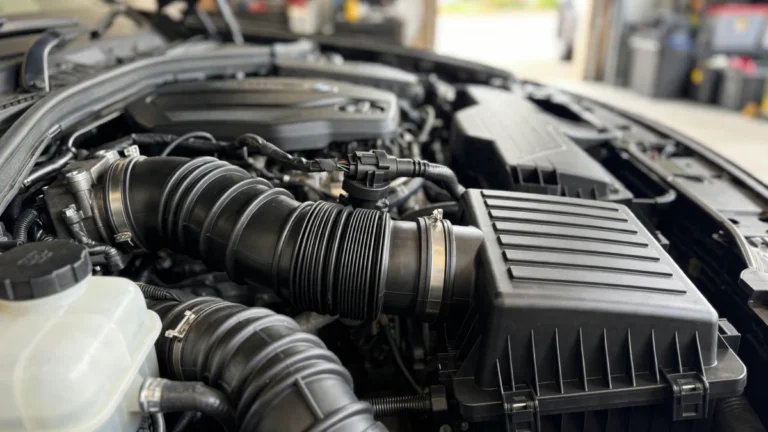
This check takes ten seconds. Pop the hood and look for a small plastic power steering fluid reservoir — on the E90 it sits on the driver’s side of the engine bay with a cap marked ATF or CHF 11S. Found it? You have hydraulic steering and the rest of this article applies. No reservoir? You have electric power steering (EPS): no pump, no fluid, no leak to find. Skip to the F30 and G20 EPS section instead of buying parts for a system that does not exist.
| Generation | Years | Steering type | What to know |
|---|---|---|---|
| E90 / E91 / E92 / E93 | 2006–2013 | Hydraulic (pump + fluid) | Nearly all US-market cars. Belt-driven pump (LUK on N52 cars); the cars this diagnosis is written for. |
| E90 (European N53 cars) | 2007–2012 | Electric (EPS) on some cars | A minority of Euro-market N53 LCI cars left the factory with electric steering. No reservoir under the hood confirms it. |
| F30 / F31 / F34 | 2012–2019 | Electric (EPS) | First 3 Series generation with electric steering across the range. No pump, hoses, or fluid — problems here are electrical or mechanical, never a leak. |
| G20 / G21 | 2019–present | Electric (EPS) | Same story as the F30: electric rack, no hydraulic parts. Whining noises on these cars come from elsewhere (belt, pulleys, alternator). |
Why the confusion? Forums are full of E90 whine threads, and F30 owners read them and assume their car works the same way. It does not — the hydraulic-to-electric switch happened with the F30. The upside of the split: if your car whines and has a reservoir, the diagnosis below will find it; if it whines and has no reservoir, you have ruled out the entire hydraulic system in one glance.
One exception: E90s with optional Active Steering (option code S217A) use a different, electronically controlled pump assembly than standard cars. Diagnosis is the same, but parts differ and cost more — check your option codes before ordering.
Whine diagnosis: pump, belt, low fluid, or air in the system?
Not every whine means a dead pump — suspect the pump last, not first. The table runs cheapest and most common first. Key distinction: a whine tracking RPM is pump- or belt-related; a groan only at full lock is often the relief valve, normal in short bursts.
| Noise / symptom | When it happens | Most likely cause | First step |
|---|---|---|---|
| High-pitched whine rising with RPM | All the time, worse when cold | Low fluid level from a slow leak | Check the reservoir cold; top up correctly and find the leak |
| Whine + foamy fluid in reservoir | After driving, fluid looks aerated | Air entering on the suction side (loose return-hose clamp or cracked reservoir) | Tighten/replace return-hose clamps; inspect the reservoir |
| Groan or moan when turning | Only near full lock, parking maneuvers | Relief valve working — normal briefly; constant groaning means low fluid or a worn pump | Check level; don’t hold hard against full lock |
| Whine that fades as the car warms up | Cold starts only | Thick, aged fluid or a partially restricted reservoir filter | Fluid exchange; new reservoir (filter isn’t serviceable separately) |
| Whine + visible metal flakes in fluid | Constant, assist fading | Pump internals failing | Replace pump; flush so debris doesn’t kill the new one |
| Squeal plus whine | On startup and when turning | Worn or slipping serpentine belt (it drives the pump) | Inspect for glazing/cracks; replace belt and tensioner together |
| Whine appeared right after a fluid service | Immediately after topping up or flushing | Wrong fluid type or air trapped during the service | Verify cap-spec fluid; bleed lock-to-lock with engine running |
| No noise, but heavy steering | Constant | Belt failure, seized pump, or (on EPS cars) electrical fault | Check the belt first — a snapped belt is cheap, a dead pump isn’t |
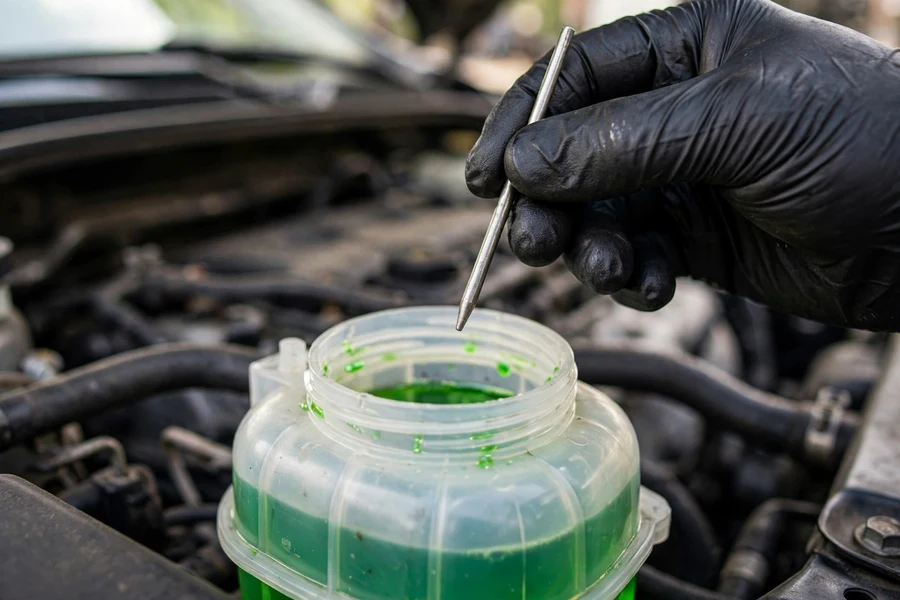
Check fluid before ordering parts. A reservoir that was full last month and is low today means a leak — the whine is the leak’s symptom, not a failed pump. Full reservoir, clean fluid, still whining? Suspect the pump, the belt, or the reservoir’s internal filter — built in, not serviceable, and technicians report groaning pumps going quiet after just a fresh reservoir and fluid.
Interactive: whine and leak diagnostic picker
Answer three questions and the picker narrows the cause, the fix, and the fluid check. The whole diagnosis branches on hydraulic versus electric, so start there.
Power steering diagnostic picker
Where hydraulic systems actually leak: the five failure points
E90 steering leaks rarely start at the pump. They start at connections, hoses, and the reservoir — rubber and plastic aging in a hot bay. The five failure points, by frequency:
| Leak point | What fails | How to spot it | Typical fix |
|---|---|---|---|
| High-pressure hose (pump to rack) | Rubber section or crimp fittings weep under pressure | Oily residue along hose and crimps; drips after a drive | Replace hose assembly with new seals; 1.5–3 hours labor |
| Reservoir and suction hose | Plastic reservoir cracks; suction hose hardens and seeps at clamps | Fluid film around the reservoir body or cap; damp hose ends | New reservoir and/or hose with fresh clamps |
| Pump shaft and housing seals | Front shaft seal wears; housing O-rings harden | Fluid slung in a ring by the pulley; seepage from pump body | Reseal or replace depending on age and mileage |
| Return hose and cooler loop | Clamps loosen; the cooler loop corrodes | Damp low-pressure lines; the classic air entry point (foamy fluid) | New clamps or hose section; inspect cooler loop |
| Steering rack end seals | Inner seals wear; fluid collects inside the tie-rod bellows | Swollen/dripping bellows; fluid loss with no visible leak | Rack reseal or replacement — the biggest job here |
To find a leak: clean the suspect area with brake cleaner, drive a day, then inspect with a flashlight — fresh leaks shine, old grime doesn’t. Check hose-crimp undersides and the back of the pump pulley, where a shaft-seal leak slings fluid in a telltale circle. Confirm the fluid’s identity first: the oil leak identification guide distinguishes engine oil, coolant, and steering fluid by color and location — a valve cover leak on the belt side fools many into a steering diagnosis.
The fluid question: CHF 11S vs ATF — get this right
BMW E90s don’t all use the same fluid, and mixing the two damages seals. The two: Pentosin CHF 11S (green synthetic hydraulic fluid) and Dexron III ATF (red). Not interchangeable, not “close enough.” Generic “power steering fluid” bottles suit neither — don’t use them.
| Your E90 | Correct fluid | Color | Notes |
|---|---|---|---|
| 6-cylinder: 325i, 328i, 330i, 335i (N52 / N54 / N55) | CHF 11S | Green | Pentosin CHF 11S or the BMW-branded equivalent; covers most US-market E90s. |
| 4-cylinder petrol: 316i, 318i, 320i (N42 / N46 / N43) | ATF (Dexron III) | Red | Cap typically engraved “ATF only.” Common in Europe; rare in the US. |
| Diesel: 318d, 320d, 330d, 335d (M47 / N47 / M57) | Usually CHF 11S | Green | Confirm on your cap — diesel variants are less documented. |
| F30 / G20 (any engine) | None — electric steering | — | No fluid exists — nothing to top up or mix. |
Your reservoir cap is the final authority — not this table or memory. BMW’s spec changed during production: owners report some early E90 reservoirs engraved “ATF” with a later blue sticker over the engraving specifying CHF 11S. Sticker wins. Corroborate with the white-rag test — red is ATF, green is CHF 11S (very old fluid browns either way, meaning it’s overdue). Suspect a previous owner used the wrong fluid? Flush fully to the correct spec rather than topping up.
Why the strictness? Seals are compounded for their fluid. The wrong one swells or shrinks seals it was never designed to meet, creating the very leak you’re fixing — sometimes within weeks. “Universal” fluids are a trap: universal means formulated for the domestic cars dominating the shelf, not your BMW.
Turkey-baster refresh vs full flush: the honest debate
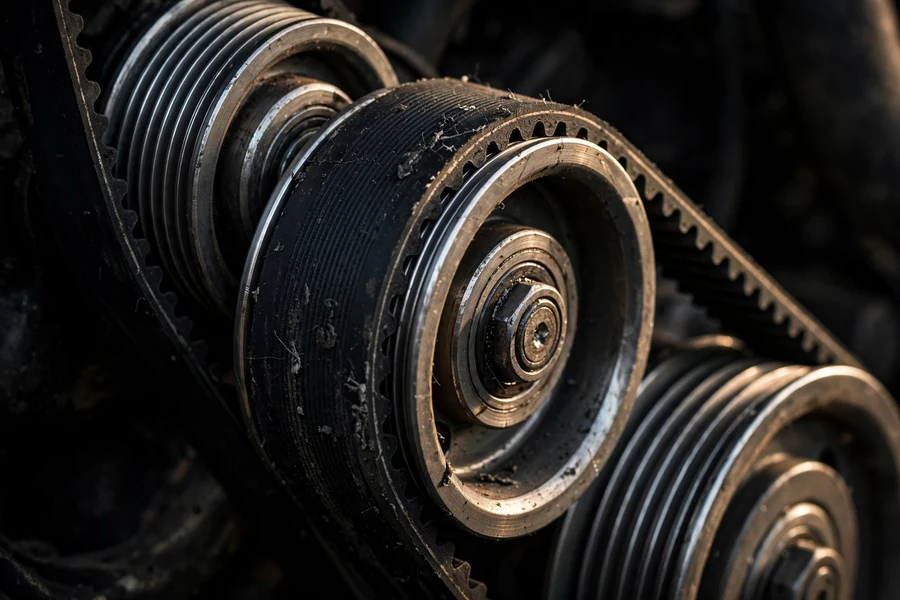
BMW calls the fluid “lifetime fill” — meaning unscheduled, not immortal. It darkens and collects wear particles; by high mileage most E90 reservoirs hold fluid nothing like what went in. Two exchange methods:
| Turkey-baster refresh | Full flush | |
|---|---|---|
| Method | Suck the reservoir dry with a turkey baster, refill, drive a week, repeat 3–4 times | Disconnect the return hose into a drain pan and cycle fresh fluid through while a helper turns the wheel lock-to-lock |
| Pros | Ten minutes, no special tools, no risk of running the pump dry; gentle enough for routine maintenance | Exchanges nearly all fluid in one session; the right choice after replacing a pump, hose, or rack |
| Cons | Each pull replaces only the reservoir’s fraction of total volume — only works as a repeated ritual | Messier; seconds of a dry reservoir can damage the pump; introduces air to bleed; a two-person job |
| Cost (DIY) | Roughly the price of a bottle of fluid per round | A few bottles of fluid plus an afternoon |
The working consensus: turkey-baster pulls as maintenance — three or four spaced a week apart steadily freshen the fluid — and a full flush after any repair. For both: use only the cap-spec fluid, and never let the reservoir run dry with the engine running. A merely noisy pump can need replacing after a botched flush.
When the pump is actually dead vs just noisy
Pumps are tougher than their reputation: simple vane or roller pumps, mostly killed by running dry or on contaminated fluid — both preventable. Before condemning the pump:
| What you observe | Verdict | Action |
|---|---|---|
| Whines, but assist is normal and fluid is low | Pump is fine — it is starved | Fix the leak, top up, re-evaluate — most go quiet. |
| Whines on cold start, quiets when warm, fluid dark | Pump is fine — fluid/filter issue | Fluid exchange plus a new reservoir; revisit only if noise persists. |
| Constant whine with full, clean, correct fluid and good belt | Pump is worn | Replacement is reasonable; a pressure test confirms it. |
| Metal flakes or glitter in the reservoir | Pump failing internally | Replace the pump AND flush — debris kills a new pump. |
| Intermittent assist, hard spots while turning | Pump or rack | Check belt and fluid first; if good, get professional diagnosis (rack seals fail too). |
| Sudden total loss of assist with a bang or snap | Belt, not the pump | Do not drive far — the same belt runs the alternator and water pump. |
When the table leaves you torn between pump and rack, a pressure test at a shop settles it: low pressure with good fluid and a good belt condemns the pump, while good pressure with heavy steering points at the rack.
What it costs: pump, hoses, flush, and the F30 rack
US planning ranges from estimators and owner reports; region and labor rate move the needle. The pattern: the pump is mid-priced, labor is the variable, and the F30’s electric rack is another league.
Two cost traps. First, the half-price remanufactured pump: some are excellent, some are noisy out of the box, and the labor to do the job twice erases the savings — if you DIY, the risk is only your Saturday; if you pay labor, buy the better pump. Second, Active Steering cars (S217A): their pump assembly is a different, more expensive part than the standard LUK unit, so suspiciously cheap quotes may be pricing the wrong part. For context on overall upkeep costs, see the maintenance schedule guide.
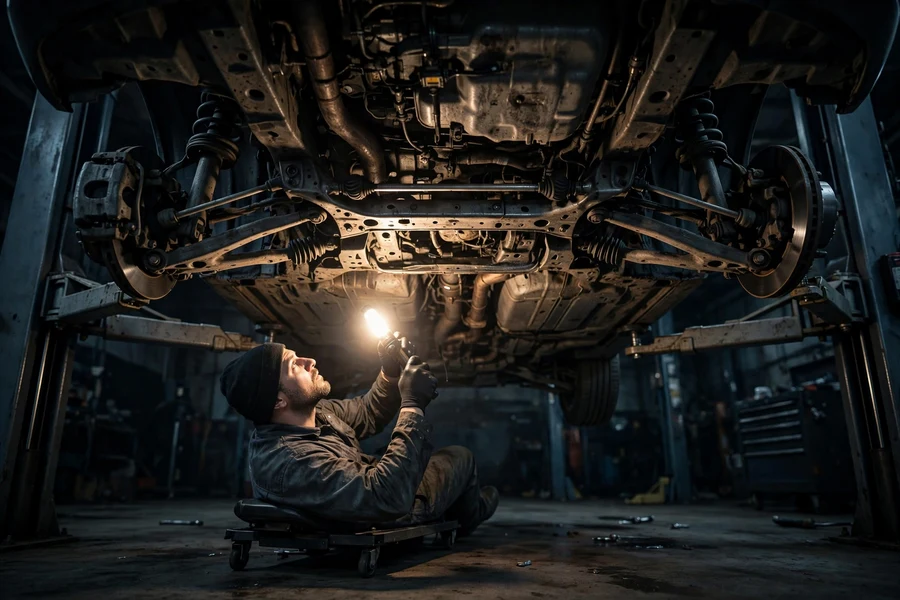
Hose replacement: honest difficulty for the DIYer
Replacing the high-pressure hose on an E90 rates about 5 out of 10 — firmly intermediate. The job is simple (two fittings, a couple of bracket clips), but access is not: the rack-end fitting lives against the subframe, best reached from below with the car safely on jack stands. Budget two to three hours your first time, plus a fluid exchange afterward.
- Use line wrenches on hydraulic fittings — open-end wrenches round them off, and a rounded fitting turns a Saturday job into a tow.
- Never reuse crush washers or sealing rings. New washers come with most hose kits; if yours did not, get them before you start.
- Crack fittings with the system cool and a drain pan positioned — residual pressure will spray fluid.
- Route the new hose exactly like the old one, clips included — contact with the subframe or exhaust will chafe it through.
- Bleed thoroughly: fill the reservoir, start the engine, turn lock-to-lock slowly several times with the cap off, topping up. Foamy fluid means air remains — keep going.
- Replace the one-time-use aluminum pump bracket bolts rather than reusing stretched fasteners — check the torque spec for your car.
If that is more than you want to tackle, hand it to an independent BMW shop — a professional bleed avoids the comeback whine of trapped air. But don’t drive for months on a weeping hose: the leak worsens, the pump runs starved, and a hose job becomes a hose-plus-pump job.
F30 and G20: electric steering troubleshooting (no pump, no fluid)
If you skipped here from the top, welcome — your car has no power steering pump, no hoses, and no fluid, so none of the hydraulic diagnosis above applies. EPS on the F30 and G20 is a motor-driven rack controlled by the car’s electronics. When it misbehaves, causes are electrical or mechanical, and the diagnostic order is different:
- Battery first, always. A weak battery is a documented cause of EPS assist cutting out on the F30 — owners report a “power steering disabled” message after deep discharge, sometimes persisting until the battery is replaced and codes cleared. Heavy steering plus slow cranking? Start here.
- Check the EPS fuse — the cheapest possible fix, taking minutes.
- Scan for codes. A BMW-capable scanner reads steering-module codes, not just engine codes — see the OBD2 scanner guide.
- Inspect the rack wiring. Owner reports describe rodents chewing the small EPS data wires as a surprisingly common cause of sudden steering faults — a splice repair costs far less than the whole-harness replacement some dealers quote.
- Know the rack rattle. Knocking from the front over bumps is a known F30 rack issue; racks can be refurbished or replaced. Mechanical wear — software won’t fix it.
- Consider a software update. BMW revised early F30 EPS tuning over the model run; an update can improve feel and resolve some assist complaints.
An EPS rack is expensive: owner-reported F30 parts prices run well over $1,500, with shop replacements commonly $2,000–$3,000. That is why the battery-fuse-codes-wiring sequence comes first — each check costs a fraction of a rack. Never let anyone sell you power steering fluid for these cars; there is nowhere to put it.
Prevention: keeping the system quiet for years
Hydraulic steering asks for almost nothing in return for lasting the life of the car. Check the reservoir when you check the oil — a steady level is healthy; a creeping drop warns of a leak long before any whine. Wipe the cap area clean before opening it: grit falling into the reservoir goes straight to the pump. Keep the correct fluid on the shelf so a top-up never becomes an excuse for the wrong bottle. Do the turkey-baster refresh when fluid looks dark — it is the cheapest maintenance on the car. Replace the serpentine belt on schedule — a shredded belt takes the pump, alternator, and water pump with it. Treat full-lock holds as the brief maneuvers they are: sitting against the lock builds maximum pressure and heat for no benefit. The complete BMW 3 Series guide ties steering into the full upkeep picture.
Frequently asked questions
Can I drive with a power steering pump leak?
Briefly, to reach a repair — not indefinitely. Keep the reservoir topped up with the correct fluid and avoid full-lock turns. The danger is running the pump dry (a hose job becomes a pump job) or fluid degrading the serpentine belt. A slow seep buys days; a steady drip buys one careful trip to the shop.
What power steering fluid does my E90 take — ATF or CHF 11S?
Your reservoir cap is the final authority. As a pattern: six-cylinder E90s (325i, 328i, 330i, 335i) use green Pentosin CHF 11S; four-cylinder petrol models use red Dexron III ATF. Never mix them — the wrong fluid damages seals. A white-rag dip test corroborates (red = ATF, green = CHF 11S), and generic “power steering fluid” suits neither.
Does the F30 or G20 3 Series have a power steering pump?
No. The F30 (2012–2019) was the first 3 Series generation with electric steering across the range, and the G20 continues it. No pump, no hoses, no fluid — so heavy steering points to the battery, fuses, wiring, fault codes, or the EPS rack. If a shop offers you a power steering flush on an F30 or G20, find another shop.
Why does my BMW whine when I turn the steering wheel?
In order: low fluid from a slow leak (check the reservoir first), air entering via a loose return-hose clamp or cracked reservoir (foamy fluid), a clogged reservoir filter starving the pump, a worn serpentine belt slipping on the pulley, and only then a worn pump. Whine rising with RPM is the classic signature; a groan only at full lock is often just the relief valve.
How much does it cost to replace a power steering pump on a BMW 3 Series?
E90: $180–$450 DIY (pump, fluid, flush) or $450–$1,000 at an independent shop. High-pressure hose: $250–$600 installed. Shop fluid flush: $150–$300. The F30’s electric rack is a different budget — $2,000–$3,000+ all-in, which is why electrical checks come before parts on those cars.