How to Fix BMW Wastegate Rattle on N54/N55
A BMW wastegate rattle is the metallic clattering turbocharged 3 Series cars make on cold start and as revs fall to idle. It is most associated with the N54 twin-turbo engine in the 2007–2010 335i, where the wastegate flapper, its shaft bushing, and the actuator arm wear loose over thousands of heat cycles and chatter against their seats. The N55 single-turbo engine (2011–2015 335i) can rattle the same way, but far less often. This guide covers what it sounds like, how to tell it apart from VANOS rattle, timing-chain noise, heat-shield buzz, and lifter tick, how to diagnose it yourself, and honest repair costs — from a free adjustment to a full turbo replacement.
If your 335i is making an unfamiliar noise, start broad: our complete 3 Series guide maps every major system, and the wastegate rarely fails in isolation. Owners chasing this rattle often find a tired charge pipe, a weakening high-pressure fuel pump, or worn ignition coils behind the rough running that makes the rattle more noticeable. VANOS and Valvetronic problems can sound similar at idle — hence the rattle-versus-noise table below, because misdiagnosis here is expensive.
The short answer
BMW wastegate rattle is wear in the wastegate flapper shaft, its bushing, and the actuator arm — the valve chatters against its seat on cold start and deceleration, most audibly as revs drop from around 3,500 RPM. On the N54 (2007–2010 335i, twin-turbo) it is a signature wear item; on the N55 (2011–2015 335i, single twin-scroll turbo) it is far less common. A rattle with no codes and no boost loss is annoying but rarely an emergency; a rattle plus underboost codes (30FF) means the wastegate no longer seals and the turbo needs rebuilding or replacement. Honest cost bands: adjustment $0–$250 (temporary), actuator replacement $400–$900 (mainly N55), specialist rebuild $1,500–$3,500, full turbo replacement $2,500–$5,000+ at an independent shop. Shop-rate estimates, not quotes.
In this guide
- What the BMW wastegate rattle actually is
- What it sounds like: the three signature moments
- Which engines are affected: N54 vs N55
- Wastegate rattle vs other engine noises
- How to diagnose it in your driveway
- Rattle identifier: what is your noise?
- Repair options, ranked cheapest to most complete
- Can you keep driving with it?
- Buying a used 335i? Listen before you buy
- Frequently asked questions
What the BMW wastegate rattle actually is
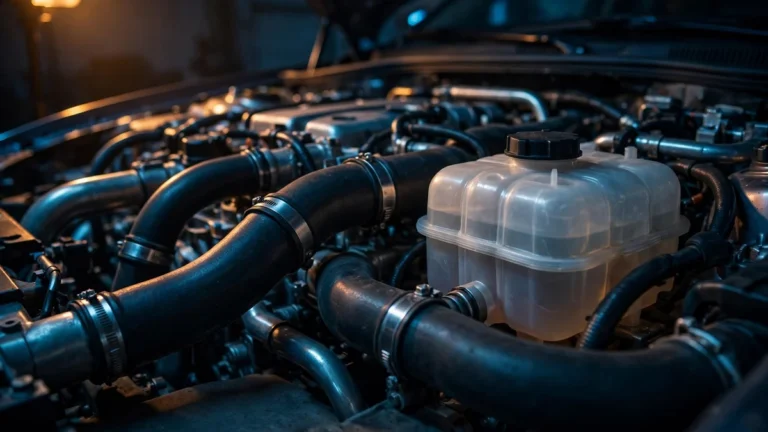
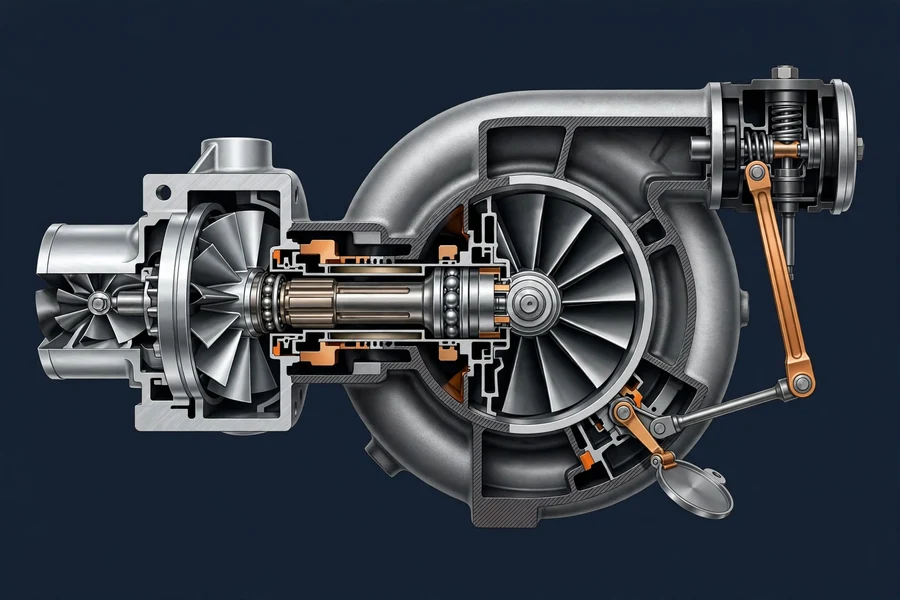
Every turbocharged engine has a wastegate: a bypass valve in the turbine housing that bleeds exhaust gas around the turbine wheel to limit boost. On the N54 and N55 it is internal — a flapper valve on a shaft, moved by a linkage arm from the actuator. When the ECU wants less boost, the actuator pulls the arm, the flapper lifts, and exhaust bypasses the turbine.
The rattle starts when the linkage joints wear: the bushing the flapper shaft pivots in, the eyelet where the actuator rod meets the crank arm, and the flapper’s seating surface. Thousands of heat cycles grow the clearances until the flapper can vibrate — then exhaust pulses buffet it at cold start or on deceleration and it chatters against its seat like a coin in a tin can.
BMW acknowledged the problem in service bulletin SI B 11 13 07 (February 2009, N54): a “distinct clanking noise from the turbocharger area” occurring up to six or seven times in a row during deceleration from approximately 3,500 RPM, caused by the wastegate valve not fully closing. The bulletin also draws a line owners should know: a slight rattle under steady acceleration in the 2,000–4,000 RPM range comes from the rotating wastegate valve face — a deliberate sealing feature — and BMW calls that normal operation. The defect rattle is the loud, repeated clanking on deceleration and cold start.
Why cold start? During warm-up the engine control unit holds the wastegate open as part of its catalytic-converter heating strategy, and a loose flapper in the open position has maximum freedom to chatter. Once warm, the wastegate closes to build boost, the actuator holds the flapper against its seat, and the noise fades. That warm-up fade is the most reliable fingerprint of wastegate rattle — and why the noise can vanish on a warm test drive. Always diagnose it stone cold.
What it sounds like: the three signature moments
Owners describe it consistently: a metallic chatter like shaking a spray-paint can with the cap off, or small wrenches in a toolbox. Not a squeak, whine, or knock. Listen in these three situations.
- Cold start, first 30–60 seconds. After the car has sat overnight, open the hood, start it, and listen at the exhaust side of the bay where the turbos sit low. The rattle is usually loudest here — rapid metallic chatter that softens as the idle settles. Present at cold start and largely gone five minutes later means the wastegate is the prime suspect.
- The deceleration clank. Parked, parking brake set, blip the throttle to about 3,500 RPM and release. As revs fall, a worn wastegate produces a series of distinct metallic clanks — BMW’s bulletin describes up to six or seven in a row, and it is the test BMW technicians were instructed to perform. Falling revs swing the wastegate through the position where the loose flapper is free to bounce.
- Light load, 1,500–3,500 RPM. Gentle uphill driving in a high gear can produce a fainter rattle here — but judge carefully, because BMW’s bulletin says a slight rattle under steady acceleration between 2,000 and 4,000 RPM can be the normal rotating-valve-face noise. The defect version is louder and usually comes with the cold-start and deceleration symptoms. If light-load rattle is the only symptom, monitor it rather than repairing.
Two negative fingerprints matter as much. Wastegate rattle does not follow engine RPM precisely the way a lifter tick does — it is irregular chatter, not rhythm. And it gets quieter as the engine warms. Any metallic noise that gets louder with temperature, or that is perfectly rhythmic, is something else — which is what the comparison table below is for.
Which engines are affected: N54 vs N55
Wastegate rattle is overwhelmingly an N54 problem: BMW’s first twin-turbo gasoline engine wears its wastegate hardware faster than the single-turbo N55 that replaced it. The N55 is not immune; the rattle just moves from “expect it eventually” to “possible but uncommon.”
| Engine | 3 Series cars | Turbo setup | Wastegate rattle risk |
|---|---|---|---|
| N54 3.0L twin-turbo inline-six | 2007–2010 335i (E90/E92/E93), plus 2011–2013 335is | Two small parallel turbos | High — a signature wear item; check both turbos |
| N55 3.0L single-turbo inline-six | 2011 335i (E90 LCI), 2012–2015 335i (F30) | One twin-scroll turbo | Lower — documented but far less common |
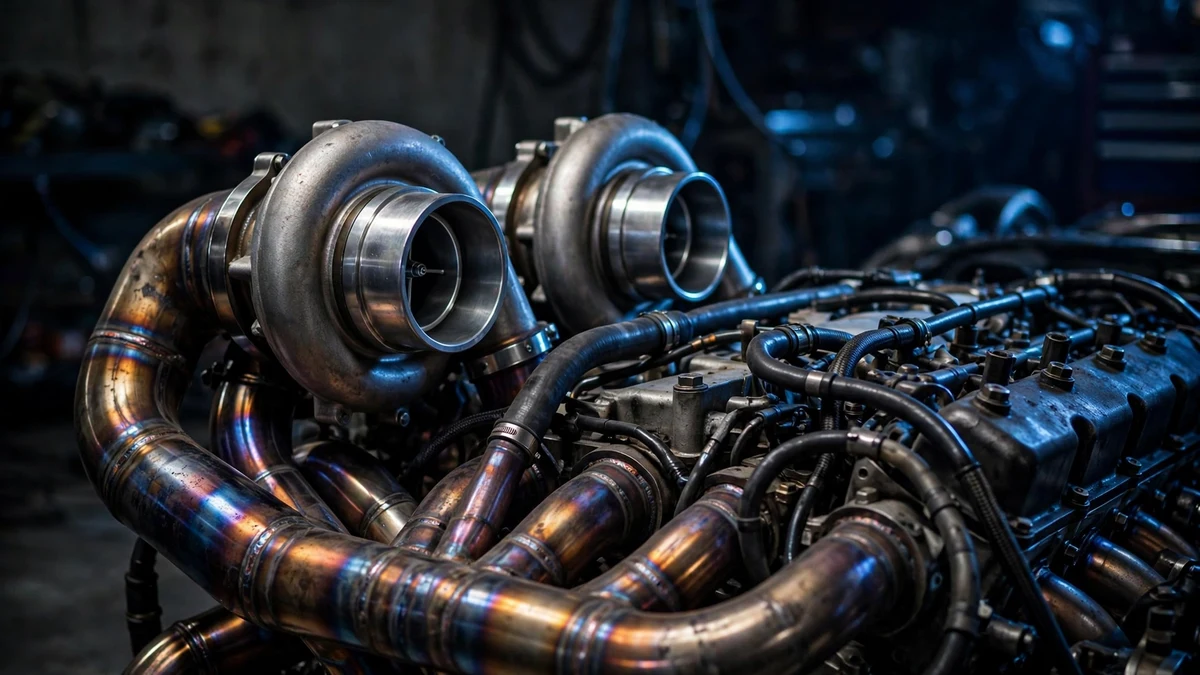
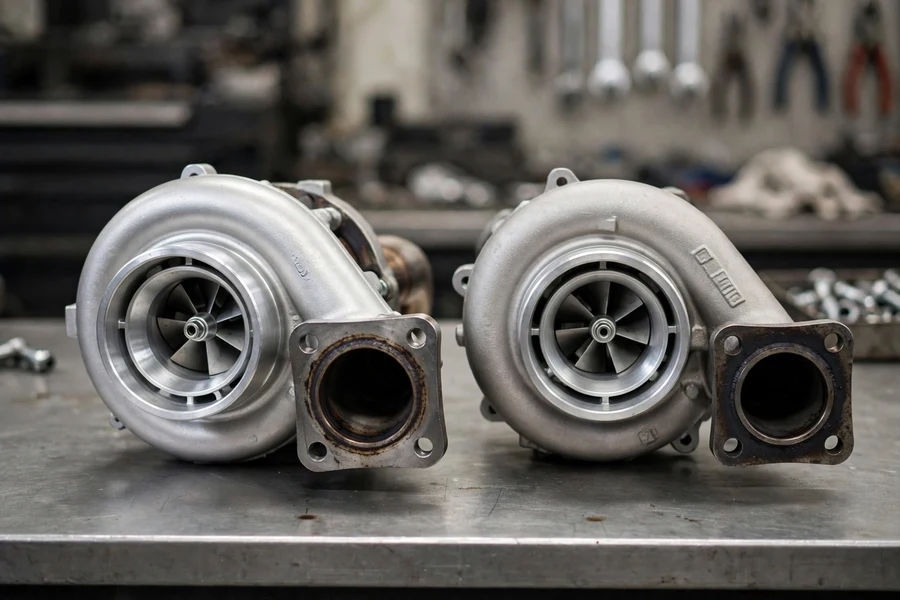
Three details matter before spending money. The N54 has two turbos and two wastegates wearing at roughly the same rate — owner consensus is blunt: if one side rattles badly, the other is not far behind, so single-turbo repairs often end with a second bill a year later. Plan for the pair.
Second, BMW’s parts strategy differs: for the N54, BMW never sold the wastegate actuator or wear parts separately — the official dealer repair is a complete turbocharger assembly, which is why N54 wastegate work skews expensive at dealers and the independent rebuild market exists. For the N55, a separate actuator part number exists, making actuator replacement a realistic mid-tier option.
Third, a warranty footnote: BMW North America extended turbo and wastegate coverage on affected N54 cars to 8 years or 82,000 miles. Every covered car has long since aged out — a 2010 car expired in 2018 — so treat it as history. When shopping, “turbos replaced under warranty” in the records is good news: the car is likely on its second set of wastegate hardware.
BMW wastegate rattle vs other engine noises
Half the money wasted on this problem goes to fixing the wrong noise. The N54 and N55 produce at least five distinct metallic sounds, and heat-shield buzz and the exhaust flapper can mimic a wastegate rattle closely enough to fool a quick diagnosis. Work through this table before authorizing any repair.
| Noise | What it sounds like | When you hear it | Key giveaway | Usual fix |
|---|---|---|---|---|
| Wastegate rattle | Metallic clatter, like wrenches in a tin can | Cold start; deceleration from ~3,500 RPM; fades as engine warms | Irregular chatter, not rhythmic; loudest at the turbo area; quiets when warm | Actuator adjustment, rebuild, or turbo replacement |
| VANOS rattle | Diesel-like growl or rattle at idle | Idle and low RPM; changes with oil temperature | Follows engine speed; often with VANOS fault codes | VANOS solenoids or cam adjusters |
| Timing-chain noise | Whining rattle with a high-pitched whir underneath | Constant; worst at cold start but never fully fades | Comes from the front of the engine (chain side), not the turbo area | Timing chain and guide replacement |
| Heat-shield buzz | Tinny vibration or buzz | At a specific RPM or under load; from underneath the car | Stops when you press the shield; reproducible by tapping it cold | Bend, tighten, or replace the loose shield |
| Lifter tick | Rhythmic ticking that tracks RPM exactly | Idle; worse when cold or overdue for oil | Perfectly rhythmic, from the top of the valve cover | Oil change with correct grade; lifters if persistent |
Two confusions deserve extra attention. The exhaust flapper valve is a vacuum-operated flap that rattles at idle — but the sound comes from the rear of the car, not the engine bay. Owners isolate it by temporarily disconnecting its vacuum line (the well-known “golf tee mod”). Rattle loudest at the tailpipe? Test the flap before touching the turbos.
The second is direct-injection tick: the high-pressure injectors’ loud, rapid ticking at idle, which nearly every new owner mistakes for a valvetrain problem once. Injector tick is perfectly rhythmic, present at every temperature, and loudest near the fuel rail — normal noise, not a defect, and it never fades with warmth. If your “rattle” is a metronome, it is injectors, not the wastegate.
On the VANOS row: worn cam adjusters produce a diesel-like clatter easily confused with wastegate noise at idle, but VANOS noise follows engine speed smoothly and often stores cam-timing codes, while wastegate rattle is irregular and codeless until wear leaks boost. With cam-correlation codes, chase VANOS first — our VANOS and Valvetronic problems guide covers it.
How to diagnose BMW wastegate rattle in your driveway
Confirm wastegate rattle with basic tools and a cold engine. Work through these steps in order — each rules something out, and skipping ahead is how misdiagnoses happen.
- Step 1 — The cold-start listen. After the car sits overnight, open the hood, start it, and stand at the exhaust side of the bay: rapid metallic chattering from low near the turbos, fading as the idle settles. That fade is diagnostic.
- Step 2 — The rev-and-drop test. In park or neutral, parking brake set, rev to about 3,500 RPM and release. A worn wastegate clanks distinctly as revs fall — up to six or seven in succession per BMW’s bulletin. Repeat twice. Consistent clanking is a strong positive; silence makes the wastegate unlikely.
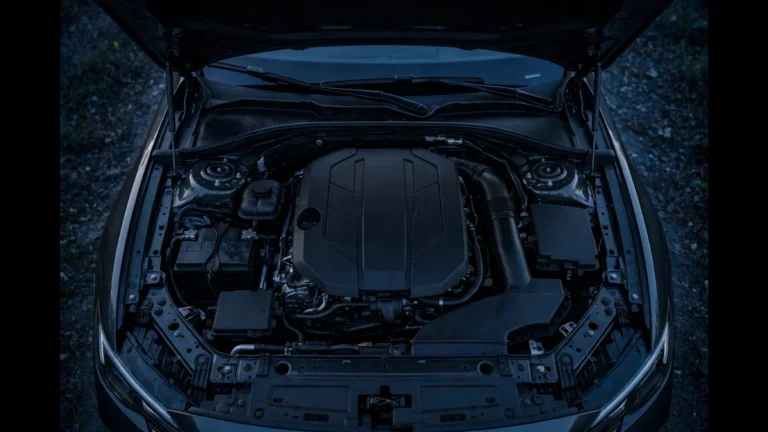
- Step 3 — Localize with a stethoscope. A mechanic’s stethoscope (or rubber hose to your ear) pinpoints the source: probe each turbo’s turbine housing — both sides on the N54. Wastegate chatter is dramatically louder there than anywhere else. Loudest at the valve cover means lifters or injectors; at the front cover, the timing chain.
- Step 4 — Scan for boost codes. Check for stored codes even with no warning light. Code 30FF (underboost) or 3100-series boost-control codes mean the wastegate no longer seals well enough to hold boost — wear is now functionally compromised, not just noisy. Rattle with no codes is early-stage; with 30FF it needs a real repair, not an adjustment.
- Step 5 — Rule out the heat shields. Engine fully cold, tap the turbo and exhaust heat shields. A loose shield buzzes with a tinny voice — a five-minute fix that has saved many owners from a turbo quote. Rattle loudest at the rear? Isolate the exhaust flapper before suspecting the turbos.
- Step 6 — Check the actuator rod for play. Engine off and cold, find the actuator rod where it meets the crank arm and move the arm by hand: the flapper should operate smoothly with minimal slop. Excessive play at the rod eyelet, or a shaft that wobbles in its bore, confirms worn hardware — not a calibration issue. On the N54, check both turbos.
Caution on Step 6: never reach around a hot turbo or force the linkage — rod position is part of boost calibration. You are feeling for looseness, not testing strength. Significant play confirms the diagnosis; the remaining question is which repair tier it justifies.
Rattle identifier: what is your noise?
Describe your noise and when it happens — the identifier points to the most likely cause and next step, using the same fingerprints as the comparison table.
BMW rattle identifier
Describe the noise and when it happens, then hit “Identify my rattle”.

Repair options, ranked cheapest to most complete
No single correct fix — a ladder, where the right rung depends on wear severity, your engine, and how long you will keep the car. Ranked by cost, with honest notes on what each accomplishes and how long it lasts.
| Repair option | Typical cost band | Difficulty / downtime | How long it lasts | Best for |
|---|---|---|---|---|
| Actuator rod adjustment | $0 DIY / $100–$250 at a shop | Easy; under an hour | Temporary — weeks to months | Mild, early rattle |
| Wastegate actuator replacement | $400–$900 parts + labor | Moderate; a few hours | Durable — if the actuator was the worn part | N55, where the actuator is sold separately |
| Turbo rebuild with hardened wastegate hardware | $1,500–$3,500 all-in | Specialist job; car down for days | Long-term fix for the actual wear | N54 cars worth keeping |
| Full turbo replacement (OEM / reman) | $2,500–$5,000+ (N54 pair, independent shop) | Major; 1–3 days | Longest — new or remanufactured units | Severe wear or turbos already out for other work |
| DME software update | $150–$300 at a dealer | Easy; about an hour | Masks mild rattle only | Early N54 per bulletin SI B 11 13 07 |
Actuator rod adjustment is the free first step: tightening the rod removes linkage slack so the flapper sits firmer. But it masks wear rather than repairing it — the rattle typically returns within weeks to months, and over-tightening can alter boost behavior (BMW’s bulletin told dealers not to adjust early N54 rods). Small increments; stop when the noise quiets.
Actuator replacement fits when wear is in the actuator itself — diaphragm, eyelet, or spring — rather than the turbo’s internal flapper shaft. Primarily an N55 option, since BMW sells that actuator separately but never did for the N54. Budget the part plus one to three hours of labor — but if the flapper shaft bushing is the worn part, a new actuator changes nothing. Confirm with the play check first.
Turbo rebuild with upgraded wastegate hardware fixes the actual wear without new turbos: specialists remove the units and fit hardened bushings and new flapper arms. Parts are cheap; labor is not, since turbo removal is most of the job. All-in cost sits between an actuator job and full replacement — usually the best value per quiet year on a keeper N54.
Full turbo replacement is BMW’s official answer: new or factory-remanufactured turbos with fresh wastegate hardware throughout. On the N54, do both as a pair — owner history shows single-turbo jobs are usually followed by the other side failing within a year or two, and the labor overlaps almost completely. Expect $2,500–$5,000 for the N54 pair at an independent shop (dealers run higher), or roughly $3,000–$4,500 for the N55 single turbo. Caution: replacement turbos have a mixed reliability record, with some aftermarket units developing oil consumption — buy from established suppliers and verify warranty terms in writing.
The DME software update is BMW’s historical answer: the bulletin directed dealers to reprogram early N54 cars because revised wastegate positioning quieted mild cases. Cheap and worth doing if never applied — but software cannot restore worn metal, so expect little if your rattle is loud.
Can you keep driving with BMW wastegate rattle?
In most cases, yes — a rattle with no fault codes and no boost loss is an annoyance, not an emergency. Many N54 owners have driven tens of thousands of miles with the chatter; the noise by itself does not strand cars. If the car pulls strongly, shows no warning lights, and the rattle is the only symptom, plan the repair on your schedule rather than the car’s.
That patience has limits. Act promptly on: underboost codes (30FF) or a drivetrain-malfunction warning; noticeable power loss or boost lag that is worsening; blue smoke on throttle tip-in (turbo seal wear); or a rattle that suddenly gets much louder (flapper or seat deteriorating). A leaking wastegate also forces the turbo to work harder, raising exhaust temperatures — not an immediate failure mode, but not ignorable for years.
The practical rule: rattle alone — monitor and budget. Rattle plus codes or performance loss — schedule the repair. And if the turbos are already coming out for adjacent work, address the wastegate hardware then: the labor you are already paying for is most of any turbo repair bill.
Buying a used 335i? Listen before you buy
Wastegate rattle is one of the highest-value checks when shopping a used 335i: audible in sixty seconds, negotiable in dollars. Insist on a stone-cold start — arrive early or ask the seller not to warm the car — and run the rev-and-drop test before the test drive. A quiet cold start on a high-mileage N54 means either a well-kept car or fresh turbos; ask which.
Paperwork matters as much as your ears: ask for receipts for turbo or wastegate work. On an N54, “turbos replaced” is a genuine selling point — but verify what was fitted (OEM, remanufactured, or aftermarket) and when. On an N55 the rattle is less likely, yet the same cold-start listen applies. Our used 3 Series buying guide and reliability record by model year cover the rest of the pre-purchase checklist.
If the car rattles and you still want it, price the repair into your offer using the cost bands above as negotiating arithmetic. And beware the freshly detailed, fully warmed-up car: a seller who “helpfully” warmed it may know the rattle fades with temperature. Cold engine, open hood, your ears — in that order.
Frequently asked questions
Is BMW wastegate rattle dangerous?
The rattle itself is not dangerous — worn metal chattering, not debris headed for the engine. The risk is what the wear represents: a wastegate that no longer seals leaks boost, costing power and raising exhaust temperatures, and severe cases store underboost codes (30FF) with drivetrain-malfunction warnings. Codeless rattle: budget for it. Rattle with codes or power loss: schedule the repair.
How much does it cost to fix BMW wastegate rattle?
Actuator adjustment: $0 DIY or $100–$250 at a shop, but temporary. Actuator replacement: $400–$900, mainly realistic on the N55. Specialist rebuild with hardened wastegate hardware: $1,500–$3,500 all-in. Full replacement at an independent shop: $2,500–$5,000+ for the N54 pair, roughly $3,000–$4,500 for the N55 single turbo. Regional estimates, not quotes.
Can you adjust the wastegate to stop the rattle?
Yes, temporarily. Tightening the rod removes linkage slack and usually quiets the chatter — the standard first step. But it cannot restore the worn bushing or eyelet, so the rattle typically returns within weeks to months, and over-tightening can disturb boost calibration (BMW’s bulletin told dealers not to adjust rods on early N54s). A stopgap, not a permanent fix.
Does the N55 have wastegate rattle?
It can, but far less often than the N54 — the single twin-scroll turbo’s wastegate hardware wears more slowly. When an N55 does rattle, BMW sells the actuator separately, making actuator replacement a legitimate mid-cost repair instead of a full turbo replacement. The same diagnosis steps apply to both engines.
Will wastegate rattle cause a check engine light?
Usually not early on — no codes are stored while the wastegate still seals adequately. A light appears when wear leaks boost: code 30FF (turbocharger underboost), sometimes with a drivetrain-malfunction warning and power loss. A rattle with 30FF needs a rebuild or replacement, not an adjustment.