How to Replace a Failed BMW PCV Valve (N20/N52)
Short answer: BMW PCV valve replacement on the N52, N20, and N26 is really a valve cover replacement: BMW molded the crankcase vent valve into the plastic valve cover, so there is no separate valve to buy. The telltale symptom is a high-pitched whistle or squeal at idle that stops the instant you crack the oil filler cap. Expect $900–$1,500 at an independent BMW specialist, $1,400–$2,000+ at a dealer, or $400–$650 in parts if you do it yourself. A torn PCV diaphragm is not an emergency, but driving on it for months raises oil consumption and can foul sensors and catalytic converters.
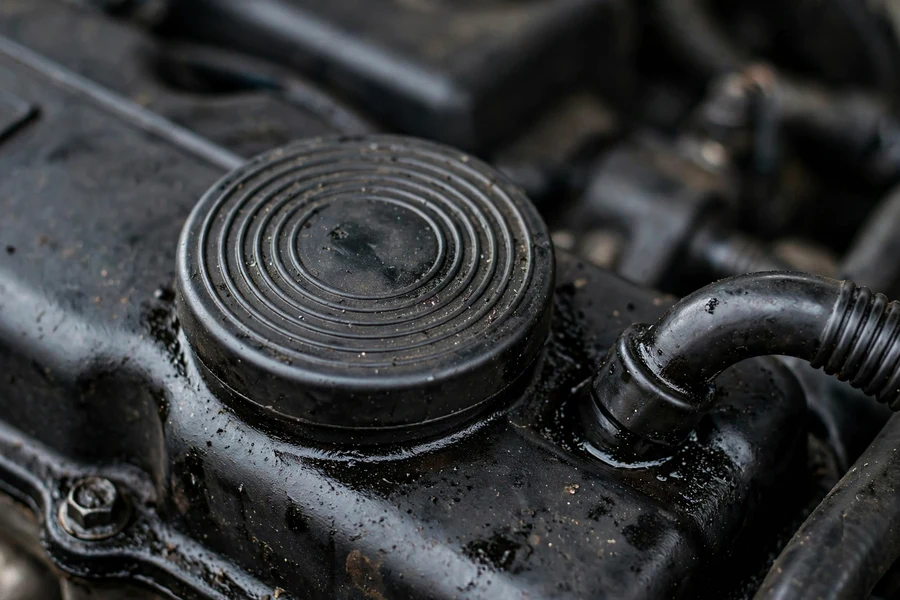
A whistling BMW 3 Series at idle sends a lot of owners hunting for a small, cheap PCV valve on a parts diagram — and then into confusion, because on the N52, N20, and N26 there isn’t one to buy. BMW integrated the crankcase ventilation valve into the valve cover itself: a rubber diaphragm and spring, sealed under a round plastic cap, regulating how much vacuum the intake pulls on the crankcase. When that diaphragm tears with age and heat, the engine gulps full manifold vacuum straight into the crankcase, and the whole engine starts telling you about it.
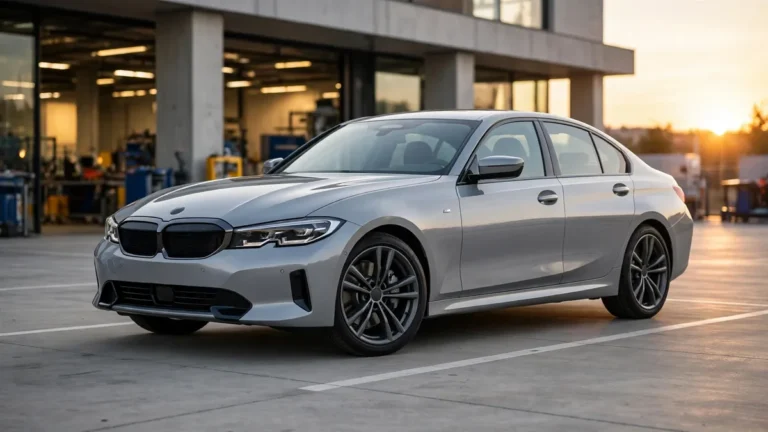
This guide covers the full path from symptom to fix for E90 (N52) and F30 (N20/N26) cars: what the PCV system does, the seven symptoms, four ways to confirm the diagnosis before spending money, PCV failure versus valve cover gasket leak, your two repair options, a realistic DIY walkthrough with difficulty and costs, and the crankcase vacuum numbers that settle it. If you came here because of external oil dripping down the engine rather than a whistle, read the valve cover gasket leak guide first — different failure, different fix.
Why there is no separate PCV valve on these engines
Every gasoline engine produces blow-by: combustion gases that slip past the piston rings into the crankcase. The PCV (positive crankcase ventilation) system meters those gases back into the intake to be burned, while holding the crankcase at a slight, carefully regulated vacuum — roughly 30 millibar on an N52, about half a psi. Too much vacuum and the engine starts sucking oil mist and seals inward; too little (or positive pressure) and oil gets pushed past gaskets and seals.
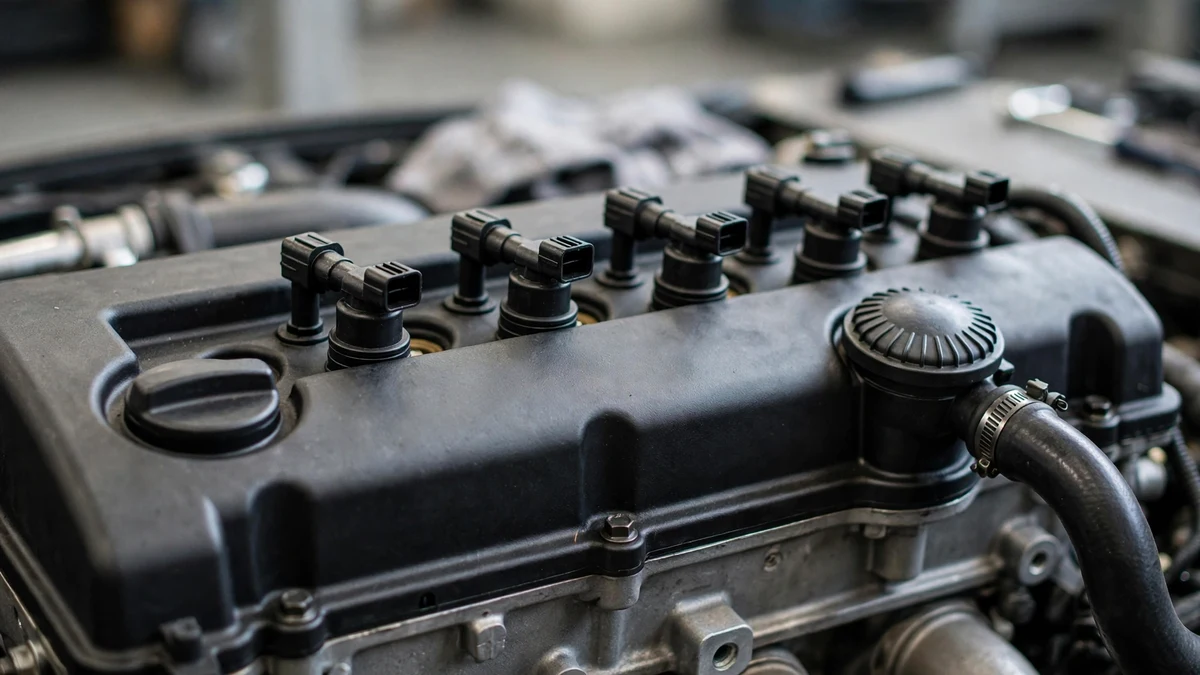
On older BMW sixes like the M54, this regulation happened in a separate oil-separator and valve assembly bolted under the intake manifold. For the N52 (2006–2013 E90 325i/328i/330i and N51 SULEV cars), BMW moved the whole thing into the valve cover: a diaphragm-type regulating valve plus an oil separator, all molded into the plastic cover, with a breather hose running to the intake. The N20 and N26 four-cylinders (2012–2019 F30 328i, including the SULEV N26) use the same philosophy — an integrated diaphragm valve in the valve cover, venting through a hose toward the turbo inlet. Fewer parts, fewer leak points, and one big consequence: when the diaphragm fails, BMW’s repair procedure is the entire valve cover.
The failure itself is simple. The diaphragm is a thin rubber membrane with a calibrated spring behind it, and after a decade of heat cycles it hardens, cracks, and tears. A torn diaphragm can no longer regulate, so full intake-manifold vacuum hits the crankcase unregulated — causing the whistle, the sucked-down oil cap, extra oil mist in the intake, and a lean mixture. It shows up most past 80,000–100,000 miles, and extended oil-change intervals get blamed for accelerating it: sludged ventilation passages make the diaphragm work harder and run hotter.
One clarification: this is not the PCV valve heater recall. BMW recalled the crankcase vent valve heater (an electrical element in the vent hose, fitted to prevent icing) on many N52/N20-era cars over fire risk — an important recall, but a separate component. Having the heater replaced does nothing for a torn diaphragm. If your car whistles after the recall was done, the two issues are unrelated.
The 7 symptoms of a failed BMW PCV valve
BMW’s own service information on crankcase ventilation faults lists the signature set: whistling or howling noise, rough idling or misfire, excessive oil in the intake, and increased fuel-trim values. Owners report the same cluster. Here is what each symptom looks like and why a failed PCV valve causes it.
| # | Symptom | What you notice | Why the PCV causes it |
|---|---|---|---|
| 1 | High-pitched whistle or squeal at idle | A tea-kettle whistle from the top/rear of the engine, loudest at idle, often fading as revs rise | Air being dragged through the torn diaphragm and past the valve cover seals under high vacuum |
| 2 | Oil filler cap sucked down hard | The cap resists removal at idle; cracking it open changes the idle note and kills the whistle | Unregulated manifold vacuum in the crankcase instead of the regulated ~30 mbar |
| 3 | Rough, hunting, or stumbling idle | Idle wavers or dips, sometimes with a cold-start shudder | Extra unmetered air entering through the failed valve upsets the idle mixture |
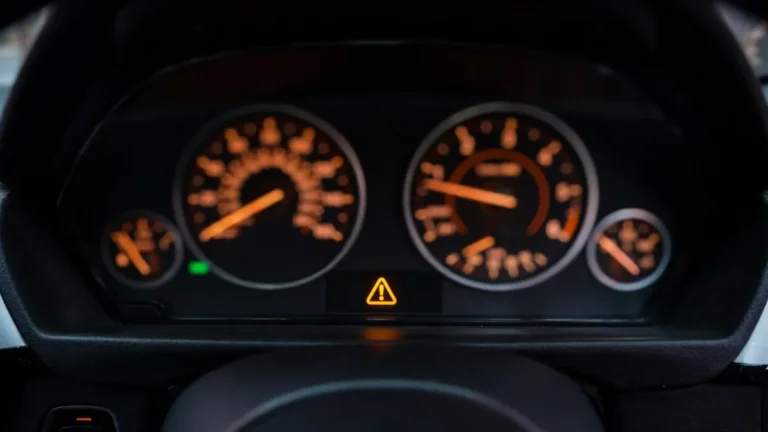
| 4 | Lean codes and fuel-trim faults | P0171/P0174 (system too lean) or rising long-term fuel trims | The DME adds fuel to compensate for the unmetered air the torn diaphragm admits |
| 5 | Rising oil consumption | Needing top-ups between changes with no visible drip on the ground | Excess vacuum pulls extra oil mist through the ventilation system into the intake, where it burns |
| 6 | Oily intake tract and connections | Oil residue at intake hose joints, oily film inside the intake boot | The separator is overwhelmed by the extra crankcase vapor volume and passes oil downstream |
| 7 | Failed crankcase vacuum test | A gauge on the oil filler neck reads far above spec at idle | Direct measurement of the unregulated vacuum — the definitive confirmation |
The whistle is the symptom that matters most, because almost nothing else on these engines makes exactly that noise. A belt squeal changes with engine speed and load; a PCV whistle is loudest at idle, seems to come from the valve cover itself, and — the giveaway — vanishes the moment you crack the oil filler cap. If your car whistles and the cap test kills the whistle, you have found your fault. For consumption causes beyond the PCV, see the oil consumption guide; for the lean codes themselves, the check engine light causes guide covers P0171/P0174 in context.
Interactive: PCV symptom checker
Pick your engine, your main symptom, and what the oil-cap test showed. The checker weighs the three together — no single symptom is conclusive on its own — and tells you whether the evidence points at the PCV diaphragm, at something else, or at the one test that settles it.
Confirm it before you buy parts
The whistle-plus-cap-test combination is convincing, but a valve cover is a $400+ part and a half-day job, so confirm with at least one objective test. These are the four checks, in order of cost and effort.
1. The oil-cap test (free, 30 seconds)
Warm the engine fully, let it idle, and slowly twist the oil filler cap. On a healthy engine you feel slight resistance and the idle changes only a little when the cap comes off. On a failed PCV valve, the cap is sucked down hard, and the moment you crack it the whistle dies and the idle note changes dramatically (some engines stumble or nearly stall). That contrast — whistle present with the cap on, gone with it cracked — is the single most reliable driveway diagnosis there is.
2. Locate the whistle (free, 5 minutes)
With the engine idling and whistling, use a length of rubber hose as a stethoscope — one end at your ear, the other swept around the valve cover. A PCV whistle is loudest at the round diaphragm cap near the rear of the cover (N52) or around the cover’s vent outlet (N20). If the noise tracks to a belt pulley or the alternator instead, you are chasing the wrong fault; belt-driven whines change pitch with engine speed, while a PCV whistle is loudest at idle and fades as revs climb.
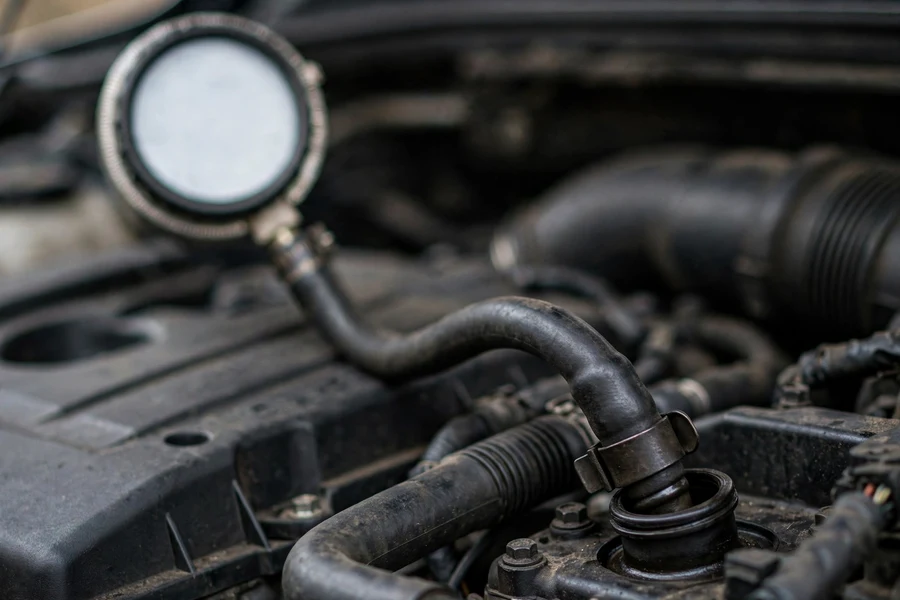
3. The crankcase vacuum gauge test (the definitive one)
BMW’s official crankcase ventilation test (service information bulletin B11 03 08) measures vacuum at the oil filler neck with a sensitive gauge. The published specs, in millibar at idle:
| Engine | Fitted to | Spec (mbar) |
|---|---|---|
| N52 | E90 325i / 328i / 330i (2006–2013) | 30 |
| N51 / N52K | SULEV variants | 33 |
| N20 / N26 | F30 328i (2012–2019) | 35 |
Readings may vary about ±10% (no more than 5.0 mbar) with the measuring tool, per the bulletin — but a failed diaphragm doesn’t produce borderline numbers. It typically reads several times the spec, which is why the cap test is so dramatic. A near-spec reading with a whistle points at a hose leak instead. The full bulletin is published through NHTSA’s TSB database (BMW SI B11 03 08 on crankcase ventilation testing); any BMW specialist can run it in under half an hour.
4. Smoke-test the intake (rules out look-alikes)
If the gauge reads near normal but you have lean codes or a whistle, a smoke machine finds what the gauge can’t: cracked intake boots, split breather hoses, or a leaking DISA seal admitting unmetered air. High-mileage cars can have a tired diaphragm and a cracked hose at once — and a new valve cover won’t fix the hose.
PCV failure versus valve cover gasket leak: don’t confuse them
Both faults live in the valve cover and both are common past 100,000 miles, but they are different failures with different symptoms and minimum fixes. A gasket-only reseal will not fix a PCV whistle, and a full cover bought for a weeping gasket is money spent twice if the diaphragm was fine.
| PCV (crankcase vent) valve failure | Valve cover gasket leak | |
|---|---|---|
| What failed | Rubber diaphragm inside the cover tore | Rubber gasket between cover and head hardened |
| Signature symptom | Whistle/squeal at idle, sucked-down oil cap | Oil seeping down the side of the engine, burning-oil smell |
| Oil on the ground? | No — oil is burned, not dripped | Yes, eventually — drips onto the exhaust and undertray |
| Codes | Lean codes P0171/P0174, high fuel trims | Usually none, until oil fouls something |
| Minimum fix | Whole valve cover (or diaphragm repair kit) | New gasket set (cover itself can be reused if straight) |
| Full cover fixes it? | Yes — the valve comes with the cover | Yes — and also renews the aging diaphragm as a bonus |
The overlap is real: a whole new cover cures both at once, which is why shops often recommend it when a high-mileage car has a weeping gasket plus early PCV symptoms. But diagnose first — a gasket set costs a fraction of a cover. The valve cover gasket leak guide covers the external-leak side, including seepage that can wait versus a leak that can’t. And the 3 Series oil leak guide maps the other usual suspects.
Your two repair options, honestly compared
Once the diagnosis is confirmed you have two paths. BMW only sanctions one; the other is a well-known owner workaround with real trade-offs.
| Full valve cover replacement | Diaphragm repair kit | |
|---|---|---|
| What it is | Complete new cover with integrated valve, gaskets, and bolts | Aftermarket diaphragm, spring, and cap fitted into your existing cover |
| BMW’s position | The official repair procedure | Not offered or approved by BMW |
| Parts cost | $350–$650 depending on brand and engine | $40–$80 |
| Labor | 3–5 hours (the cover has to come off either way) | About 1 hour once the cover is off — but most of the job is getting there |
| Also fixes | Aging gasket, warped or cracked cover, brittle vent outlets | Nothing else — the old gasket and cover stay |
| Risks | Low with a quality cover; cheap covers can whistle out of the box | Cap tabs break during removal; mixed owner-reported longevity; finicky seating |
| Best for | Cars over 100k miles, any gasket seepage, cracked covers, keep-the-car-forever owners | Low-budget fix on a younger cover with a confirmed torn diaphragm and a healthy gasket |
A note on the repair kits: they replace only the diaphragm assembly under the round cap, and getting the old glued cap off without breaking its tabs is genuinely fiddly — owners report breaking the cap and needing a cover anyway. Kits (referenced to BMW repair part number 11 12 7 552 281) exist from several aftermarket suppliers; owner-reported results range from multi-year fixes to repeat whistles within a year. If your cover already seeps at the gasket, the kit saves little: you’re paying most of the labor to remove the cover regardless.
Cover quality matters more here than on most parts: the valve inside is calibrated, and the cheapest no-name covers have a reputation for whistling straight out of the box. Genuine BMW is the safe but expensive choice; established OEM-equivalent brands are the usual middle ground. Whatever you buy, confirm it includes the gasket set and new bolts — the N52’s aluminum valve cover bolts are single-use.
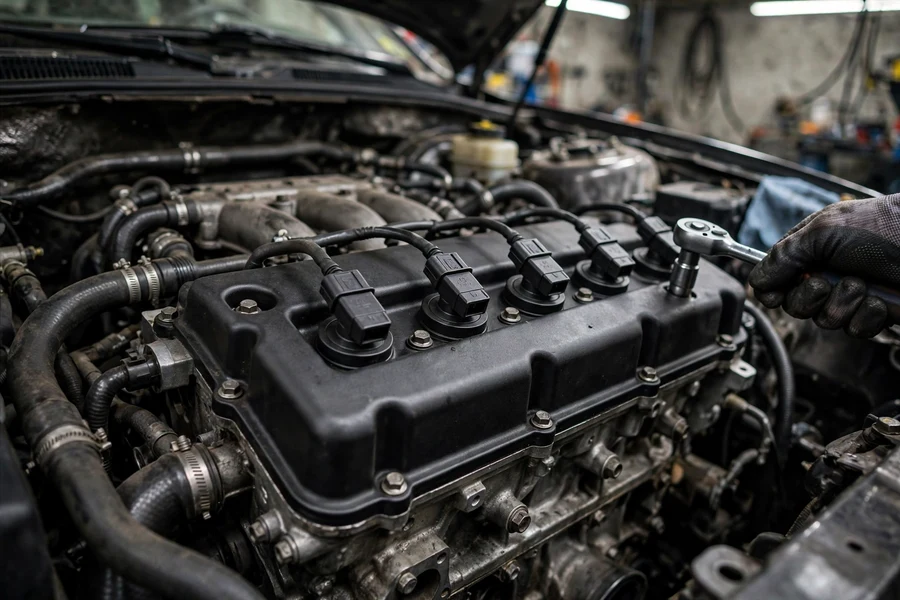
DIY: replacing the valve cover on the N52 (N20 differences noted)
Honest difficulty: intermediate. No single step is exotic, but it’s a long sequence of careful disassembly with brittle plastic everywhere, and mistakes (a cracked breather hose, a pinched gasket, a dropped bolt into the timing area) turn a Saturday job into a tow. If you’ve done coils, a thermostat, or similar mid-level work, this is within reach. If your biggest job so far is an oil change, pay a specialist.
Time and tools. Budget 4–6 hours the first time, less on a repeat. You need a torque wrench, E-Torx sockets (the cover bolts), trim tools, and patience. A scan tool that reads BMW codes helps for the before/after check — the OBD2 scanner guide covers which ones actually talk to these cars.
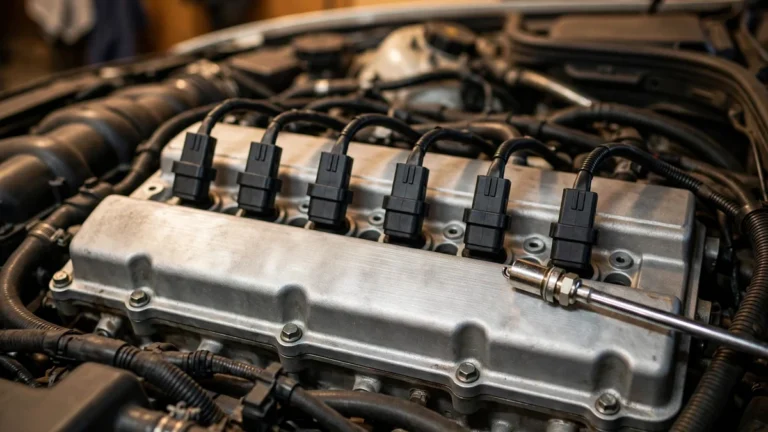
Disconnect the battery. Remove the cabin air filter housing and cowl trim — half the battle on the N52 is reaching the rear of the cover. Remove the engine cover, ignition coils (label them), and the crankcase breather hoses; expect brittle plastic connectors and have replacements on hand. Remove the Valvetronic actuator motor (it protrudes into the N52’s cover), then the ground straps and the cover bolts in the specified loosening sequence. Lift the cover straight up; if it resists, it’s stuck on the old gasket — never pry against the cylinder head sealing surface.
The F30’s N20 has no Valvetronic motor, but the high-pressure fuel pump and fuel lines live in the work zone — the fuel system must be depressurized first (no sparks, no smoking, rags for residual pressure) — and turbo inlet plumbing crowds the rear of the cover. Photograph the breather hose routing before disconnecting.
Do the jobs that are nearly free with access: spark plugs (coils are already out), the N52’s eccentric shaft sensor seal (a notorious leaker that needs the cover off anyway), and an inspection of every breather and vacuum hose you touched — replace anything brittle now. Clean the head sealing surface with a plastic scraper and solvent only. Fit new gaskets dry unless the maker specifies sealant at the half-moons, install new bolts, and torque in sequence to spec — uneven tightening is how new gaskets leak.
Reconnect everything, double-check the breather hoses are fully seated (a loose breather mimics the original fault), and start the engine. The whistle should be gone immediately and the cap test should show only slight resistance. Clear any lean codes and watch fuel trims over the next few drives — long-term trims should settle toward zero as the DME unlearns its compensation. Consider a short oil-change interval next service if the failed valve was passing oil mist; see the maintenance schedule guide.
What BMW PCV valve replacement costs
Costs below are owner- and specialist-reported bands for the full valve cover replacement (the real-world fix), not a standalone valve that doesn’t exist. Prices move with cover brand and local labor rates, but the shape of the numbers is consistent.
| Route | N52 (E90) | N20/N26 (F30) | Notes |
|---|---|---|---|
| DIY (quality aftermarket cover + gaskets + bolts) | $400–$650 | $400–$650 | Add $40–$80 for a diaphragm kit instead, but see the caveats above |
| Independent BMW specialist | $900–$1,500 | $900–$1,600 | 3–5 hours labor; one owner-reported shop quote landed at $1,472 |
| Dealer | $1,400–$2,000+ | $1,500–$2,100+ | Genuine BMW cover at full retail plus dealer labor rate |
The diaphragm kit changes DIY math to under $150 all-in — tempting, but the labor to reach the diaphragm is nearly the same as swapping the cover, so savings are parts-only. And if a shop quotes a suspiciously cheap $200–$300 “PCV valve replacement,” ask what part they’re actually replacing: on these engines there is no $50 valve, and that quote usually means a gasket-only reseal or a kit job sold as the full fix.
Keeping the new valve alive
The diaphragm fails from heat and age, which you can’t negotiate with — but you can avoid accelerating it. Sensible oil-change intervals matter more than BMW’s old 15,000-mile guidance suggests: clean oil keeps the ventilation passages and separator clear, so the diaphragm isn’t fighting sludge on top of heat cycles. Many specialists land around 7,500 miles. Don’t ignore an early whistle; a torn diaphragm left for a year keeps pulling oil mist into the intake, fouling the MAF sensor, intake valves, and eventually the catalytic converters — turning a valve cover job into a valve cover plus sensors job. And whenever you touch the intake or breathers, inspect the vent hoses: on a fifteen-year-old N52 they’re all living on borrowed time.
Frequently asked questions
Can I drive with a failed BMW PCV valve?
Short distances, yes — it won’t strand you. But don’t treat it as permanent: excess vacuum raises oil consumption, leans the mixture, and the extra oil mist fouls the intake tract, sensors, and catalytic converters over time. Weeks is fine; a year of commuting is how a $1,000 job becomes a $2,500 one.
Can I replace just the PCV valve on an N52 without the whole cover?
Not with a BMW part — BMW doesn’t sell the valve separately; its repair procedure is the complete valve cover. Aftermarket diaphragm kits (roughly $40–$80) exist and can work, but they’re fiddly, the old cap tabs break easily, and owner-reported longevity is mixed. On a high-mileage cover that’s also seeping, the full cover is the better value — you’re paying the same labor either way.
How do I know it’s the PCV valve and not the valve cover gasket?
The whistle and the oil-cap test decide it. A torn diaphragm whistles at idle and sucks the oil filler cap down hard; cracking the cap kills the whistle. A gasket leak shows external oil seepage down the side of the engine and a burning-oil smell, usually with no whistle and a normal cap test. A full new cover fixes both — but a gasket-only reseal won’t fix a PCV whistle.
What should crankcase vacuum read on my N52 or N20?
Per BMW service information B11 03 08 at idle: N52 about 30 mbar, N51/N52K about 33 mbar, N20/N26 about 35 mbar, with roughly ±10% tolerance. A failed diaphragm doesn’t read borderline — it typically reads several times the spec. Near-spec readings with a whistle point at a breather hose leak instead.
Will a failed PCV valve trigger a check engine light?
Often, but not always. The classic codes are P0171 and P0174 (system too lean, banks 1 and 2) as the DME adds fuel to compensate for the unmetered air, sometimes with mixture-adaptation or fuel-trim faults on a BMW-specific scan. Early diaphragm tears can whistle for weeks before the trims drift far enough to set a code, so the absence of a light doesn’t rule it out — the oil-cap test and a vacuum gauge reading are more sensitive than the check engine light.