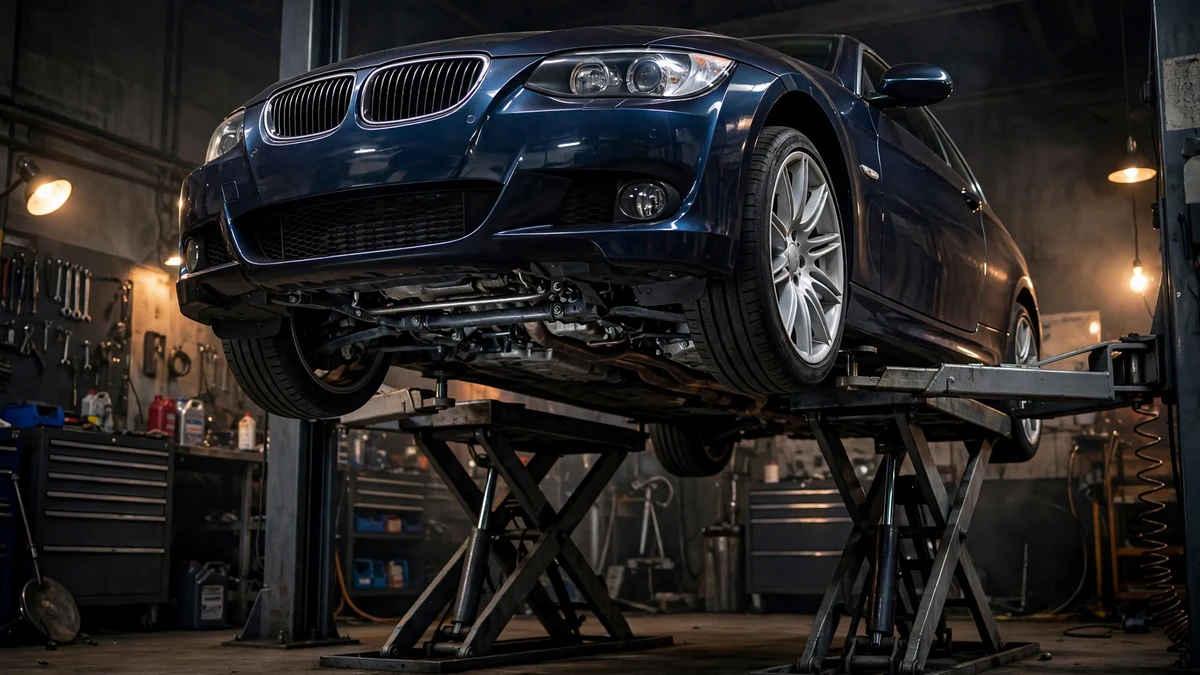
BMW Oil Pan Gasket Leak Costs Double on xDrive
BMW oil pan gasket leak — short answer:
A BMW oil pan gasket leak shows up as oil spots under the middle of the engine, a burning-oil smell on hot exhaust, and a slowly dropping electronic oil level. The gasket itself costs under $150 — the repair costs $1,200 to $3,000 because the front subframe must be lowered to reach the pan. On xDrive cars the job is roughly two hours harder, because the front axle passes through the oil pan and the front differential has to come out too.
The oil pan gasket is one of the cheapest parts on your BMW and one of the most expensive leaks to fix. That mismatch confuses a lot of owners: the gasket sells for $50 to $150, yet quotes come back at four figures. The part is not the problem — the access is. The pan sits directly above the front subframe, sandwiched between the engine and the suspension structure, so there is no way to pull it without lowering the entire subframe. On rear-wheel-drive cars that is an 8- to 10-hour book-time job. On xDrive cars, the front axle shaft passes right through the oil pan to reach the front differential, which adds axle and differential removal on top — roughly two more hours of labor.
This guide covers how to recognize a genuine oil pan gasket leak (it is one of the most misdiagnosed leaks on BMW inline-sixes), why the labor is so heavy, realistic cost bands for RWD vs xDrive and DIY vs shop vs dealer, what an honest DIY attempt involves, and what else to replace while the subframe is down. All figures are estimates based on reported book times and shop invoices — labor rates vary by market, and your quote may land above or below these bands.
Symptoms of a BMW oil pan gasket leak
Unlike the valve cover gasket, which drips from the top of the engine and is relatively obvious, an oil pan gasket leak starts low and stays low. Early on you may never see a drop — the leak often begins as a slow weep that darkens the bottom of the engine before it ever reaches the ground. Here are the symptoms, roughly in the order most owners notice them:
| Symptom | What it tells you | How urgent |
|---|---|---|
| Oil spots under the middle of the engine | The pan is at the lowest point of the engine, so a pan gasket leak drips straight down — typically between the front wheels, not toward the front bumper or rear of the car. | Monitor closely |
| Burning oil smell after driving, especially at stops | Oil weeping from the pan edge migrates onto hot exhaust components and vaporizes. The smell is the classic sign that seepage has progressed beyond a harmless weep. | Inspect soon |
| Oil level dropping between services | BMW 3 Series models from the E90 onward have no dipstick — you check via the electronic level sensor. Needing a quart added between changes points to an active leak (or oil consumption, which is a separate issue). | Top off and track the rate |
| Wet, grimy oil pan visible from below | The pan’s lower half and the area around the gasket seam look damp and attract road grime. Compare with the dry upper engine — the contrast points to the source height. | Confirm with a clean inspection |
| Oil spots on the driveway after a hot soak | Leaks get worse with hot, thin oil. If the ground is clean in the morning but spots appear after a drive, the gasket is weeping under operating temperature and pressure. | Schedule the repair |
One caveat: BMW’s underbody panels are good at catching early drips, so the absence of ground spots does not prove the gasket is healthy. Owners of high-mileage cars frequently discover the pan is wet long before anything reaches the garage floor. If you only ever look at the ground, you can miss a developing leak for a year or more.
Timing-wise, the oil pan gasket is a late-life failure on BMW inline-sixes (N52, N54, N55, B58). It commonly weeps at high mileage, and many owners report the original gasket surviving well past 150,000 miles. When a leak appears earlier, the oil filter housing gasket and valve cover gasket are far more likely culprits — both fail earlier and their leaks run downward, pooling at the pan and masquerading as a pan gasket failure. Diagnosing the real source before committing to a subframe drop is the single most important step in this whole process.
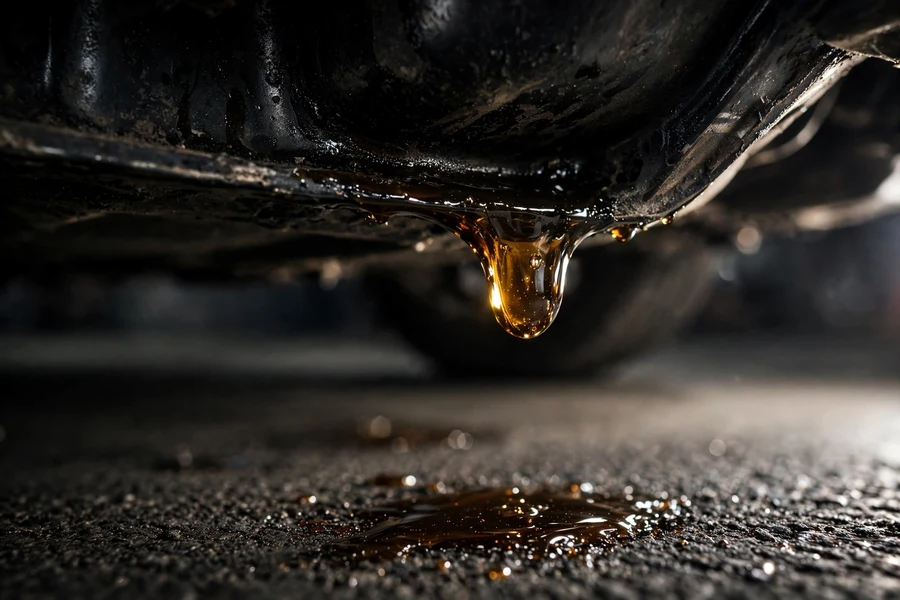
Confirm it is actually the oil pan gasket before you pay for a subframe drop
Shops see a wet oil pan and quote a pan gasket job more often than the data justifies. Because the oil filter housing gasket sits directly above the pan and the valve cover gasket sits above that, oil from either failure travels down the side of the engine and collects along the pan seam. From below, all three leaks can look identical. Before authorizing a job that costs ten times what an oil filter housing gasket costs, insist on a proper diagnosis:
- Clean first, then look. Have the underside of the engine degreased (or do it yourself with the car raised safely — see our guide to jacking up a BMW 3 Series safely), drive a few days, and re-inspect. Fresh oil traces will show you exactly where the leak starts, instead of a year’s worth of grime pointing everywhere at once.
- UV dye is the tiebreaker. A small bottle of UV dye in the oil plus a UV flashlight makes the fresh leak glow brightly even in a filthy engine bay. If the glowing trail starts at the oil filter housing, that is a $150-to-$450 repair, not a subframe-drop repair.
- Check the height of the highest wet point. Oil only flows downhill. If the engine is wet at the filter housing and dry everywhere below it until the pan, the pan gasket is innocent. A genuine pan gasket leak has its highest wet point at the pan-to-block seam itself.
- Check the oil pan bolts. BMW oil pan bolts are single-use torque-to-yield bolts, but they can loosen over years of heat cycling on some engines. A careful re-torque to the factory procedure sometimes slows a weep — though this is a diagnostic step, not a permanent fix.
Getting this wrong is the most expensive mistake in the article: paying for a full pan gasket reseal only to have oil reappear because the real source was the filter housing all along. If a shop quotes the pan gasket without cleaning or dye-testing first, that is worth a second opinion.
Why the job is so labor-heavy: the subframe-drop reality
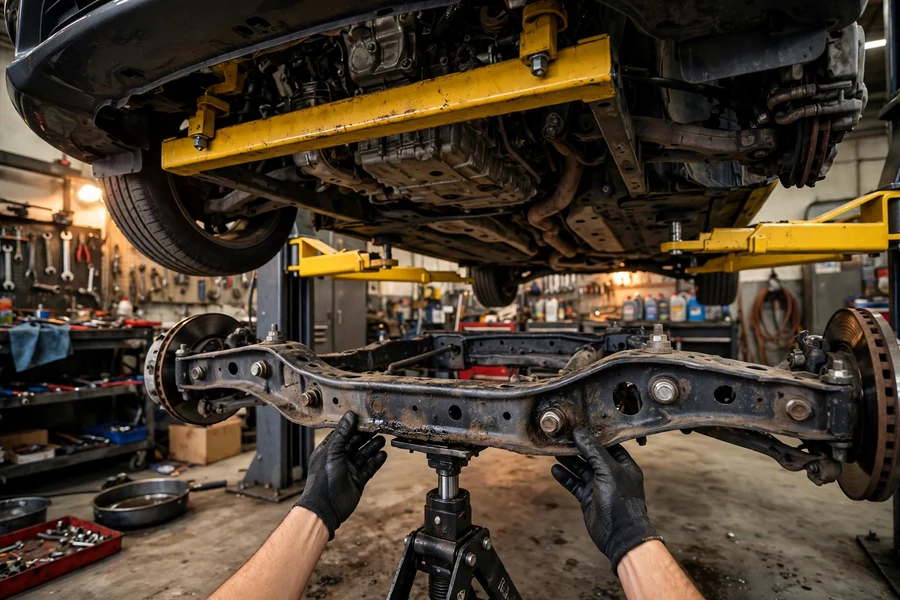
The oil pan is bolted to the bottom of the engine, and the front subframe — the large steel structure that carries the steering rack, control arms, and engine mounts — sits directly underneath it. There is no clearance to remove the pan’s two dozen or so bolts with the subframe in place, let alone drop the pan itself. The only way in is to separate the subframe from the car. That is a structural job, not a “while you wait” service:
- The engine must be held from above. The engine mounts bolt to the subframe, so before the subframe can be lowered, the engine is suspended with an engine support bar (or a hoist) spanning the engine bay. If the engine is not supported correctly, it shifts and damages mounts, hoses, or wiring.
- The steering comes down with it. The steering rack is mounted to the subframe, so the subframe drop means disconnecting the steering column, tie rod ends, and on many cars the power steering lines. Every one of these connections must be reassembled precisely.
- Subframe bolts are one-time-use. BMW specifies new subframe bolts and new torque-to-yield oil pan bolts with the job — follow the factory torque procedure rather than reusing stretched hardware.
- Alignment is mandatory afterward. Lowering the subframe disturbs the front suspension geometry. A four-wheel alignment after reassembly is part of the real cost, not an upsell.
All of that adds up to roughly 8 to 10 hours of book time on a rear-wheel-drive car — and that is before xDrive enters the picture.
RWD vs xDrive: what changes
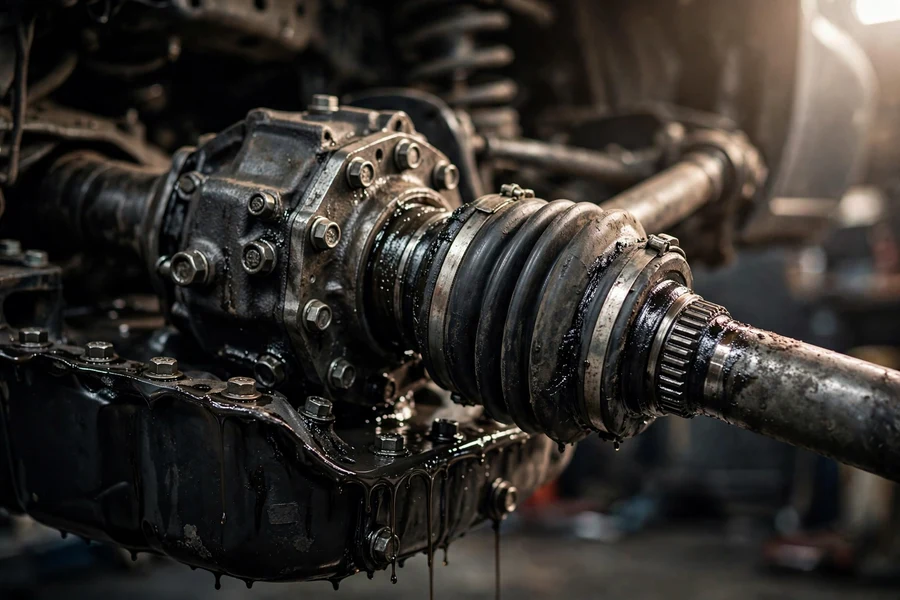
On xDrive cars, BMW routed the right front axle shaft straight through the oil pan to reach the front differential, which bolts to the side of the pan itself. That packaging choice means the oil pan is threaded through the all-wheel-drive hardware. To free the pan, the technician must additionally remove the front axle shafts, disconnect the front driveshaft at the transfer case, and unbolt and lower the front differential. Owners and technicians consistently report this adding roughly two hours of labor compared with RWD.
| Step | RWD | xDrive |
|---|---|---|
| Support engine from above | Required | Required |
| Lower front subframe | Required | Required |
| Disconnect steering rack / column | Required | Required |
| Remove front axle shafts | Not needed | Required — right axle passes through the pan |
| Remove front differential | Not present | Required — bolts to the oil pan |
| Disconnect transfer case front driveshaft | Not present | Required |
| Replace axle seals and O-rings | Not applicable | Strongly recommended while apart |
| Typical book time | 8–10 hours | 10–12 hours |
The xDrive hardware also adds parts: axle seals and differential O-rings should be replaced while everything is apart, since reassembling worn seals on a freshly sealed pan is false economy. That is one more reason xDrive quotes run higher than RWD quotes for the same gasket.
BMW oil pan gasket replacement cost
The part is cheap; the hours are not. With book times of 8–10 hours (RWD) and 10–12 hours (xDrive), labor is 85–90% of every quote. The bands below are estimates compiled from reported book times and typical shop rates — independent shop rates commonly run $120–$180/hour and dealer rates $190–$260/hour, varying by market. Your actual quote depends on your region, your engine, and the condition of the hardware underneath.
| Who does it | RWD (8–10 hr) | xDrive (10–12 hr) | Notes |
|---|---|---|---|
| DIY | $150–$350 | $200–$450 | Parts only: gasket, new bolts, oil and filter; plus axle seals on xDrive |
| Independent BMW shop | $1,200–$1,800 | $1,600–$2,300 | The typical sweet spot — the right tooling at a sane rate |
| BMW dealer | $1,800–$2,500 | $2,400–$3,100 | Highest rates; OEM parts and factory procedure guaranteed |
Figures are parts-plus-labor totals and include fresh oil and a post-job alignment. If a quote comes in far below these bands, ask what is being skipped — reused torque-to-yield bolts or a skipped alignment are the usual shortcuts.
Where the money actually goes: parts vs labor
Breaking a typical independent-shop quote down shows why the gasket’s price is almost irrelevant. All part prices below are estimates — OEM parts cost more than aftermarket, and markets vary.
| Line item | Estimated cost | Share of a $1,500 RWD quote |
|---|---|---|
| Oil pan gasket | $50–$150 | ~5% |
| New oil pan bolt kit (single-use) | $20–$60 | ~3% |
| New subframe bolts | $30–$80 | ~4% |
| Engine oil and filter | $60–$120 | ~6% |
| Axle seals and O-rings | $20–$50 | xDrive only, ~2% |
| Four-wheel alignment | $120–$200 | ~10% |
| Labor (8–12 hours) | $1,000–$2,200 | ~70–85% |
That breakdown is also your checklist for reading any quote. A proper estimate should show new pan bolts, new subframe hardware, oil and filter, and an alignment as separate lines or explicitly included — not silently absorbed. If those lines are missing, the shop is either reusing single-use bolts (a real safety and reliability concern on a structural joint) or planning to add the alignment as a surprise at pickup. The healthiest sign on a quote is specificity: “new torque-to-yield pan bolt set” beats “hardware” every time.
Oil pan gasket cost estimator
Pick your drivetrain and who does the work for an estimated cost band and labor-hour context. Estimates only — actual quotes vary by market and vehicle condition.
Book-time context (hours billed, same for every provider):
Can you do it yourself? An honest difficulty assessment
This is not a beginner job, and it is barely an intermediate one. It is a full-weekend project for an experienced home mechanic with the right equipment. The gasket swap itself is trivial — clean the mating surface, lay the new gasket, bolt the pan back up. Everything around it is what makes this one of the hardest common jobs on a BMW 3 Series:
- You need serious lifting equipment. A two-post lift is ideal. On jack stands, the job is possible but miserable: you need the car high enough to lower the subframe on a transmission jack while the engine hangs from a support bar. Cheap stands and a wobbly floor jack under a suspended engine is how people get hurt.
- The engine support bar is non-negotiable. The engine hangs from the bar while the subframe is out. Rent or buy a proper support bar — chaining the engine to a garage beam or improvising with lumber is not a plan.
- One-time-use bolts everywhere. The oil pan bolts are torque-to-yield and must be replaced; BMW’s procedure calls for new subframe bolts too. Reusing stretched bolts is a genuine risk of the pan or subframe coming loose later. Budget the bolt kits into your parts list, not as an afterthought.
- Plan for a full weekend, not a Saturday. A first-timer should budget 12 to 20 hours across two days, including cleaning, fighting one stuck bolt, and the inevitable parts run. Shops do it in 8–10 because they have done it a hundred times.
- Alignment afterward. Factor in the cost of a four-wheel alignment once the subframe is back up — even a careful reassembly shifts geometry.
What can go wrong
- Stripped subframe bolt threads. The subframe bolts thread into the unibody, and corroded threads can strip on removal — especially on cars that have seen road salt. Repairing that means a thread insert (helicoil) or worse, and it is the most common reason a DIY job balloons into a tow-truck situation.
- Engine shift damage. If the support bar slips or the engine is not properly secured, the engine can shift and tear motor mounts, hoses, or wiring harness connectors. Check the engine’s position constantly while the subframe is out.
- Steering column clock spring damage. The steering column must be disconnected from the rack; if the steering wheel spins freely while disconnected, the clock spring inside can snap — killing the airbag, horn, and steering-wheel controls. Lock the wheel or mark and secure it.
- Damaged axle seals on xDrive. Pulling axles without the right technique tears the seals you were supposed to replace, and a torn CV boot goes unnoticed until it throws grease everywhere. Order the seals before you start.
- Oil pan mating surface contamination. Any old gasket material, RTV residue, or oil film left on the sealing surfaces guarantees a repeat leak. The surface prep is slow, fiddly work — rushing it wastes the entire weekend.
Our honest take: if you have done suspension work, own a support bar and a transmission jack, and have a full weekend free, the RWD version is achievable. For xDrive, or if any of that equipment is missing, an independent BMW specialist is the better value — the two extra hours of their labor cost less than the tools you would need to buy.
While you are in there: parts worth replacing
With the subframe down and the pan off, labor access you will never get this cheaply again is sitting right in front of you. The table below lists the items worth considering, in order of how strongly the trade-off favors doing them now:
| Item | Why now | Applies to |
|---|---|---|
| Engine mounts | They bolt between the engine and the subframe — fully exposed with the subframe lowered. Worn mounts cause vibration and clunks that owners often chase for months. | All |
| Water pump and thermostat | Only if they are due by age or mileage. The electric water pump is a known failure item, and access is far easier with the subframe out of the way. | High-mileage cars |
| Front axle seals and O-rings | They are disturbed during xDrive disassembly. New seals now prevent a differential fluid leak later that would require repeating half this job. | xDrive only |
| Oil level sensor seal | The sensor lives in the oil pan. Its seal hardens with heat and age, and replacing it costs almost nothing while the pan is already off. | All |
| Fresh oil and filter | The oil has to be drained anyway. Refilling with fresh oil and a new filter is effectively free maintenance. | All |
| Control arm bushings (inspect) | The control arms are right there. Inspect the bushings for cracking — if they are worn, this is the cheapest labor you will ever get for replacing them. | Inspect; replace if worn |
Do not let the “while you’re in there” list turn into scope creep: every item above is cheap in parts and nearly free in labor at this moment. Anything beyond it — suspension overhauls, steering racks — is a separate job with its own quote, even if the subframe happens to be down.
BMW oil pan gasket leak FAQ
How do I know it is the oil pan gasket and not the valve cover or oil filter housing gasket?
Check the highest point of wetness on the engine. Oil flows downhill, so if the engine is wet at the oil filter housing or valve cover and the pan seam is only wet below that, the pan gasket is innocent. A genuine oil pan gasket leak has its highest wet point at the seam between the pan and the engine block. When in doubt, clean the engine, add UV dye to the oil, drive for a few days, and inspect with a UV light — the glowing trail will start exactly where the leak begins. This diagnosis matters because a misdiagnosed filter housing leak costs a tenth of a pan gasket job to fix.
Can I drive with an oil pan gasket leak?
A slow weep is not an emergency, but it is a maintenance item with a clock on it. Keep the oil level topped up — check it weekly via the electronic level sensor, since there is no dipstick — and watch for the burning-oil smell that means oil is reaching the exhaust. That smell is your signal to stop driving it casually: oil on hot exhaust components can smoke heavily, and a leak that suddenly worsens can drop the level faster than you expect. There is no sealant-in-a-bottle fix worth using on this gasket; plan the repair and do not let it become a “top off the oil forever” habit.
How long does an oil pan gasket replacement take?
Book time is roughly 8–10 hours on a rear-wheel-drive car and 10–12 hours on xDrive. That is professional time with a lift and the right tools — a first-time DIYer should expect 12–20 hours across a weekend. The gasket itself takes minutes to replace; the hours are all in supporting the engine, lowering the subframe, disconnecting the steering, removing the xDrive hardware if present, cleaning the sealing surfaces, and reassembling everything with new one-time-use bolts.
Why is xDrive so much more expensive for this job?
On xDrive cars the right front axle shaft passes directly through the oil pan to reach the front differential, which is bolted to the pan. The technician must remove both front axle shafts, disconnect the front driveshaft at the transfer case, and unbolt the differential before the pan can move. That adds about two hours of labor plus axle seals and O-rings that should be replaced while apart. The result: xDrive quotes typically run $400–$600 higher than RWD at an independent shop.
Should I replace the oil pan itself or just the gasket?
Just the gasket, in the vast majority of cases. The pan itself only needs replacing if it is cracked, corroded through, or has damaged threads or a warped sealing flange — which usually traces back to impact damage or a botched previous repair. If a shop recommends a new pan on a car with no impact history, ask them to show you the damage. A new pan adds a few hundred dollars in parts to a job that is already labor-heavy, so it should never be a default upsell.
For the bigger picture on keeping an aging 3 Series healthy, our BMW 3 Series complete guide covers the maintenance timeline these cars actually need. An oil pan gasket leak is a rite of passage for high-mileage BMWs — expensive because of access, straightforward once you are in, and a perfect excuse to handle the wear items hiding around it.