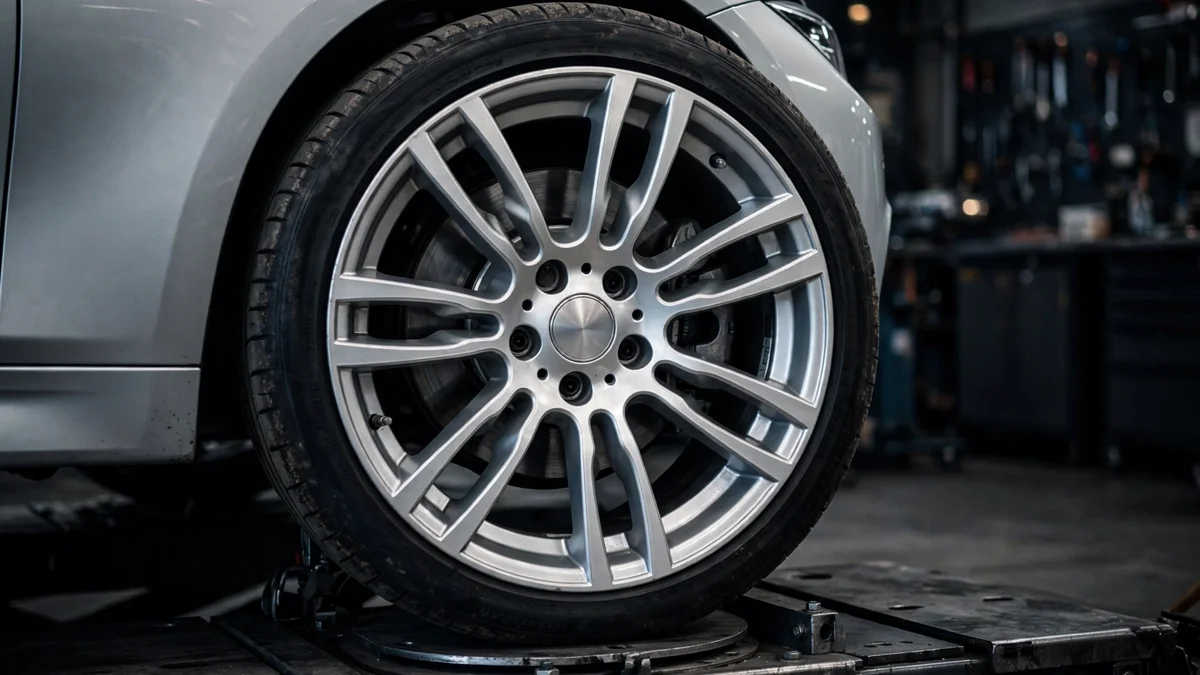
5 BMW Tire Wear Patterns That Scream Bad Alignment
BMW wheel alignment specs look intimidating on a shop printout — degrees, minutes, toe difference angles — but they boil down to three angles and one fact: your 3 Series comes from the factory with aggressive rear camber that eats inner tire edges on purpose. That negative camber is deliberate for cornering grip, yet when toe drifts out of range it turns into premature tire destruction. This guide explains camber, toe and caster in plain terms, lists factory BMW wheel alignment specs for the E46, E90, F30 and G20, walks through the five tire wear patterns that point at alignment problems, and covers when to pay for an alignment and what it should cost.
Below you will find the three angles explained, the factory spec ranges by generation in one table, the five wear patterns with causes, an interactive wear-pattern diagnoser, the honest rules on when an alignment is actually needed, 2026 cost bands, and what to check before you pay a shop. If you are still deciding on rubber, pair this with our run-flat versus regular tire guide, and if you are tire shopping used, the used 3 Series buying guide tells you how to read a worn tire as part of a pre-purchase inspection.
The short answer
BMW wheel alignment specs center on three angles: toe (wheels pointing in or out), camber (wheels leaning in or out at the top), and caster (steering-axis tilt). Factory targets run roughly 0°14′ total front toe and about −0.5° front camber, with roughly −1.5° rear camber and 0°18′ total rear toe — the rear camber is deliberate for handling. The five tire wear patterns that reveal alignment trouble are inner-edge wear (negative camber plus toe-out), feathering (toe misalignment), cupping or scalloping (worn shocks or imbalance), one-sided camber wear (camber out of range), and rapid toe scrub (excessive toe-in or toe-out). Get an alignment after any suspension work, a hard pothole or curb hit, new tires, or when you see uneven wear — expect roughly $100–$150 at an independent shop or $170–$300 at a dealer, and always ask for the before-and-after printout.
In this guide
- Camber, toe and caster: what each angle does to your tires
- Factory BMW wheel alignment specs by generation
- 5 tire wear patterns that scream bad alignment
- Interactive: diagnose your wear pattern
- When your 3 Series actually needs an alignment
- What a BMW alignment costs in 2026
- Dealer vs independent: who should align a BMW
- What to check before you pay for an alignment
- Frequently asked questions
Camber, toe and caster: what each angle does to your tires
Wheel alignment is simply the three angles at which each wheel meets the road. Understanding them takes five minutes, and it is the difference between nodding along at the alignment rack and knowing whether the numbers on the printout actually explain your worn tires.
Toe is whether the front of the wheels point toward each other (toe-in) or away from each other (toe-out), viewed from above. A tiny amount of toe-in is normal — it keeps the car tracking straight as the wheels pull themselves forward. Toe is the fastest tire killer of the three angles: even a fraction of a degree of toe misalignment scrubs rubber sideways on every rotation, and it produces the classic feathered, sawtooth tread blocks you can feel by running your hand across the tread.
Camber is the lean of the wheel viewed from the front: top tilted inward is negative camber, outward is positive. Every 3 Series since the E46 runs noticeable negative camber at the rear — roughly −1.5 degrees — because a leaning tire keeps more contact patch on the road when the car rolls in a corner. The price: the inner edge always works harder, so some inner-edge wear on BMW rear tires is the design working as intended. Camber becomes a problem past the factory window: too much negative and the inner edge wears fast; positive camber (from sagging springs or bent parts) wears the outer edge.
Caster is the tilt of the steering axis viewed from the side — the angle that makes your steering wheel self-center after a turn. It does not wear tires directly, but it controls steering feel and straight-line stability. On a 3 Series, caster is not adjustable from the factory; it is baked into the strut and control-arm geometry. If a caster reading is out of spec, something is bent or a bushing has collapsed — you do not fix it with an alignment, you fix it by replacing the damaged part.
| Angle | What it is | What it does to tires when wrong | Adjustable on a stock 3 Series? |
|---|---|---|---|
| Toe | Wheels angled in/out from above | Feathering, rapid scrub wear on one or both edges | Yes — front via tie rods, rear via eccentric bolts |
| Camber | Wheel lean viewed from the front | One-sided edge wear (inner for negative, outer for positive) | Rear: yes, via eccentric bolts. Front: barely — strut hardware only, effectively fixed on most cars |
| Caster | Steering-axis tilt viewed from the side | No direct wear; causes pulling and unstable steering | No — set by suspension geometry; out-of-spec means bent or worn parts |
One BMW-specific quirk worth knowing before you read your printout: BMW specifies alignment with the car loaded to normal operating weight — full tank plus ballast in the seats and trunk to simulate a driver and passengers. Ride height changes camber and toe, so an alignment on an empty car reads differently. Many independent shops skip the ballasting, which is the most common reason a car comes off the rack “in spec” but wears tires anyway. Ask whether the shop follows BMW’s loaded test conditions.

Factory BMW wheel alignment specs by generation
BMW publishes alignment data per chassis code in its technical documentation, and the values below are typical factory ranges for stock ride height and standard suspension. Treat them as reference ranges: exact targets vary by model, engine, suspension package, and xDrive, so verify the spec set for your VIN before a shop sets anything. E46 and E90 values come from BMW technical documentation; F30 and G20 values are the typical factory target ranges seen on dealer printouts. Degrees and minutes (°’) is BMW’s format — 0°14′ is fourteen minutes, roughly 0.23 degrees.
| Generation | Front total toe | Front camber | Rear total toe | Rear camber | Front caster |
|---|---|---|---|---|---|
| E46 (1999–2006) | 0°14′ ± 8′ | −43′ ± 20′ | 0°16′ ± 6′ | −2°04′ ± 15′ | 5°36’–5°47′ (not adjustable) |
| E90 (2006–2011) | 0°14′ ± 12′ | −18′ ± 30′ | 0°18′ ± 12′ | −1°30′ ± 25′ | Measured only, not adjustable |
| F30 (2012–2018) | ~0°14′ ± 12′ | ~−30′ ± 30′ | ~0°18′ ± 12′ | ~−1°30′ to −1°50′ | Measured only, not adjustable |
| G20 (2019+) | ~0°14′ ± 12′ | ~−30′ ± 30′ | ~0°18′ ± 12′ | ~−1°30′ ± 25′ | Measured only, not adjustable |
Two things jump out. First, rear camber is always far more aggressive than front camber — the BMW handling signature, and why 3 Series rear tires wear their inner edges fastest. Second, front camber is essentially non-adjustable on a stock car; the tolerance exists because the shop measures it, not because the technician can change it. If your front camber is out of range, the cause is ride height (sagging springs), a bent strut or knuckle, or collapsed bushings.
Also note the toe tolerance language on a real printout: BMW gives both a measurement tolerance and a narrower adjustment tolerance, precisely because measuring angles to the minute is noisy work. A good shop aims for the middle of the window, not just anywhere inside it. And the left/right difference limits matter as much as the absolute numbers — camber differing more than 30 minutes side-to-side will make the car pull even when both sides are technically “in spec.”
5 tire wear patterns that scream bad alignment
Your tires keep a diary. Each of these five patterns has a signature look, a most-likely cause, and a clear next step. Read the wear first, then decide whether you need an alignment, a suspension part, or simply new tires.
1. Inner-edge wear: the BMW classic
What it looks like: the innermost inch or two of tread is worn smooth or down to the wear bars while the rest of the tread still has usable depth — most often on the rear tires.
The cause: negative camber combined with toe-out. Some inner-edge wear is normal on a 3 Series because of that deliberate ~−1.5° rear camber, but rapid or severe inner-edge wear means the rear toe has drifted out — even a few minutes of toe-out multiplies the scrubbing the camber was already causing. Worn rear suspension bushings and sagging springs are the usual mechanical reasons camber and toe move beyond the factory window.
Next step: alignment check with attention to rear toe, plus a bushing inspection. This is the number-one tire killer on BMWs, and it is entirely preventable with regular alignments.
2. Feathering: the toe signature
What it looks like: tread blocks develop a sawtooth texture — run your palm across the tread one way and it feels smooth, the other way it feels sharp. Most common on the front tires.
The cause: toe misalignment, period. When the wheels point slightly in or out instead of straight ahead, every rotation drags the tread sideways across the pavement. Toe feathering destroys tires faster than almost any other pattern, and it is often accompanied by a steering wheel that sits off-center or a vague, wandering feel at highway speed.
Next step: a four-wheel alignment. Feathering is the single most alignment-specific pattern there is — if you see it, the toe is wrong.
3. Cupping or scalloping: the suspension cry for help
What it looks like: scooped-out dips or a wavy scalloped pattern around the circumference of the tread, often with a droning road noise that sounds like a bad wheel bearing.
The cause: the tire is bouncing instead of rolling smoothly — worn shocks or struts, an unbalanced wheel, a bent rim, or loose ball joints. An alignment does not cause cupping and does not fix it; it is a damping and balance problem. Cupped tires are famously misdiagnosed as wheel-bearing failures because of the noise.
Next step: inspect shocks/struts and wheel balance, check for bent rims, and only align after the mechanical fault is fixed — aligning first wastes the money.
4. One-sided camber wear: the lean problem
What it looks like: one shoulder of the tread — inner or outer — wears smoothly and evenly while the rest looks fine. Unlike feathering there is no sawtooth texture; it is a clean, tilted wear.
The cause: camber outside the factory window. Inner-shoulder wear means too much negative camber — common on lowered cars, where dropping ride height adds negative camber the factory adjustment cannot remove. Outer-shoulder wear means positive camber, which on a stock 3 Series almost always traces to sagging springs, a bent strut, or collapsed control-arm bushings. Remember: front camber is barely adjustable, so the fix here is parts, not a toe-and-go alignment.
Next step: measure ride height against stock, inspect springs and bushings, and fix the mechanical cause before or alongside the alignment.
5. Rapid toe scrub: both edges going at once
What it looks like: both inner and outer shoulders wear faster than the center, but unlike underinflation wear (which looks the same), the tread feels rough and scrubbed, and tread life collapses in a few thousand miles.
The cause: excessive total toe — in or out — forcing the tires to fight each other down the road. Underinflation also wears both shoulders, so always check pressures first (the door jamb sticker, not the tire sidewall, gives the right number). If pressures are correct and both shoulders are scrubbing, the total toe is far outside the window.
Next step: check tire pressure first, then get a four-wheel alignment. Before you panic about alignment, also reset your TPMS baseline afterward — our BMW TPMS reset guide covers the procedure.
Interactive: diagnose your wear pattern
Pick the wear pattern you see and which axle it is on. The diagnoser gives the most likely cause, the BMW-specific context, and what to do about it.
Tire wear pattern diagnoser
When your 3 Series actually needs an alignment
BMWs do not need alignments on a fixed mileage schedule — they need one after events. The triggers that genuinely warrant the money:
- After any suspension or steering work. Tie rods, control arms, bushings, struts, springs — anything that unbolts from the geometry changes it. A shop that replaces these parts without an alignment has not finished the job. Our control-arm bushing guide covers the most common alignment-shifting repair on these cars.
- After a hard pothole, curb strike, or accident. One solid impact can bend a control arm or knock toe out in a single corner. If the steering wheel is suddenly off-center after an impact, that is your sign.
- With every new set of tires. The highest-value alignment you will ever buy. Mounting fresh rubber on misaligned geometry just restarts the uneven-wear clock — and on a BMW, rear toe drift will chew the inner edges of new tires before you notice.
- When you see uneven wear. Any of the five patterns above is a direct instruction, not a suggestion.
- When the car pulls, wanders, or the wheel sits crooked. A pull on a flat road, a steering wheel that is not centered driving straight, or nervous wandering at highway speed all point at toe or thrust-angle problems.
- After lowering or fitting different wheels. Lowering adds negative camber a stock alignment cannot fully correct; new wheel offsets change scrub radius and can alter how the car tracks. See our 3 Series wheel fitment guide before changing sizes.
What does not require an alignment: a tire rotation, a brake job (pads and rotors do not touch the geometry), or a TPMS warning. And note that BMW’s Ultimate Care free maintenance does not cover alignments — they are classified as wear-and-tear adjustments, so budget for them out of pocket.
What a BMW alignment costs in 2026
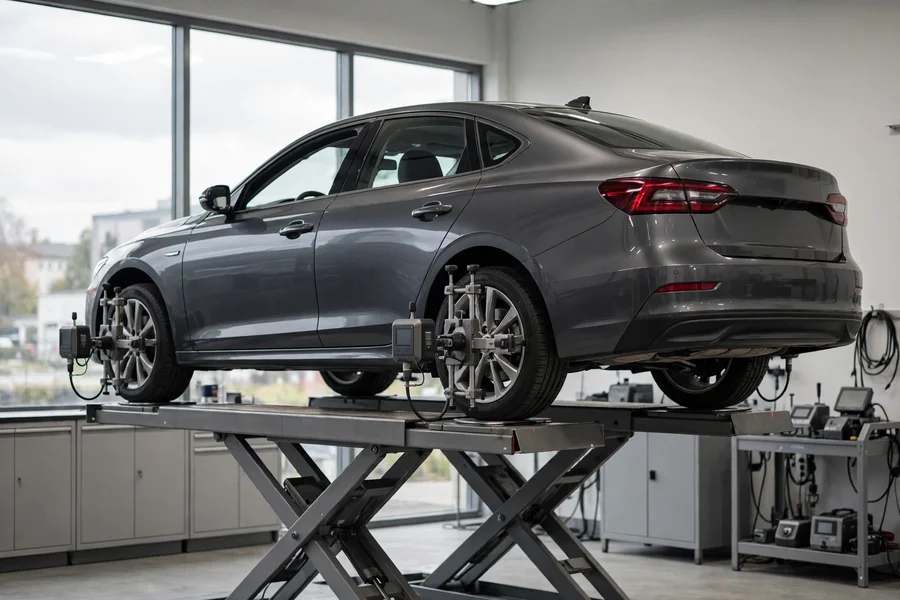
Alignment pricing varies by region; the bands below reflect what independent shops, BMW specialists, and dealers actually charge in the US market — approximate planning figures, not quotes, since labor rates differ by city. A proper BMW alignment is always a four-wheel alignment; a “front-end only” alignment leaves the rear geometry — where most BMW tire wear happens — untouched.
| Service | Typical cost band | Notes |
|---|---|---|
| Front-end alignment only (independent) | $80–$120 | Toe set at the front axle; misses rear toe, the main BMW wear driver — poor value on a 3 Series |
| Four-wheel alignment (independent shop) | $100–$150 | The sensible default if the shop has a modern machine and BMW experience |
| Four-wheel alignment (BMW specialist) | $150–$200 | Worth it for loaded test conditions and model-specific spec sets |
| Four-wheel alignment (BMW dealer) | $170–$300+ | Correct specs, weights and procedures; highest price, sometimes with coupons |
| Lifetime alignment plan (chain shops) | $170–$220 one-time | Re-aligns as often as you like; quality depends entirely on the technician |
| Camber plates / adjustable arms (parts + install) | $300–$800+ | Only needed for lowered cars or when factory adjustment is maxed out |
Whatever you pay, the alignment should include a before-and-after printout of every angle at all four corners: it proves what was wrong, what changed, and what stays unadjustable. A shop that will not show you the numbers has not earned your money. And on high-mileage cars, seized rear eccentric bolts can turn a simple alignment into a bolt-replacement job — a legitimate extra charge, not a scam.
Dealer vs independent: who should align a BMW
The honest answer is that the technician matters more than the sign over the door. A modern alignment machine is only as good as the person interpreting it — and on a BMW, interpretation means knowing the loaded test conditions, the correct spec set for your exact model and suspension package, and that front camber is essentially a measurement, not an adjustment.
Dealers get two things right by default: they follow BMW’s procedure (full tank, ballast weights, correct VIN-specific spec set) and their technicians align BMWs all day. The counterpoint from the owner community is real — some dealer alignments still come back with crooked steering wheels, and the premium is steep. An independent shop with a modern machine and genuine BMW experience can match dealer quality at half the price; the risk is the shop that “sets the toe and lets it go” without checking the rear axle or loading the car.
The questions that separate good shops from bad ones, dealer or not: Do you weight the car to BMW’s test conditions? Do you use the VIN-specific spec set, not a generic 3 Series sheet? Will I get a before-and-after printout? A shop that answers all three confidently is a safe bet at any price. One that waves them off is not.
What to check before you pay for an alignment
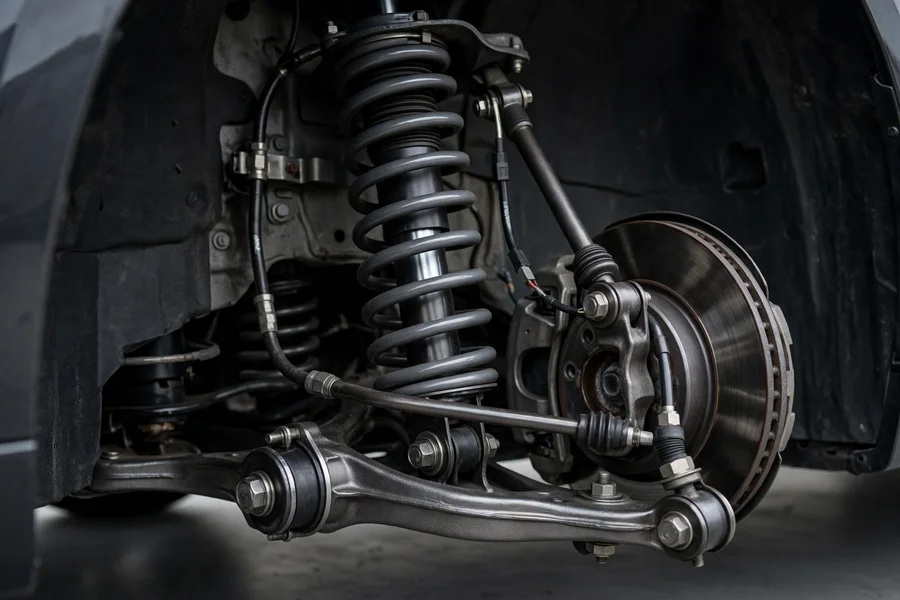
An alignment sets angles — it cannot fix worn hardware. Aligning a car with shot bushings buys geometry that changes the first time you hit a bump. Before the rack, check these:
- Tire pressure. Wrong pressure mimics alignment wear — both-shoulder wear from underinflation, center wear from overinflation. Set pressures to the door-jamb sticker (cold) before any diagnosis. Our TPMS reset guide explains why BMW’s pressure monitoring makes this step non-optional.
- Control arms and bushings. The thrust-arm and control-arm bushings are the most common wear items that move alignment angles on high-mileage 3 Series. Cracked, leaking, or visibly shifted bushings must be replaced first — see the control-arm bushing guide.
- Tie-rod ends. Any play here makes toe a moving target. A good shop checks this during the alignment; a bad one aligns around it.
- Shocks and struts. Cupped or scalloped tires point here, not at the alignment rack. Worn dampers also change ride height, which changes camber and toe readings.
- Ride height. Sagging springs drop the car, add negative camber, and shift toe. Compare your car’s stance to stock before assuming the alignment is at fault — especially on cars over 100,000 miles.
- Bent wheels. A pothole-bent rim causes vibration and uneven wear that no alignment fixes. Rule it out on a balancer.
The practical rule: fix the mechanical cause, then align. In that order, always. And once the alignment is done, keep it honest with regular tire rotations — the 3 Series maintenance schedule includes the rotation intervals that keep wear even between alignments.
Frequently asked questions
Alignment spec ranges are typical factory values for stock ride height and standard suspension; E46 and E90 figures come from BMW technical documentation, while F30 and G20 figures are typical factory target ranges seen on dealer printouts — always verify the spec set for your VIN and suspension package before a shop sets anything. Cost bands are approximate US-market figures synthesized from independent-shop, specialist, and dealer pricing reported by owners and service guides, labeled as planning estimates. Wear-pattern diagnosis is guidance, not a substitute for a professional inspection. Last verified: September 2026.