BMW Valve Cover Gasket Leak: Symptoms & Repair Cost
Short answer: A BMW valve cover gasket leak on N20, N52, and N55 engines shows up as a burning oil smell after you park, oily residue around the valve cover perimeter (passenger side on inline-6s), and sometimes oil in the spark plug wells causing misfires. The gasket itself sets no fault codes. Weeping commonly starts around 60,000 miles; repair runs $400–$700 at an independent shop or $600–$1,000 at a dealer — and on high-mileage or N20 cars, the whole plastic cover is often the right fix.
In this guide
- What the valve cover gasket does — and why BMW’s fails
- Valve cover gasket leak symptoms: the full list
- Per-engine differences: N20, N52, and N55
- Fault codes you may see alongside a leak (not from it)
- How to confirm it’s the valve cover gasket
- Burning smell: which leak is it? Interactive checker
- BMW valve cover gasket leak repair costs
- BMW valve cover gasket leak DIY: difficulty, tools, torque specs
- Gasket-only or whole cover? The 100,000-mile debate
- Valve cover gasket leak FAQ
The valve cover gasket is one of the most common oil leaks on the E90 and F30 — and one of the most over-diagnosed. A burning smell after you stop could be this gasket, the oil filter housing gasket, a torn PCV diaphragm, or oil burned inside the engine. Each has a different urgency and bill, so diagnosis matters more than the repair itself.
This guide covers the three engines where it’s endemic — the N52 inline-6 (E90 325i/328i/330i), N55 turbo six (E90/F30 335i), and N20 four-cylinder (F30 320i/328i) — with owner-reported cost bands, verified torque figures (and the one we couldn’t verify), and a clear line between what this gasket does and what only looks like it.
What the valve cover gasket does — and why BMW’s fails
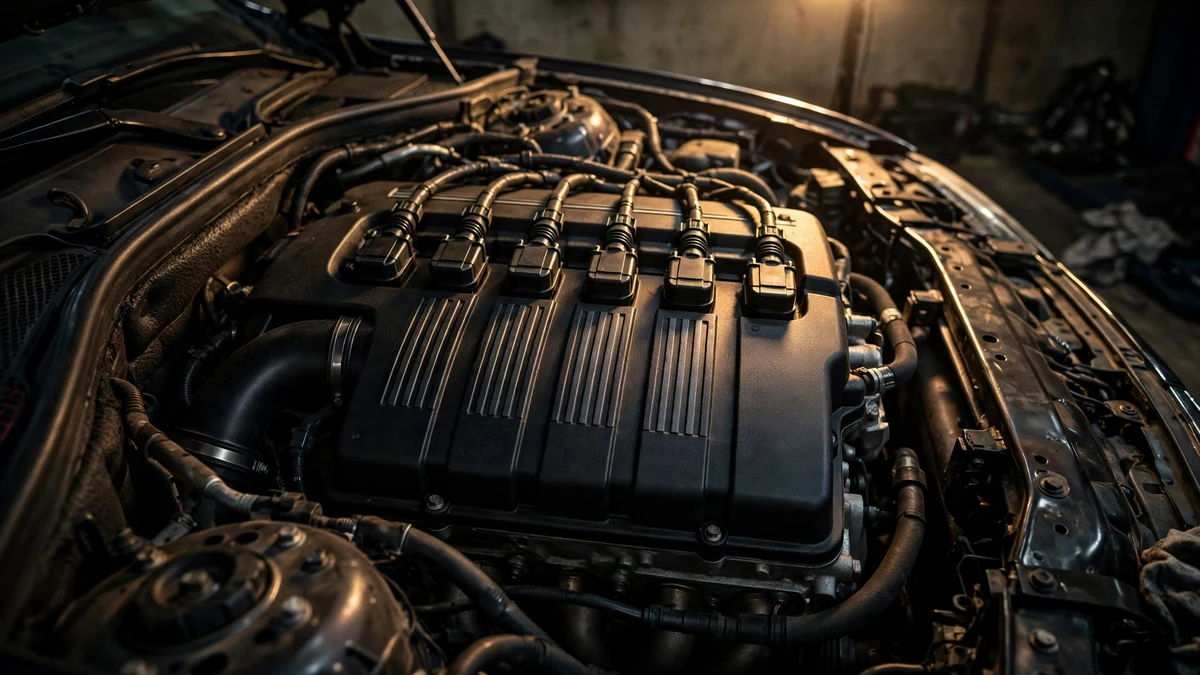
The valve cover sits atop the cylinder head, sealing the valvetrain — camshafts, lifters, Valvetronic hardware — in splash oil. The gasket is the molded rubber seal between cover and head: keep oil in, contaminants out, survive heat cycling. On the N20, N52, and N55 the cover is molded plastic composite with the crankcase ventilation system — the pressure-regulating PCV diaphragm — integrated into it, which is why a “gasket leak” and a “cover problem” are often the same conversation.
Failure is chemistry and physics: the rubber gasket hardens with heat cycles until it can’t conform to the sealing surfaces, and the plastic cover warps, gets brittle, and can crack — the N20’s cover is particularly known for this. Owner reports cluster weeping onset around ~60,000 miles on the N55 family and BMW inline-6s generally — owner-report clustering plus one specialist’s consensus, not a BMW-published interval. BMW publishes no replacement interval for this gasket.
One foundational point: a valve cover gasket leak is external oil loss you can smell and see — oil escaping the engine and burning on the exhaust manifold. That’s different from oil consumption, where oil is burned inside the engine through worn rings, valve stem seals, or turbo seals. Dipstick dropping with no smell and no residue? That’s oil consumption territory, not gasket territory. Our general oil leak guide lists every common leak point on these cars; this article goes deep on just this one.
Valve cover gasket leak symptoms: the full list
The signature symptom is the smell — but smell alone isn’t a diagnosis. Most of the oil burns off on the exhaust rather than pooling, which is why this leak can be advanced before you ever see a drip.
| Symptom | What it indicates | Engine-specific detail |
|---|---|---|
| Burning oil smell after driving / parking | Oil dripping onto the hot exhaust manifold and burning off | The signature on all three engines; can be so slight the dipstick never moves |
| Oily residue / crud around the valve cover perimeter | Active seepage past the hardened gasket | On inline-6s (N52/N55) it concentrates on the passenger side (the engine leans that way), dripping onto the exhaust heat shields |
| Small oil spots where parked — or nothing at all | External loss, usually minor in volume | Often nothing on the ground — the oil burns off first. Key contrast with OFHG leaks, which make a visible mess |
| Oil level dropping between changes (slight) | Slow external loss | Big drops with no smell and no residue point to internal oil consumption instead |
| Oil pooled in the spark plug wells | Failed spark plug well seals (replaced with the gasket) | Found when removing coils/plugs: oil on the plug boots → misfires |
| Rough idle, whistling / whooshing noise | Torn PCV diaphragm integrated in the cover — not the gasket itself | Most associated with N52; confirm with a smoke test + crankcase vacuum test — not by ear alone |
| Whiff of smoke from under the hood | Oil burning on the exhaust manifold heat shields | Usually right after stopping, when airflow no longer carries the fumes away |
On urgency: oil dripping onto the exhaust manifold is a burn-off nuisance first, a fire risk only if ignored long-term — one low-authority owner thread raises the fire angle, and it shouldn’t be the headline. Consensus: a minor seep is not a same-day emergency. Keep oil topped up and get it booked — but not months from now. The leak worsens, and once oil reaches the plug wells you’re buying coils too.
Per-engine differences: N20, N52, and N55
Same gasket concept, three different repair stories. The cover construction, the integrated PCV, and how far the job reaches into the engine all vary — and the N20 is the odd one out in a way that changes both the parts bill and the DIY difficulty.
| Engine | Cars | Cover construction | Failure character | Key gotchas |
|---|---|---|---|---|
| N52 | E90 325i / 328i / 330i (2006–2013) | Plastic cover, integrated crankcase ventilation (PCV diaphragm) | Rubber gasket hardens and weeps; torn PCV diaphragm adds whistling + rough idle | Replace the separate valvetronic motor gasket while the cover is off. The eccentric shaft sensor can oil-foul on bad leaks. Bolts are single-use aluminum (blue paint); tighten inside-out from the two centermost nuts. |
| N55 | E90 / F30 335i (2011–2016) | Same integrated-PCV plastic cover architecture | Same burning-smell signature; owner reports cluster weeping onset around ~60,000 miles | Torque 8.5 Nm is single-source (owner post) — verify against a manual. |
| N20 (N26 same) | F30 320i / 328i (2012–2016) | Plastic cover notorious for warping, brittleness, and cracking from heat cycling | Gasket-only replacement often doesn’t hold on a warped cover — whole-cover replacement is frequently the proper fix | Hardest DIY of the three: cowl, coils, injectors, fuel rail, HPFP, and vacuum pump all come off. Check the separate oil fill cap gasket before condemning the VCG. No verified torque figure — never borrow another engine’s number. |
The N20 row is the most expensive mistake here. Owner and specialist sources agree its plastic cover warps and cracks badly enough that a fresh gasket on the old cover may seal briefly, then fail again. If your F30 320i/328i is being quoted for this job, ask whether the quote covers the complete cover assembly: a Genuine BMW N20 cover is owner-reported around ~$500 (single source) versus ~$92–$130 for complete aftermarket covers — one of the widest parts spreads in this repair.
On the N52, know the valvetronic motor gasket: a separate small seal right where you’re already working — replace it while the cover is off, per standard community practice. And the warning worth repeating: don’t drop the eccentric shaft when the valvetronic motor comes out. For rough-idle and valvetronic overlap, our VANOS and Valvetronic problems guide covers that system in depth.
Fault codes you may see alongside a leak (not from it)
A valve cover gasket leak itself sets no fault codes — there is no “VCG code.” The codes below are real code reads from owner threads about valve cover, whistling, and idle problems, appearing only as secondary effects: oil in the plug wells fouls the coils and causes misfires; a torn PCV diaphragm upsets crankcase pressure and can throw ventilation and VANOS-adjacent faults. If your scanner shows these, they describe the leak’s consequences — and point at the same repair.
| Code | Context in which it appeared | What it actually means here |
|---|---|---|
| P0300 series (P0303, P0304, P0305, P0306) / DME 29CC–29D0 | Misfires read after valve cover work in owner threads | Oil in the plug wells fouling the coil boots. A wet coil boot means the misfire is a leak consequence, not a bad coil — though oil-soaked boots usually need replacing anyway. |
| 2A82, 2D27, 2A7C, 2F08 | Whistling engine / valve cover + PCV diagnosis thread | Crankcase ventilation faults from a torn PCV diaphragm — the whistling cluster. Smoke test + crankcase vacuum test confirm. |
| P0012, P13B4 | Bad idle / screech reported after a DIY gasket replacement (single owner case) | Post-repair issue, not a leak symptom — if these appear after your DIY, recheck seating, torque sequence, and vacuum connections. |
With misfire codes plus the burning smell, check the plug wells before buying coils — our spark plug replacement guide and check engine light causes guide cover both ends of that diagnosis.
How to confirm it’s the valve cover gasket
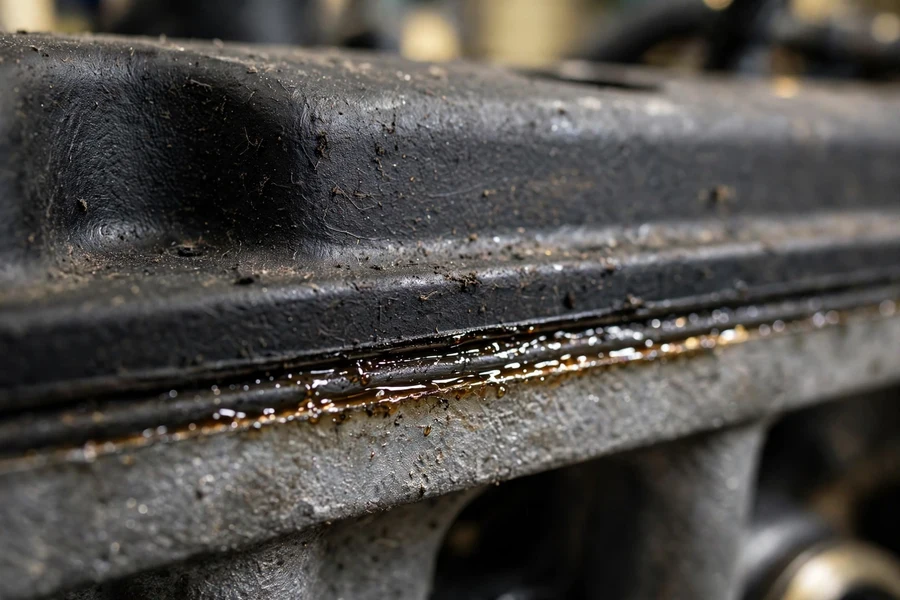
Diagnosis is visual and starts with a clean engine bay — old residue shows where the leak is, but only a clean surface shows where it’s coming from:
- Clean and drive. Degrease the top of the engine, drive 50–100 miles, then inspect with a flashlight: fresh wet oil at the cover seam — especially the passenger side on inline-6s — is your answer.
- Check the whole perimeter. Run a finger or white rag along the cover-to-head seam all the way around — leaks often start at one corner or the half-moons.
- Pull a coil. On a misfiring cylinder — or during any plug service — look down the well: oil around the plug or a wet coil boot confirms the plug well seals failed with the gasket.
- Listen at idle for the whistle. A distinct whistling or whooshing points at the PCV diaphragm inside the cover rather than the gasket seal. Don’t diagnose by ear alone: specialists confirm it with a smoke test and crankcase vacuum test, both doable in about half an hour at a specialist shop.
- Check the N20 oil fill cap gasket. On F30 320i/328i cars this small separate seal leaks too — verify before condemning the whole cover.
Three other problems wear the same disguise — the delineations that prevent misdiagnosis:
- VCG vs. oil filter housing gasket (OFHG). The OFHG lives at the front of the engine and makes a visible mess down the block; the VCG lives at the top and burns off on the exhaust. Top-of-engine wetness = VCG, front-of-engine = OFHG. The OFHG’s own urgency — oil reaching the serpentine belt — is covered in our oil filter housing gasket leak guide.
- VCG vs. internal oil consumption. External loss you can smell and see versus oil burned inside the engine. The test: clean bay + 500 miles. Residue and smell with the level mostly holding? VCG. Level dropping with a clean bay and no smell? Oil consumption.
- Gasket vs. PCV diaphragm vs. cracked cover — all under the same plastic cover: gasket = seepage at the seam, no whistle; PCV diaphragm = whistle/rough idle, confirmed by smoke and vacuum tests; cracked/warped cover (N20 especially) = seepage returning after a gasket-only fix. The difference between a $59 gasket and a $500 cover.
Used-car shopping habit: the sniff test. After the test drive, pop the hood and smell the top of the engine — a burning-oil whiff on a 70,000+ mile car is a reliable tell this job is coming, per our used BMW 3 Series buying guide. It’s a known weak point across these generations (see our 3 Series reliability by year breakdown).
Burning smell: which leak is it? Interactive checker
Four questions, four culprits. The checker weighs your answers against the patterns above — VCG leak, OFHG leak, torn PCV diaphragm, or internal oil consumption — and ranks them with urgency and cost bands. It doesn’t replace a flashlight and a clean engine bay, but it tells you where to look first.
Burning smell: which leak is it?
Answer four questions; the checker ranks the likely causes with urgency and cost bands.
Answer at least one question above to see the ranked likely causes.
BMW valve cover gasket leak repair costs
Few repairs have a wider spread between a DIY afternoon and a dealer invoice — parts run ~$59 to ~$500, labor two hours to most of a day. Every figure below is owner-reported (many from 2010s forum threads): labeled ranges, not quotes; labor rates and parts prices have moved since, and regions differ.
| Repair route | Cost band (USD) | What it covers |
|---|---|---|
| DIY, gasket-only | ~$59 parts | Gasket set with plug well seals + grommets (owner-reported N52 cost); add ~$15–30 for the N52 valvetronic motor gasket and RTV for the half-moons |
| DIY, whole-cover replacement | ~$92–$130 aftermarket cover; ~$500 Genuine BMW N20 cover (single-source dealer report) | Complete cover assembly — the N20’s common fix; the 100k-mile option on inline-6s |
| Independent BMW specialist | $400–$700 | Owner consensus; ~4–5 billed hours on most cars, ~2 hours on the easiest N52 jobs (DIY-article baseline quoted by an ASE tech) |
| Dealer | $600–$1,000 | Owner-reported for N51/N52 gasket jobs; one owner put dealer labor alone at ~$800+ |
The chart tells the story: DIY gasket-only is almost absurdly cheap in parts, while the dealer route costs roughly ten times the parts for a two-to-four-hour N52 job. Where you land depends on three variables: whether the cover itself needs replacing (the N20 question), your local labor rate, and how much you value your Saturday. The forgotten cost: oil in the plug wells often ruins the coil boots — budget for boots (or coils) with the gasket, or the misfires survive the repair.
Ask every shop: “Does this cover the complete valve cover assembly or just the gasket?” A $450 gasket-only quote on a warped N20 cover that leaks again in a year is worse value than a $700 complete-cover job done once. Time it with our 3 Series maintenance schedule — pairing with a plug service saves duplicate labor, since the coils come off either way.
BMW valve cover gasket leak DIY: difficulty, tools, torque specs
Difficulty: moderate to hard — moderate on the N52, genuinely hard on the N20. The owner summary: “It’s not hard, but it is time consuming and annoying… lots of time bent over.” The N52 is a ~2–4 hour first-timer job: engine cover, coils, and valvetronic motor off, unbolt, clean, reseal. The N20 is a longer day — cowl, coils, injectors, fuel rail, HPFP, and vacuum pump come off first. If fuel-system disassembly is outside your comfort zone, hand the N20 to a specialist.
Everywhere, the shape is the same: clear access, remove the cover, clean the sealing surfaces meticulously, install the new gasket with fresh plug well seals and grommets, and torque inside-out / crisscross from the two centermost nuts outward (the N52 has bolts down the middle by the coils — include them). The classic DIY failure is over-torquing: “overtorque… is a sure-fire way to get the gasket to leak.” Bolts should bottom out on the head — snug, not crushed.
| Fastener | Torque | Source honesty note |
|---|---|---|
| N52 valve cover bolts | 8.6 ± 0.6 Nm | Read off the valve cover stamping by an owner; corroborated by Bentley-manual-citing sources at ~9 Nm (7 ft-lb). |
| N55 valve cover bolts | 8.5 Nm | Single owner post — verify against a manual. |
| N52 valvetronic motor bolts | 10 Nm | Single owner citing the Bentley manual. |
| N20 valve cover bolts | Not published here | No verified figure found — verify against the manual for your car. |
Hard-won details: replace the plug well seals and grommets with the gasket — they’re why oil ends up in the wells. On the N52, replace the valvetronic motor gasket while the cover is off. A dab of RTV at the half-moon corners is standard practice (the brand gets debated; the dab doesn’t) — insurance, not a substitute for a flat cover and correct torque. Fit new N52 bolts rather than reusing the aluminum originals. And once more: don’t drop the eccentric shaft.
Know your limits. If the whistling test pointed at the PCV diaphragm, get a specialist’s smoke and vacuum test confirmation first — otherwise you may do the whole job and keep the whistle. On the fence about the whole-cover question? Read the next section before ordering parts.
Gasket-only or whole cover? The 100,000-mile debate
The honest split, without picking a winner. One ASE/BMW master tech: over 100,000 miles, replace the complete valve cover, not just the gasket — the plastic warps with age and heat cycling, and a fresh gasket on a warped cover is temporary. Another ASE tech, in the same discussion: no need to replace the cover unless it’s damaged — if it’s straight and uncracked, a gasket is enough.
Both positions are single-expert advice, not consensus — your car is the tiebreaker. Replace the whole cover if: it’s an N20 (warping and cracking are that engine’s known failure mode), mileage is well past 100,000, the cover shows warping or cracks, or a gasket-only fix already failed once. Gasket-only is defensible if the cover inspects straight and uncracked, mileage is moderate, and the PCV diaphragm tests healthy — ~$59 in parts instead of ~$92–$500. Decide before ordering parts: pulling the cover to “take a look” and waiting a week for one to arrive turns a Saturday job into a two-week driveway ornament.
Valve cover gasket leak FAQ
Does a BMW valve cover gasket leak set any fault codes?
No — there is no “VCG code.” Oil in the plug wells fouls the coils and causes misfire codes (P0300-series / 29CC–29D0); a torn PCV diaphragm can throw crankcase ventilation and VANOS-adjacent faults (2A82, 2D27, 2A7C, 2F08). With a burning oil smell, they describe the leak’s consequences, not a separate failure.
How much does it cost to replace a BMW valve cover gasket?
Owner-reported: $400–$700 at an independent specialist, $600–$1,000 at a dealer (N52/N55). DIY: ~$59 for a gasket set; whole-cover replacement — common on the N20 — runs ~$92–$130 aftermarket or ~$500 Genuine BMW (single-source report). Confirm whether a quote covers the gasket alone or the complete cover.
Can I keep driving with a valve cover gasket leak?
A minor seep is not a same-day emergency: keep oil topped up and book the repair soon — but don’t ignore it for months. The leak worsens, oil in the plug wells ruins coil boots (adding misfires to the bill), and exhaust-manifold drips are a fire risk if neglected long-term. Heavy smoke or rapid oil loss means repair promptly.
Should I replace the whole valve cover or just the gasket on my BMW?
It depends on the engine and cover. On the N20, whole-cover replacement is frequently the proper fix — the plastic warps, gets brittle, and cracks. Past 100,000 miles, one ASE master tech says replace the complete cover; another says a gasket suffices if the cover inspects straight and uncracked. Decide before ordering parts — a gasket-only fix on a warped cover often leaks again.
What is the difference between a valve cover gasket leak and oil consumption?
A valve cover gasket leak is external loss you can smell and see — oil escapes and burns on the exhaust manifold. Oil consumption is oil burned inside the engine (worn rings, valve seals, turbo seals): no smell, no residue. The test: clean the bay, drive 500 miles. Residue and burning smell with the level mostly holding means a leak; a dropping level with a clean bay and no smell means internal consumption.
The valve cover gasket is the most common — and most misdiagnosed — oil leak on these cars because its symptoms overlap with three other problems. Get the location right (top of the engine, burning off on the exhaust), confirm with a clean-and-drive check, and the repair is straightforward: a moderate DIY on the N52, a long day or a shop job on the N20, a whole-cover decision past 100,000 miles. Leak at the front of the engine instead? Read our oil filter housing gasket guide — different urgency. For the full picture, the complete BMW 3 Series guide ties every system together.