BMW N54 Injectors: 6 Signs You Need Index 12s
Short answer
BMW N54 fuel injector replacement means installing Index 12 injectors — the final and latest revision — and coding each injector’s calibration values into the DME, because every injector flows slightly differently and the engine computer must know the difference. Budget roughly $550–$700 DIY or $1,100–$1,500 at a dealer for one injector, and $3,000–$3,600 DIY or $3,800–$5,000 at a dealer for all six. Replace a single injector only if the injectors already fitted are index 11 or higher; index 10 or lower cannot share a bank with index 11 or 12.
In this guide
- What injector index numbers actually mean
- The index revision table: 1 through 12
- Symptoms of failing N54 injectors
- Diagnosis: finding the bad cylinder and bank
- Injector symptom checker
- Replacement procedure overview
- Why every injector must be coded — and how
- What it costs: DIY vs independent vs dealer
- Replace one, one bank, or all six?
- Frequently asked questions
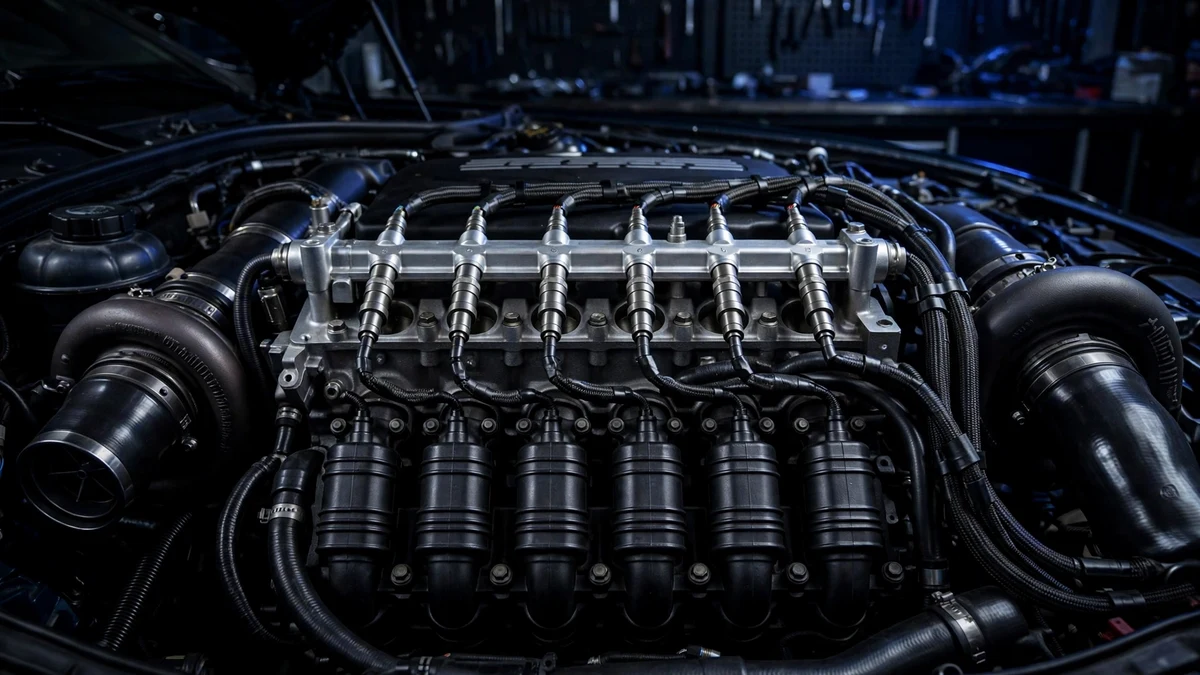
The N54 twin-turbo inline-six is one of BMW’s most rewarding engines — and its piezo direct fuel injectors are one of its most notorious wear items. BMW revised these injectors twelve times, and the final version — Index 12 — is the only one worth buying today. This guide, built from BMW’s own service bulletins and current parts data, explains what injector indexes are, how to tell when yours are failing, how diagnosis and coding actually work, and what the job honestly costs. For the broader ownership picture, see the complete BMW 3 Series guide.
What injector index numbers actually mean
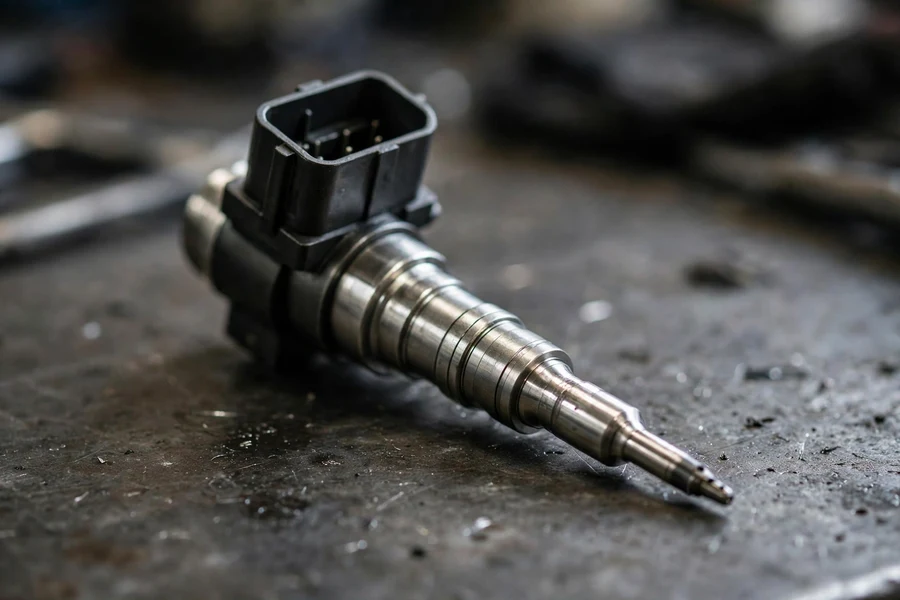
Every N54 fuel injector carries an index number — a revision code printed on the injector head right after the BMW part number, for example 13 53 8 616 079-11, where the -11 is the index. BMW revised the piezo injector design repeatedly as failures accumulated, and the numbers run from 1 through 12, with Index 12 the latest and final revision.
What did each revision change? BMW never published a per-index changelog, and anyone claiming to know exactly what changed in index 6 versus index 7 is speculating. What is documented is the trend: early indexes suffered cold-start misfires and leakage, later indexes brought internal material updates, and the final revision added improved filtering and thermo-compensating oil. The single most important fact is the compatibility split at index 11: injectors of index 10 and lower belong to one calibration family, and index 11 and higher to another. The two families must not be mixed within the same engine bank.
An engine bank on the N54 means three cylinders: bank 1 is cylinders 1–3 and bank 2 is cylinders 4–6. This matters because BMW’s official repair guidance for injector faults is written per bank, not per engine. When a misfire fault points at one cylinder, the question of whether you replace one injector or three turns entirely on which index is already fitted on that cylinder’s bank.
The index revision table: 1 through 12
This table summarizes everything that can be stated honestly about the twelve injector indexes. Blank spots in the changelog are not an oversight — BMW simply never published what changed in each individual step.
| Index | Typical BMW part number | What is known about this revision | Compatibility rule |
|---|---|---|---|
| 1–10 | 13 53 7 537 317; 13 53 7 651 38; 13 53 7 585 261 | Original-era piezo injectors fitted to early N54 production. The dominant failure pattern — cold-start misfires and leakage — comes from this group. No per-index changelog was ever published, so treat indexes 1–10 as one compatibility family. | Must not share a bank with index 11 or 12 |
| 11 | 13 53 8 616 079-11 | Improved injector released around January 2013 per BMW service information, with internal material updates. First member of the new calibration family. | Mixes with index 12 in the same bank |
| 12 | 13 53 8 616 079-12 | The latest and final revision. Suppliers describe internal material updates plus improved filtering and thermo-compensating oil versus earlier designs. This is the only index sold new today. | Mixes with index 11 in the same bank |
A practical note: if your car still has index 1 through 10 injectors — common on cars that never had injector work — the day one injector fails is the day the other two on its bank become suspect as well. BMW’s bulletin for reproducible cold-start misfires instructs dealers to replace all three injectors on the faulted bank with index 11 or higher, precisely because the early indexes share the same failure mode.
Symptoms of failing N54 injectors
N54 injector failures have a recognizable signature. The classic presentation is a rough idle or misfire on cold start that smooths out as the engine warms — BMW’s service bulletin calls out reproducible cold-start rough running specifically, because a leaking or poorly atomizing injector misbehaves most when the fuel is cold and the engine is running rich by design. If your 335i shakes for the first minute in the morning and then behaves, injectors belong at the top of the suspect list.
Beyond cold starts, the full symptom set includes extended cranking before the engine catches, especially after the car has sat; a raw, unburned-fuel smell from the exhaust at idle; a stumble under light throttle at low rpm; reduced power or limp mode once the DME decides a cylinder is misfiring badly enough to protect the catalytic converters; and the check engine light with cylinder-specific misfire codes. A leaking injector can also wash fuel past the piston rings and dilute the engine oil, which is one reason a strong fuel smell paired with misfires should not be driven on indefinitely.
Several of these symptoms overlap with other N54 weak points — the high-pressure fuel pump also causes long cranks, and failing coils also cause misfires — which is why the diagnosis section exists. If your main complaint is long cranking with no misfire codes, read the HPFP failure symptoms guide before ordering injectors; if misfires move when you swap coils between cylinders, see the ignition coil failure guide.
| Symptom | Likely injector-related cause | First check |
|---|---|---|
| Rough idle or misfire on cold start | Leaking or poorly atomizing injector; the classic early-index failure mode | Misfire codes 29CD–29D2; inspect plugs for fuel wetting |
| Long crank before starting | Leaking injector bleeding rail pressure down while parked | Rule out the high-pressure fuel pump first — it causes the same symptom |
| Raw fuel smell from the exhaust | Injector stuck open or dripping, dumping unburned fuel | Pull plugs on the misfiring bank; wet plugs confirm a leak |
| Stumble under light throttle, low rpm | Inconsistent spray pattern or quantity from a worn injector | Swap coils and plugs first — if the misfire code follows the injector’s cylinder, not the coil, it’s the injector |
| Reduced power / limp mode | DME shutting down injection on a repeatedly misfiring cylinder | Read codes; persistent cylinder-specific misfire after coil/plug swap |
| Check engine light, no obvious symptom | Early-stage injector drift caught by misfire detection | Scan with a BMW-capable tool — generic readers may miss BMW-specific codes |
Diagnosis: finding the bad cylinder and bank
Start with a scan using a BMW-capable tool — the OBD2 scanner guide covers which tools read BMW-specific codes. Misfires log as BMW codes 29CD–29D2 (cylinders 1–6), corresponding to generic P0301–P0306. The code names the cylinder; the cylinder names the bank: cylinders 1–3 are bank 1, cylinders 4–6 are bank 2.
Once you have a cylinder, rule out the ignition system before blaming the injector. Swap the coil from the misfiring cylinder to a neighbor, clear the codes, and drive. If the misfire code follows the coil, you need a coil, not an injector. If the code stays put, swap the spark plug the same way — the spark plug replacement guide covers the N54’s plugs. Only when the misfire refuses to move with either component is the injector the prime suspect. This swap test costs nothing and is the single most valuable diagnostic step on the N54.
Two physical clues confirm a leaking injector. First, pull the spark plug from the misfiring cylinder: a plug soaked with fuel — while its neighbors are dry — means that cylinder’s injector is leaking. BMW’s injector bulletin instructs technicians to replace fuel-soaked plugs along with the injectors, because a wet plug will misfire on its own even with a new injector fitted. Second, smell the oil: a strong gasoline odor on the dipstick suggests a leaking injector has been washing fuel past the rings.
Misfires confined to one bank (cylinders 1–3 or 4–6) with early-index injectors fitted point squarely at that bank’s injectors, and BMW’s guidance says to replace all three on the bank. Misfires scattered across both banks more often indicate a fuel supply problem — the high-pressure or low-pressure pump — or carbon buildup on the intake valves, which every direct-injected N54 accumulates. Injector failure is a per-cylinder disease; when the whole engine is sick, look upstream.
Match your symptoms to the likely failed injector and bank below, including what the index rule means for your repair.
N54 injector symptom checker
Answer three questions to identify the likely failed injector, its bank, and what the index rule means for your repair.
Your assessment will appear here.
Replacement procedure overview
A competent home mechanic with a full socket set, torx bits, and a free weekend can do all six. The two things that separate a successful injector job from an expensive mistake are depressurizing the high-pressure fuel system before opening it, and coding the new injectors afterward.
The outline of the procedure: disconnect the battery, then relieve fuel pressure at the rail before touching any fuel fitting — the direct-injection system holds far more pressure than a port-injection rail, and opening a fitting on a pressurized rail is dangerous. Remove the engine cover, cabin filter housing, and intake-side components blocking access to the fuel rail, then unplug each injector’s connector, remove the fuel rail with its lines, and take out the injector retaining plate on the bank you are servicing.
Each injector pulls straight out of the cylinder head — BMW makes a dedicated puller and installer tool for this, and while patient mechanics manage without it, the tool greatly reduces the risk of damaging the bore or the injector. A stuck injector should be worked patiently and evenly, never pried sideways. Before installing the new injector, fit a new seal ring and new decoupling element on every injector you touch; these are one-time-use components, and reusing them is a classic source of combustion leaks and ticking noises after the job. Keep the protective caps on the new injectors until the moment of installation.
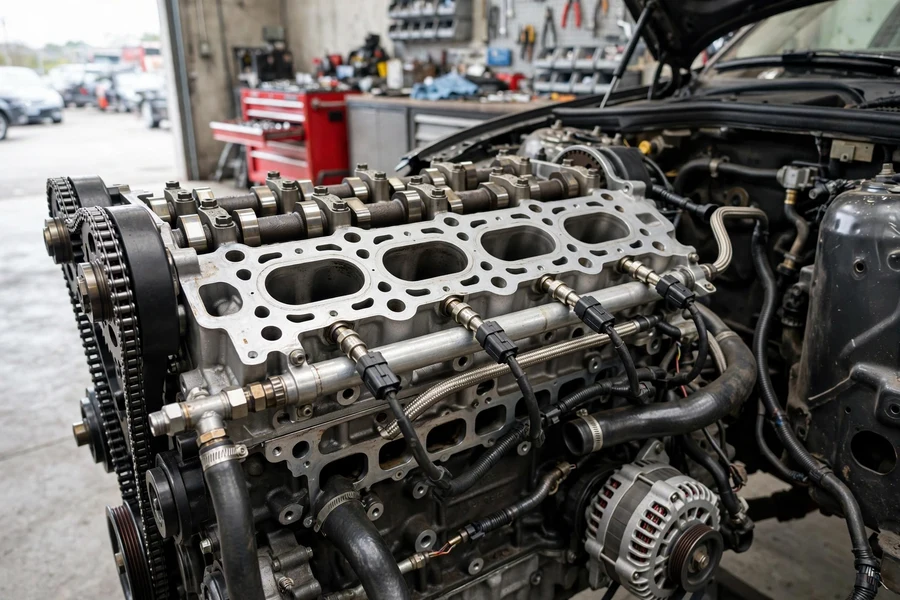
On installation, the retaining plate goes back with its concave side down, and the plate bolt is tightened until flush and snug — deliberately not cranked down hard, since over-tightening distorts the plate and the injector. Because exact fastener values vary, check your repair documentation rather than guessing at torque figures. Before fitting each injector, record the two three-digit calibration numbers printed on it — you cannot read them once the injector is installed, and you will need them for coding. Reassemble in reverse, leave the engine cover off, turn the ignition on a few times without starting to prime the system, and inspect every fitting for leaks before the covers go back on.
Common DIY mistakes, in order of how often they cause comebacks: reusing old seals and decoupling rings; failing to record the calibration numbers before installation; mixing index families within a bank; and coding the values to the wrong cylinder. Each is cheap to avoid and expensive to fix afterward. If the fuel-system work makes you uncomfortable, this is a reasonable job to hand to an independent BMW specialist — the labor portion is far cheaper than the parts.
Why every injector must be coded — and how
Here is the step everyone wants to skip and nobody should: every replacement injector must be coded to the DME (the engine computer). Each piezo injector leaves the factory with slightly different flow characteristics, so BMW prints a unique calibration value — two blocks of three digits — on every injector. The DME uses these values to correct the injection quantity for each cylinder, keeping combustion even, idle smooth, and emissions in spec. Install an injector without entering its values and the DME keeps applying the old injector’s correction to the new hardware.
The calibration numbers are printed on the injector body — typically on a small flat or on the plastic bracket near the top — which is why the procedure section insisted on recording them before installation. Once the injector is seated in the head, the numbers are no longer visible, and there is no way to read them electronically; they exist only as ink on the part.
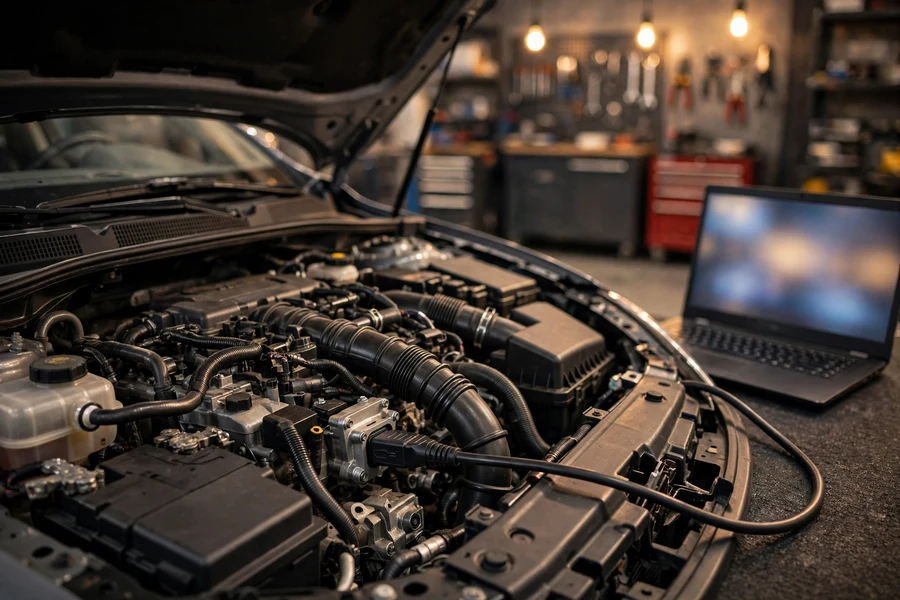
Three routes can write the values into the DME. ISTA, BMW’s own dealer-level software, performs it as a service function under Engine electronics and then the injector adjustment routine, where you enter each injector’s values against its cylinder. INPA, the older BMW engineering software many enthusiasts run on a laptop with a K+DCAN cable, exposes the same function under the engine module’s system diagnosis menu. BimmerGeeks ProTool, a phone app with a wireless adapter, offers injector coding without a laptop at all. All three accomplish the same thing; the choice is about what hardware you already own.
Two honest caveats. First, the engine will physically start and run with uncoded injectors — coding is a correction, not an immobilizer — which is why some owners report “it runs fine without coding.” It runs; it does not run right, and the DME’s adaptations can only compensate so far. Second, when you move an existing injector to a different cylinder during the swap test, the calibration values must follow the injector to its new cylinder in the DME. Getting this backwards is a documented source of post-repair rough running.
What it costs: DIY vs independent vs dealer
N54 injector replacement is one of the most expensive common repairs on the car, and the parts dominate the bill. A single genuine BMW Index 12 injector currently sells for around $490–$500 at discount BMW parts specialists, and a boxed set of six with seals and decoupling rings runs around $3,050–$3,100 — though injector pricing has swung sharply over the years, so treat these as a snapshot. Each injector also needs its seal ring, decoupling element, and retaining clip, adding roughly $50–$100 per injector if not included in a kit.
Labor is the smaller half of the bill: an experienced technician can have the injectors out in well under a couple of hours, though book times and shop rates vary widely. Independent BMW specialists typically charge $150–$200 per hour in most US markets, while dealers charge more and mark parts up further — a dealer quoting over $1,000 for a single injector is not unusual. The table below gives honest bands for the complete job, parts and labor. Prices move with parts availability, so get a written quote before authorizing work.
| Repair channel | One injector | All six injectors | Notes |
|---|---|---|---|
| DIY | $550–$700 | $3,000–$3,600 | Parts only, plus seals/clips; add a coding cable or app license if you don’t own one |
| Independent BMW specialist | $850–$1,200 | $3,500–$4,500 | Best value for most owners; confirm they will code the injectors |
| BMW dealer | $1,100–$1,500 | $3,800–$5,000 | Highest parts markup; coding and the latest software guaranteed |
When comparing quotes, ask three questions: does the price include new seals, decoupling elements, and clips for every injector touched; does it include coding the injectors to the DME; and which index are the replacements — the answer should be 12, the only index supplied new. A quote dramatically cheaper than these bands deserves scrutiny: used injectors, skipped seals, or skipped coding are the usual explanations.
Replace one, one bank, or all six?
This is the question every N54 owner asks at the parts counter, and BMW’s own service bulletin gives the clearest answer. For reproducible cold-start misfires with corresponding fault codes: replace all three injectors on the faulted bank with index 11 or higher — unless that bank’s injectors are already index 11 or higher, in which case replace only the injector on the faulty cylinder. That is the factory’s own one-versus-three decision tree.
The logic behind it is the compatibility split. If your car still has index 10 or lower injectors — common on 2007–2010 cars that never had injector work — a single new Index 12 cannot share a bank with them, so the minimum honest repair on a faulted bank is three Index 12 injectors. If the bank already carries index 11 or 12, the new Index 12 drops straight in and one injector is a complete, correct repair. Never leave a bank mixing the two families; BMW’s technical documentation warns that mismatched calibration families cause driveability problems and, in the worst case, engine damage.
Should you go further and replace all six when only one bank has failed? If the opposite bank still runs its original early-index injectors, those share the same age, heat cycles, and failure mode as the ones that just failed — budgeting for the second bank within the next year or two is realistic, and doing all six at once saves a second round of labor and coding. But if the opposite bank was already replaced with index 11 or 12, or the car is a late-build 2010 with higher-index injectors from the factory, there is no reason to touch a healthy bank.
Frequently asked questions
Can I replace just one N54 fuel injector?
Yes — but only if the other injectors on that cylinder’s bank are already index 11 or higher, since Index 12 mixes freely with index 11 in the same bank. If the bank still has index 10 or lower injectors, a single Index 12 cannot share the bank with them, and the minimum correct repair is all three injectors on that bank.
Do N54 injectors really need coding, or will the car run without it?
They really need coding. The engine will start and run with uncoded injectors, which is why the myth persists, but the DME will be applying the old injector’s flow correction to the new hardware. Expect rougher idle, worse cold starts, and higher emissions than the new injector is capable of. Coding takes minutes with ISTA, INPA, or a phone app — skipping it wastes most of what you paid for the injector.
Can I mix Index 12 injectors with my old ones?
Only with index 11. Index 11 and index 12 belong to the same calibration family and can share a bank. Index 10 and lower belong to the older family and must never share a bank with index 11 or 12 — BMW’s technical documentation warns of driveability problems and possible engine damage from mixing.
How long do N54 injectors last?
BMW publishes no replacement interval for fuel injectors — they are replaced when they fail, not on a schedule. In practice, failures cluster on the early indexes (1–10), with cold-start misfires the usual first sign. The revised index 11 and 12 injectors have a materially better record, which is why a full set of Index 12 is considered a long-term fix.
Can a bad injector damage my N54 engine?
A leaking injector can, which is why a confirmed leak should be repaired promptly rather than driven on. Excess fuel washes oil from the cylinder walls, accelerating ring and bore wear; it dilutes the engine oil; and it can overheat and destroy the catalytic converters, turning a $500 injector into a multi-thousand-dollar exhaust repair. A strong raw-fuel smell paired with misfires is the warning sign to stop driving until the car is diagnosed.