BMW 3 Series Maintenance Schedule & What It Really Costs Per Year (E90, F30, G20)
A BMW 3 Series does not have to be a money pit — but it punishes owners who guess at maintenance instead of following a schedule. This BMW 3 Series maintenance schedule guide lays out exactly what the E90 (2006–2011), F30 (2012–2018) and G20 (2019+) generations need at each mileage milestone, what those services really cost at a dealership versus an independent specialist versus your own garage, and which bills BMW’s free maintenance program quietly leaves to you. Every interval below is BMW’s published Condition Based Service guidance, and every price range traces to published market data — KBB, CarEdge, RepairPal — or specialist pricing, with honest confidence notes where sources are thin.
Below you will find the complete CBS service schedule in one table, annual cost breakdowns for each generation, an interactive cost estimator, the fine print on free maintenance, and the pattern failures worth budgeting for before they surprise you. If you are still shopping, pair this with our used BMW 3 Series buying guide and the 3 Series reliability record by year — together they tell you what to buy, what to watch, and what to pay to keep it healthy.
The short answer
A BMW 3 Series maintenance schedule runs on Condition Based Service: engine oil roughly every 10,000 miles or 12 months, brake fluid every two years, spark plugs around 60,000 miles, and automatic transmission fluid every 50,000–75,000 miles despite BMW’s “lifetime” label. Expect about $700 a year on a new G20 under free maintenance, roughly $900–$1,500 a year on an F30 at an independent shop, and $1,400–$2,000+ a year on an aging E90 — and plan on paying 30–50% more at a dealership than at a good independent.
In this guide
- How BMW’s Condition Based Service actually works
- The full 3 Series maintenance schedule, in one table
- What it costs per year: E90, F30 and G20
- Estimate your own annual cost
- What’s free under BMW Ultimate Care — and what isn’t
- Generation watch lists: what to budget before it breaks
- How to cut your maintenance bill without cutting corners
- The verdict
- Frequently asked questions
How BMW’s Condition Based Service actually works
Unlike most cars with fixed service booklets, a modern 3 Series decides for itself when it needs attention. Condition Based Service (CBS) uses onboard sensors and algorithms — oil-quality monitoring, brake-pad wear sensors, driving-style data — to calculate due dates for each maintenance item, then counts them down in the instrument cluster and iDrive. BMW TeleService can even ping your dealer when something comes due.
That sounds smart, and it is — up to a point. CBS intervals are maximums, not targets, and they are set partly with emissions and marketing in mind. The best-known example is engine oil: the CBS monitor can stretch oil changes to 15,000 miles on a G20, yet independent BMW specialists widely recommend 7,500-mile changes on turbocharged engines, because oil shears and contaminates faster under boost. The same logic applies to the transmission: BMW calls the ZF 8-speed fluid “lifetime,” while ZF itself — the company that built the gearbox — calls for fluid replacement every 50,000–75,000 miles or eight years, changing the pan and its integrated filter at the same time. Treat CBS as the schedule you must not exceed, not the schedule you should aim for.
What you will actually see on the dashboard is a countdown for each CBS item: engine oil, front and rear brakes, brake fluid, the vehicle check, the cabin microfilter and — on some cars — spark plugs. Anything not on that list — coolant, gearbox fluid, differential and transfer-case fluid — needs a calendar or mileage reminder you set yourself, because the car will never ask for it.
Two more CBS quirks worth knowing. First, several items are time-based regardless of mileage: brake fluid is due every two years even if the car sat in a garage, because brake fluid absorbs moisture from the air. Second, some items never appear on the CBS countdown at all — coolant and differential fluids, for example — which is exactly why cars with “full dealer history” still arrive at specialists with black transmission fluid. The table below puts the CBS items and the commonly skipped ones in one place.
The full 3 Series maintenance schedule, in one table
These intervals apply to the E90, F30 and G20 unless noted. “CBS” means the car’s computer sets the exact date; the figures here are the practical values the system converges on, confirmed against BMW’s maintenance program documentation and specialist guidance.
| Service | Interval | Notes |
|---|---|---|
| Engine oil + oil filter | ~10,000 miles or 12 months | CBS-calculated. Many specialists recommend 7,500-mile changes on turbo engines (N20, N55, B48, B58) instead of the longer CBS interval. |
| Brake fluid | Every 2 years | Time-based regardless of mileage — brake fluid is hygroscopic. |
| Cabin microfilter | ~20,000 miles or 2 years | Tied to the brake-fluid service on CBS; a 10-minute DIY job on most 3 Series. |
| Engine air filter | ~30,000 miles | Inspect at 20,000; sooner in dusty conditions. |
| Spark plugs | ~60,000 miles | Use OEM-spec plugs, especially on B48/B58 engines. |
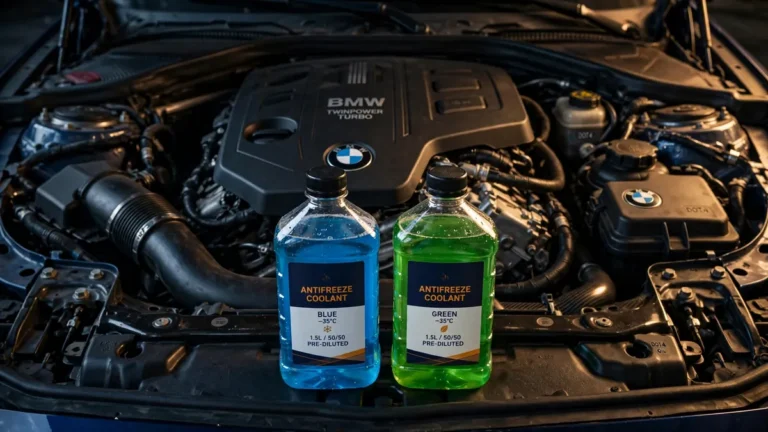
| Coolant | ~Every 4 years | BMW long-life coolant. Check the level and condition regularly between changes; see our BMW 3 Series coolant guide. |
| Automatic transmission fluid + filter (ZF 8HP) | 50,000–75,000 miles or 8 years | BMW says “lifetime.” ZF — the manufacturer — says 50–75k miles; change the pan/filter with the fluid. |
| Manual gearbox oil | 40,000–50,000 miles | Only on manual cars (rare outside the E90). |
| Rear differential + xDrive transfer case fluid | 40,000–50,000 miles | Never appears on CBS; cheap insurance against expensive failures. |
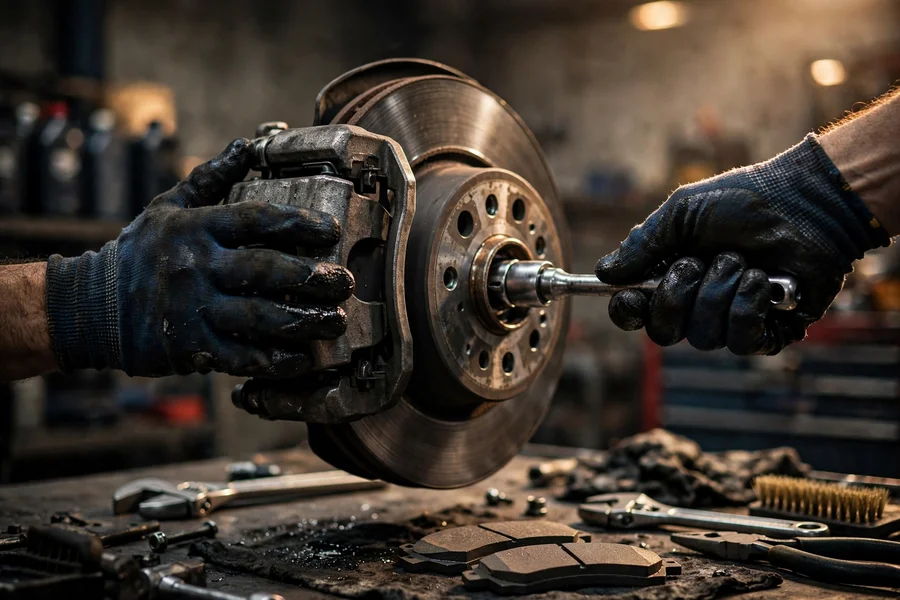
| Brake pads + rotors | Wear-based, ~30,000–70,000 miles | CBS wear sensors track pad life; rotors typically need replacing with every second pad set. |
| Tire rotation + balance | Every 10,000 miles | Staggered wheel setups (wider rear tires) cannot be rotated front-to-rear. |
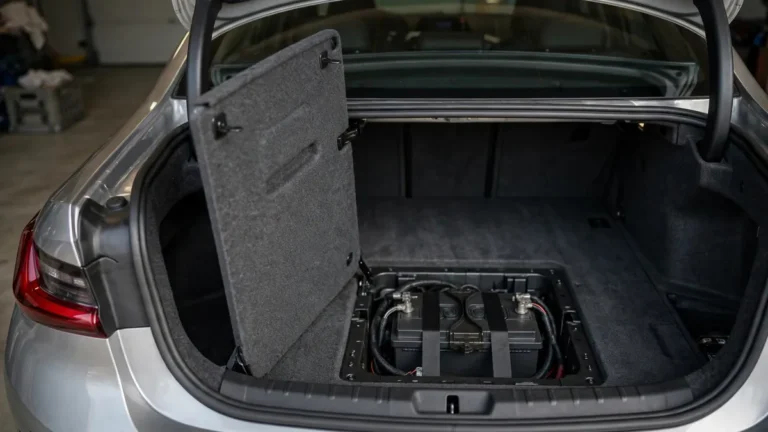
| Battery test | Test annually after year 4 | Replacement requires battery registration so the car charges it correctly — see our battery registration guide. |

What it costs per year: E90, F30 and G20
Maintenance cost is really a function of age. CarEdge’s 10-year projection for the 3 Series shows the curve clearly: about $581 in year one, $1,311 by year five, and $1,719–$2,154 a year in years six through ten, totaling $14,345 over a decade — an average of roughly $1,435 a year, with a 41.7% chance of a major repair somewhere in that span. Kelley Blue Book puts a new 3 Series at $3,520 in maintenance over five years — about $704 a year — while RepairPal estimates roughly $968 a year in repairs for the 3 Series. The truth for any given car sits between those figures, depending on its age, engine and where the work gets done. One caveat before the numbers: these are averages across all trims and engines. A 335i’s N54 or an M340i’s B58 will run above the line on brakes, tires and fluids, while a base 320i or 330i sits below it — and mileage matters more than age within a generation, so a 100,000-mile G20 costs more like an F30.
Below are realistic service-price ranges for each generation at a BMW dealership, an independent BMW specialist, and for DIY (parts only, your labor). Pick your generation. Figures are estimated ranges synthesized from specialist pricing data and owner reports — not BMW list prices, which vary by region.
E90 — budget $1,400–$2,000 a year at an independent specialist ($2,200–$3,200 at a dealer, $700–$1,100 DIY) on a 12,000-mile year, excluding big repairs. The oldest 3 Series on the road needs the most: cooling-system renewal is a near-certainty at this age, and N54-powered 335i models run higher than the figures below.
| Service | Dealer | Independent | DIY (parts) |
|---|---|---|---|
| Oil change + filter | $180–$250 | $110–$180 | $70–$100 |
| Brake pads, front + rear | $450–$700 | $300–$500 | $120–$200 |
| Brake pads + rotors, front + rear | $900–$1,400 | $600–$950 | $280–$450 |
| Water pump + thermostat | $900–$1,700 | $500–$900 | $180–$350 |
| Spark plugs | $350–$500 | $200–$320 | $60–$120 |
| Brake fluid flush | $180–$250 | $90–$150 | $25–$40 |
| Coolant flush | $250–$350 | $140–$220 | $50–$80 |
| Transmission fluid + filter (6HP) | $600–$900 | $350–$550 | $150–$250 |
F30 — budget $900–$1,500 a year at an independent specialist ($1,500–$2,300 at a dealer, $450–$800 DIY) on a 12,000-mile year. The volume generation: parts are plentiful and specialists know these cars cold, which keeps prices in check — except for the N20 timing chain, the one repair that can dwarf a year’s budget.
| Service | Dealer | Independent | DIY (parts) |
|---|---|---|---|
| Oil change + filter | $150–$250 | $100–$200 | $70–$100 |
| Brake pads, front + rear | $500–$800 | $300–$500 | $120–$200 |
| Brake pads + rotors, front + rear | $1,000–$1,600 | $650–$1,000 | $300–$450 |
| Water pump + thermostat | $800–$1,400 | $450–$800 | $180–$350 |
| Spark plugs | $350–$550 | $200–$330 | $60–$110 |
| N20/N26 timing chain, proactive | $2,500–$4,000 | $800–$1,500 | Not DIY-friendly |
| Brake fluid flush | $180–$250 | $90–$150 | $25–$40 |
| ZF 8HP fluid + filter | $800–$1,200 | $450–$700 | $180–$300 |
G20 — budget $600–$1,000 a year at an independent specialist ($900–$1,500 at a dealer, $300–$550 DIY) once free maintenance expires. The cheapest 3 Series to run: mature B48/B58 engines, fewer pattern failures, and the first three years of scheduled maintenance are on BMW’s dime.
| Service | Dealer | Independent | DIY (parts) |
|---|---|---|---|
| Oil change + filter | $170–$280 | $110–$220 | $75–$110 |
| Brake pads, front + rear | $550–$900 | $350–$600 | $140–$220 |
| Brake pads + rotors, front + rear | $1,100–$1,800 | $700–$1,100 | $320–$500 |
| Spark plugs (B48/B58) | $400–$600 | $220–$350 | $70–$120 |
| Brake fluid flush | $190–$260 | $100–$160 | $25–$45 |
| Coolant flush | $280–$380 | $150–$240 | $55–$85 |
| ZF 8HP fluid + filter | $850–$1,300 | $500–$750 | $200–$320 |
Estimate your own annual cost
Annual averages are useful, but your bill depends on your car, your miles and your mechanic. This estimator blends the figures in this guide — KBB’s new-car data, CarEdge’s 10-year curve, RepairPal’s repair averages and the specialist price ranges above — into a planning number for your situation.
3 Series maintenance cost estimator
What’s free under BMW Ultimate Care — and what isn’t
Every new BMW sold by an authorized dealer since the 2017 model year includes BMW Ultimate Care: three years or 36,000 miles of factory-scheduled maintenance, whichever comes first. The covered list is specific: engine oil and filter, brake fluid, cabin microfilter, engine air filter, spark plugs, the key-battery, the CBS vehicle check, and the fuel filter on diesels only.
Just as important is what’s not covered: brake pads and rotors, wiper blades, tires, the battery, wheel alignments, and washer fluid or top-offs — all classed as wear items or consumables. If you need brakes at 30,000 miles on a new 3 Series, that bill is yours. (An interesting footnote: 2015–2016 BMWs carried a more generous four-year/50,000-mile plan that did include brake pads, rotors and wipers — the 2017-and-newer plan dropped the wear items. A separate paid Ultimate Care+ upgrade can add brake coverage back, priced per dealer.)
Two practical consequences. First, the free period makes a new or nearly-new 3 Series genuinely cheap to maintain for three years — hence KBB’s $704-a-year average, which includes two years of nearly zero scheduled-maintenance cost. Second, used buyers get almost nothing: the plan is non-transferable to a second owner in practice, so price your F30 or G20 assuming you pay for everything from day one.
Generation watch lists: what to budget before it breaks
The schedule above covers the predictable stuff. Each generation also has pattern failures that aren’t in any service booklet but every specialist plans for. If your car is approaching these milestones, budget the repair now — it’s cheaper than the tow.
- E90 (2006–2011): the entire cooling system — electric water pump, thermostat, expansion tank and hoses — is a wear item at 80,000–100,000 miles; valve-cover and oil-filter-housing gaskets seep oil by 100,000; and 335i models add N54 high-pressure fuel pump and wastegate-rattle concerns. A cooling refresh at a specialist typically runs $900–$1,600.
- F30 (2012–2018): the N20/N26 timing chain is the headline risk on 2012–2015 328i/320i cars — listen for cold-start rattle and verify replacement history; charge pipes crack on tuned N20/N55 cars; and the electric water pump wants attention at 60,000–100,000 miles. The full rundown of what’s risky and what isn’t lives in our 3 Series reliability by year guide.
- G20 (2019+): refreshingly short list — early-production cars can crack coolant expansion tanks (an updated part exists), and the usual advice is to keep software updated and not skip the 60,000-mile ZF transmission service. If you’re cross-shopping generations, our complete 3 Series guide maps every engine and chassis code.
How to cut your maintenance bill without cutting corners
- Find an independent BMW specialist — and use the dealer for warranty work only. Dealer labor runs $150–$200 an hour in most major markets; good independents charge $100–$150 and often know the platform better. That gap is the single biggest lever on your annual bill.
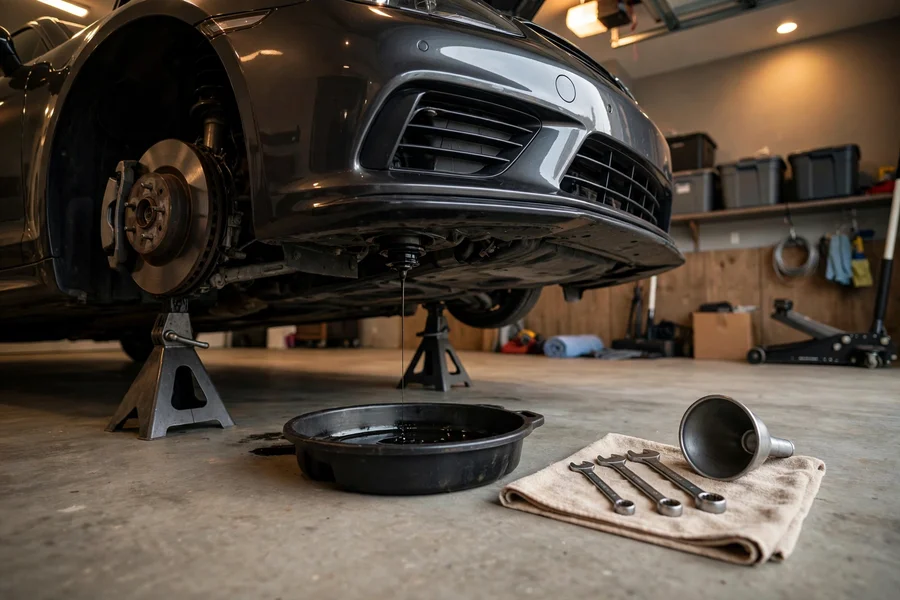
- Do the easy stuff yourself. Oil changes (~$80 in parts), cabin microfilters and engine air filters are beginner jobs on a 3 Series — see our BMW 3 Series oil change interval guide for the full breakdown of timing, oil specs and costs.
- Pair brakes with rotors when due. A pad-only job that comes back for rotors six months later pays labor twice; doing pads and rotors together typically adds only the parts cost. Our 3 Series brake pad replacement cost guide breaks down every option.
- Bundle services around the big ones. Spark plugs, air filters and a brake-fluid flush all landing near 60,000 miles? One visit, one loaner, one round of labor — ask the shop to quote the package.
- Use quality parts, not the cheapest ones. Aftermarket pads from established brands cost roughly half of BMW-branded parts and meet the same standards — but no-name rotors and sensors are how “cheap” brake jobs become expensive ones.
- Keep every receipt. A documented maintenance history is worth real money at resale: KBB notes that well-maintained 3 Series examples hold their value better, and a folder of specialist invoices is the cheapest selling feature your car will ever have.
The verdict
The BMW 3 Series maintenance schedule is not the mystery the internet makes it out to be: follow CBS, shorten the oil interval on turbo engines, service the transmission that BMW calls “lifetime,” and pick a specialist over the dealer. Do that, and the real numbers are unremarkable for the segment — roughly $700 a year on a new G20, around $1,200 a year on an F30 at an independent shop, and $1,700+ on an E90 that’s earning its keep. The owners who get burned are the ones who trusted the dashboard countdown for everything and the cheapest quote for the rest. For the bigger picture — which years to buy, which to avoid, and how each generation drives — our complete 3 Series guide pulls every thread of this series together in one place.
Frequently asked questions
Intervals follow BMW’s Condition Based Service guidance; the 7,500-mile oil interval for turbo engines, 50,000–75,000-mile ZF transmission service and 40,000–50,000-mile differential/transfer-case service are specialist consensus, not factory claims. Annual cost figures synthesize Kelley Blue Book (new-car five-year data), CarEdge (10-year projection), RepairPal (repair averages) and independent-shop pricing ranges; dealer and DIY figures are estimated from those sources with medium confidence — your region and driving style move real numbers. Generation cost bands exclude major repairs like timing-chain or engine failure. Last verified: September 2026.