BMW Oil Filter Housing Gasket Leak: Why It’s Urgent
Short answer: A BMW oil filter housing gasket leak is urgent because the housing sits above the serpentine belt: oil on the belt can make it slip, shred, and get dragged past the crankshaft seal — ruining the seal and sending debris into the engine. A weep you can monitor becomes a do-not-drive repair the moment the belt looks wet. Most gaskets seep around 60,000–70,000 miles; repair runs roughly $300–$900 at an independent shop.
In this guide
- What the gasket does (and why it leaks)
- Symptoms, by engine
- The belt-shredding failure chain
- Post-repair oil-system priming
- OFHG vs. valve cover gasket
- Repair costs: DIY vs. shop vs. dealer
- DIY repair: difficulty and key steps
- Leak urgency checker
- Oil filter housing gasket leak FAQ
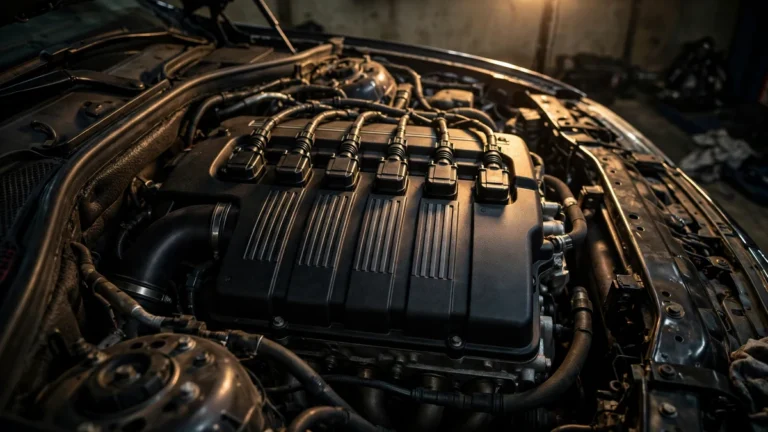
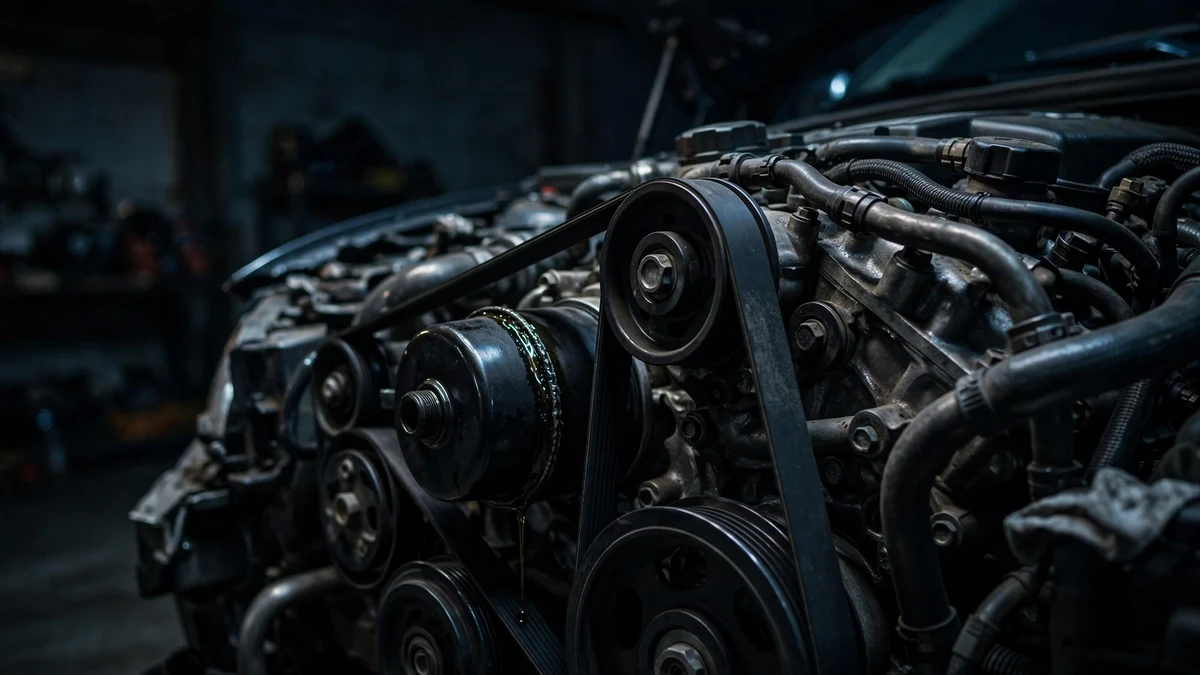
Most oil leaks on a BMW 3 Series are a nuisance: a driveway spot, a top-up between changes, a smell that comes and goes. The oil filter housing gasket (OFHG) leak is the exception — the one leak BMW specialists treat as genuinely urgent. The reason is geography: the housing sits at the front of the engine, directly above the serpentine belt, so a leaking gasket drips oil exactly where a rubber belt spins at engine speed. Oil on the belt, a slipping and shredding belt, debris forced past the front crankshaft seal — it’s the most widely reported catastrophic failure mode attached to any “minor” BMW oil leak.
One honesty note up front: the belt-shredding chain is owner- and specialist-reported and mechanically plausible, but BMW has never published a document describing it — so this guide presents it as a widely reported risk, not a BMW-confirmed one. What is BMW-documented is the post-repair oil-priming procedure, and what owner-report clustering firmly establishes is the failure window: around 60,000–70,000 miles.
What the oil filter housing gasket does (and why it leaks)
The oil filter housing is the cast aluminum (or, on newer engines, plastic) block on the side of the engine that holds the oil filter cartridge and, on most 3 Series engines, the oil cooler or oil-to-coolant heat exchanger. The gasket between the housing and the block — plus the smaller oil-cooler and thermostat gaskets — has to seal both pressurized oil and pressurized coolant, in one of the hottest, most thermally cycled spots on the engine. Like every rubber seal there, it eventually hardens, shrinks, and loses its seal.
It’s one of the “big three” resealing jobs on higher-mileage BMWs — and the one with the nastiest failure mode. The oil pan gasket leaks onto the ground; the valve cover gasket leaks onto the exhaust manifold and smokes; the oil filter housing gasket leaks onto the belt. Location is everything.
The 60,000–70,000-mile figure is a specialist rule of thumb backed by heavy owner-report clustering — not a BMW interval (BMW publishes none; this is a condition-based repair). Heat cycles harden the rubber until it turns “hard almost like hard plastic,” and hotter climates or frequent short trips may accelerate it. N52 E90s cluster at 63,000–69,000 miles; N55s range from a 44,000-mile outlier past 100,000; the N20 sits in the 60,000–100,000 window. B-series engines show fewer early reports, though G20 owners call B58 OFH leaks a known issue at 60,000-plus, and two independent B48 reports describe the plastic housing itself cracking around 60,000–70,000 miles — an emerging pattern, not yet established.
BMW oil filter housing gasket leak symptoms, by engine
Early symptoms are subtle and the housing is hard to see: on the N54, N55, and N20 it sits low under the intake manifold, so oil travels down the block before it drips — by the time you see driveway spots, the leak is well established. One 100,000-mile N55 owner’s first sign was a burning-oil smell on shutdown; the leak itself was “notoriously hard to visualize.” Learn the progression below rather than waiting for a puddle — and see our BMW 3 Series oil leak guide for the general diagnostic approach.
| Symptom | What to look for | Urgency |
|---|---|---|
| Burning-oil smell after shutdown | Oil seeps onto hot exhaust/downpipe area and burns off at shutdown. Often the first sign — the leak itself may be invisible at this stage. | Monitor closely; inspect the housing and belt now |
| Oil spots under the front of the engine | Dark spots beneath the front of the engine. On N54/N55/N20, oil runs down the block and pan first — spots mean an established leak. | Schedule repair within weeks |
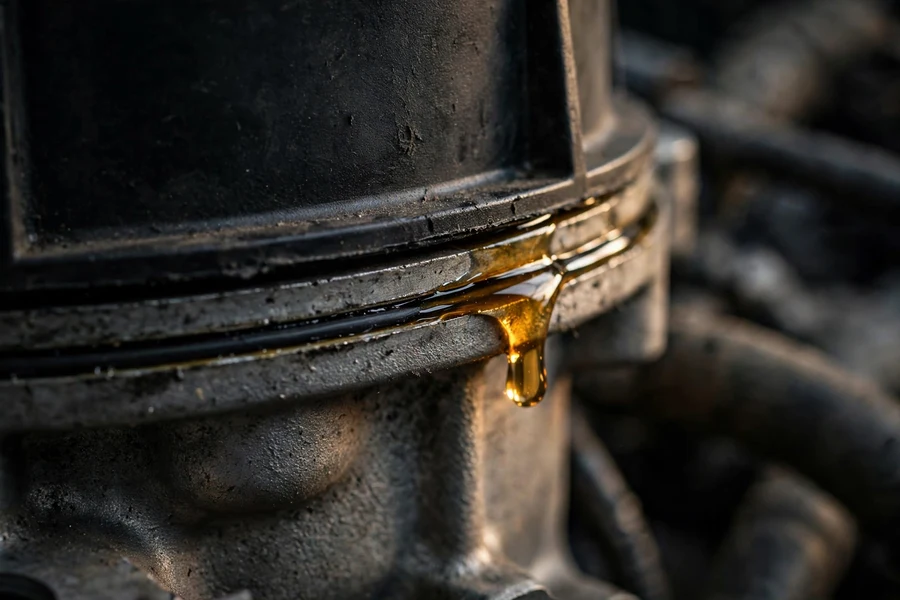
| Visible seep at the housing | Oily residue at the housing, driver’s side, front of the engine. On buried-housing engines (N54/N55/N20), remove the engine cover and look with a light from above and below. | Schedule within days; check the belt immediately |
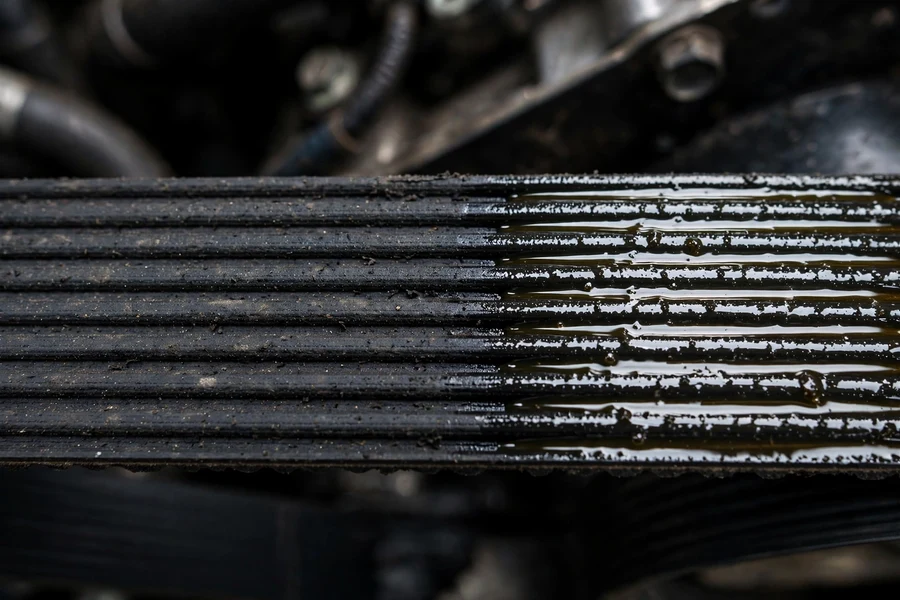
| Oil visibly on the serpentine belt | The belt or pulleys look wet, shiny, or blackened with fresh oil — the escalation point. Oil contamination is actively attacking the belt. | Do not drive — tow it in |
| Frequent low-oil / “add 1 quart” warnings | A progressing leak shows as the oil level dropping faster between changes. Distinguish from true oil consumption (burning) — see our oil consumption guide. | Schedule repair; track the loss rate |
| Oil in coolant or coolant loss | The housing also seals the oil cooler — its gaskets can let oil and coolant mix: an oil film in the expansion tank, or coolant vanishing with no external leak. Reported alongside B48 housing cracks. | Schedule within days; check both fluids |
| Smoke from the engine bay | Oil burning off hot components, visible on cold start or after parking — usually a leak that’s been ignored a while. | Schedule now; inspect belt and seals |
Two symptoms change the diagnosis. Oil on the serpentine belt flips the job from “schedule it” to “stop driving” — oil softens the belt’s rubber compound, and a contaminated belt can slip off its pulleys or shred without warning, including on the highway. Oil-in-coolant signs mean the oil-cooler/thermostat gaskets sharing the housing are involved too: always replace those with the main gasket — same age, same heat, labor already paid.
Why this leak is urgent: the belt-shredding failure chain
Here’s the mechanism, as consistently described across owner and specialist accounts — worth reading carefully, because it lets you judge urgency honestly, without panic or complacency:
The OFHG-to-engine-damage chain
Five stages from a weeping gasket to internal engine damage — and where the timeline collapses to “stop driving.”
The gasket seeps
Heat-cycled rubber hardens and loses its seal, typically around 60,000–70,000 miles (owner-report clustering, not a BMW interval). Oil weeps at the housing-to-block joint — you may smell it after shutdown before you ever see a drip. Monitor · inspect the belt
Oil reaches the serpentine belt
The housing sits directly above the belt path, so dripping oil lands on the belt and pulleys below. A belt that looks wet, shiny, or freshly blackened is contaminated — oil softens the belt’s rubber and washes lubricant from the pulley bearings. Urgency escalates
The belt slips, walks, and shreds
An oil-soaked belt loses grip: it slips, can “walk” sideways off the pulleys, or shreds outright — and a thrown belt at engine speed whips around the front of the engine, often with little warning.
Debris wraps the crank pulley and kills the seal
A shredded belt winds around the back of the crank pulley and gets pressed into the front crankshaft seal — ruining it. Belt scraps can be drawn past the seal into the engine; owners describe finding belt debris in the oil pan afterward. Do not drive
Ingestion and engine damage
With the seal compromised and debris inside, reported outcomes range from a ruined crank seal and accelerated oil loss to oil starvation and, in the worst owner-reported cases, internal engine damage. A $300–$900 gasket job has become a multi-thousand-dollar engine repair. Tow it in
Honest caveat: stages 3–5 are owner- and specialist-reported and mechanically plausible, but BMW has not published a document describing this failure mode. Severity varies by engine and belt routing — treat it as a widely reported risk, and note the one decision it hinges on (is oil on the belt?) is something you can check yourself.
The triage rule BMW specialists use: urgency is set by the belt, not the size of the drip. Dry belt, weeping gasket — schedule within weeks. Wet belt — do not drive. Once oil is on the belt, the belt must be replaced (roughly $30 in parts if you DIY) and the tensioner and pulleys inspected for contamination. Our serpentine belt guide shows what a healthy belt looks like and when it’s due on its own schedule.
| What you observe | What it means mechanically | Action timeline |
|---|---|---|
| Smell only, no visible oil | Early seep; oil burning off before it accumulates. Belt likely still dry — verify visually. | Inspect within a week; schedule repair within a month |
| Seep at housing, belt dry | Active leak confined to the housing area. The window before oil migrates to the belt. | Repair within days to a few weeks; recheck belt weekly |
| Oil spots under the car | Established leak; on buried-housing engines oil has traveled down the block. Belt contamination likely or imminent. | Repair within days; inspect the belt before every drive |
| Belt looks wet or shiny | Oil has reached the belt. Slipping, walking, or shredding can follow with little warning. | Do not drive — tow to a shop |
| Belt noise, visible fraying, or belt off pulleys | The chain is already in motion. Driving risks seal damage and debris ingestion. | Do not start the engine — tow it |
The post-repair step many shops skip: oil-system priming
One part of the OFHG story rarely makes DIY write-ups: BMW itself mandates an oil-pump and oil-supply-circuit priming procedure after the housing is removed. The bulletin is BMW Service Information 11 02 20, filed with NHTSA, and it explicitly lists “engine oil filter housing” among the repairs that interrupt the engine oil supply circuit and therefore require priming. The 2022 revision’s affected-engine list covers the N20, N26, N55, N63 and S55/S63 families, and the B-series engines (B36 through S68) plus others.
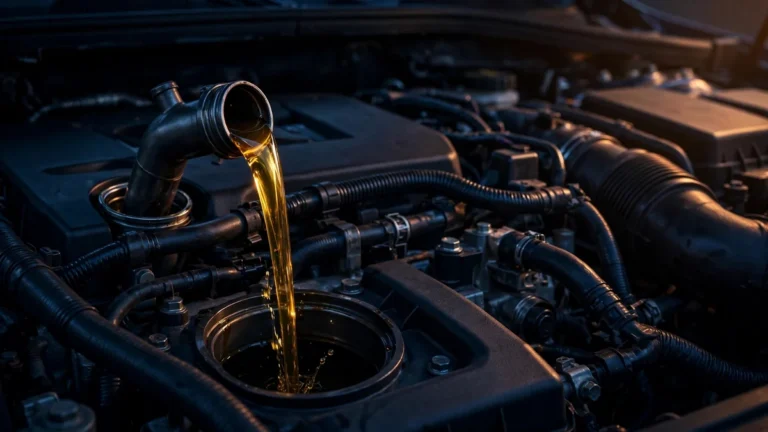
The procedure: pull the electric fuel-pump fuse, crank the engine 10 seconds, rest the starter 20 seconds, repeat twice more (three cranking cycles total), reinstall the fuse, then start. Expect a long first crank and rough idle — that’s normal. It refills the oil galleries and builds pressure before the engine fires, so bearings don’t run dry on first start.
Why this matters: owner reports — particularly a cluster around 2011 N55 cars on PistonHeads and e90post — describe rod knock or big-end bearing failure shortly after OFHG service where priming was skipped. The honest position: BMW requires priming; skipping it is the documented risk factor. Whether skipped priming directly caused those failures is debated — some shops dismiss the link — but the procedure costs nothing, takes two minutes, and is BMW-specified. Don’t skip it. An air pocket from the repair can also trigger VANOS fault codes afterward — usually cleared with a rev or a scan tool; our check engine light guide covers reading them.
Oil filter housing gasket vs. valve cover gasket
These two gaskets fail in the same mileage window, get replaced in the same shop visits, and get confused constantly — including by parts-counter staff. They’re different leaks with different symptoms and different stakes, and telling them apart takes about thirty seconds once you know where to look:
| Oil filter housing gasket (OFHG) | Valve cover gasket (VCG) | |
|---|---|---|
| Location | Front/lower of the engine, driver’s side — near the serpentine belt | Top/rear of the valve cover, running along the top of the engine |
| Signature symptom | Oil migrating toward the belt; wet/shiny belt is the red flag | Oil smoking off the exhaust manifold, often within a minute of a cold start |
| What it threatens | Serpentine belt → crank seal → engine internals (the chain above) | Mostly mess and smell; in bad cases oil can foul ignition coils |
| Seals | Pressurized oil and coolant (via the oil cooler section) | Oil only, plus crankcase pressure |
| Typical failure window | ~60,000–70,000 miles (owner-report clustering) | Similar 60,000–100,000-mile window — often done together |
| Urgency | Urgent once oil nears the belt | Schedule at convenience; rarely an emergency |
The thirty-second test: oily residue at the front of the engine, low near the belt, points to the OFHG; oil along the top edge of the valve cover, or smoke off the manifold after startup, points to the valve cover gasket. Both are often replaced in the same visit — if your shop quotes one past 70,000 miles, ask about the other; doing them together beats paying for access twice.
Repair costs: DIY vs. independent shop vs. dealer
The OFHG job has one of the wider cost spreads on a 3 Series, because the part is cheap and the labor depends on how buried the housing is. On the N52 it’s accessible at the front; on the N54, N55, and N20 it’s under the intake manifold — which is why dealer book time, assuming full manifold removal per BMW’s procedure, inflates quotes far beyond an independent specialist’s manifold-loosening shortcut. US-typical ranges below; treat them as bands, not quotes, since labor rates vary sharply by region.
| Channel | Cost band | What’s included / notes |
|---|---|---|
| DIY (parts only) | $20–$140 | Gasket kit ~$20–$50 (OEM set); add cooler/thermostat gaskets, an oil change, and a belt (~$30) if yours is oil-soaked. Budget an E10 1/4″-drive torx socket (~$22) if needed. |
| Independent specialist | $300–$900 | 1–3 hours using the manifold-loosening shortcut on buried-housing engines; N55/N20 skew toward the top of the band. |
| Dealer | $600–$1,400+ | Book time assumes full manifold removal. One N55 owner was quoted $1,400; a 528i owner reported an indy charging under a quarter of the dealer’s $600 ask. |
Two line items belong in any honest estimate. The belt: if oil touched it, it gets replaced — cleaning an oil-soaked belt doesn’t restore grip, and a compromised belt leaves the failure chain half-disarmed. The oil change: the job requires draining the oil anyway, so fresh oil and a filter are part of the repair, not an upsell. Shopping rather than repairing? Add the housing to your pre-purchase inspection checklist — a seep at 60,000-plus miles is normal wear, but it’s a negotiating point. It also belongs in the 3 Series maintenance schedule as part of the 60,000–100,000-mile resealing wave.
The DIY repair: honest difficulty and the key steps
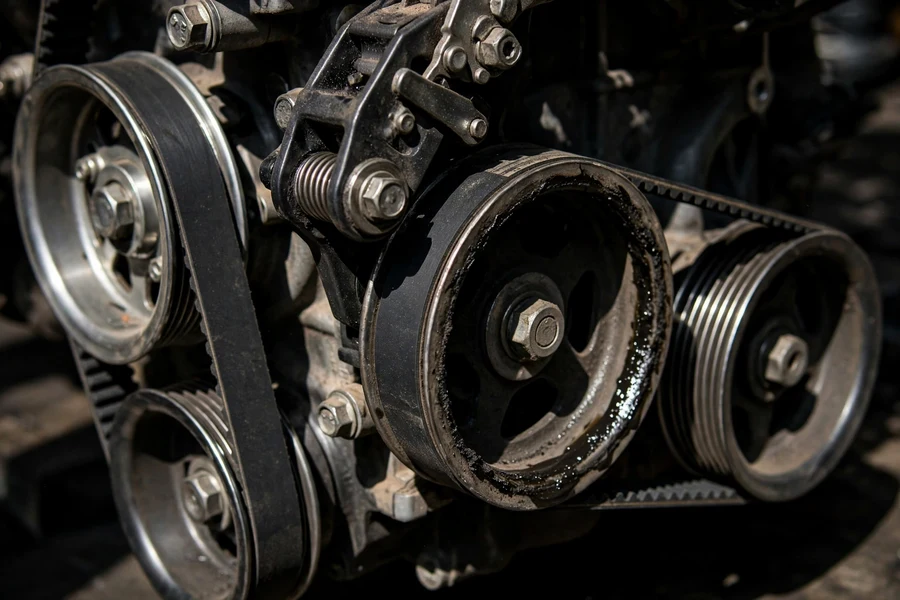
Difficulty: intermediate–advanced, about 3.5 out of 5. The gasket is a simple part; the difficulty is access. On the N52 the housing sits at the front of the engine — one of the more approachable BMW resealing jobs. On the N54, N55, and N20 it’s buried under the intake manifold, and the known shortcut is to loosen the manifold and slide it about an inch out on its studs — after disconnecting the HPFP sensor connector and turning the J-pipe aside — rather than removing it fully. That saves roughly two hours but leaves tight quarters at the rear, where one hidden bolt demands an E10 1/4″-drive torx socket (a 3/8″ drive won’t clear) or an E10 ratcheting wrench.
The job, in order:
- Drain the oil and partially drain the coolant — the housing carries coolant through the oil cooler section. The oil change is folded into the job anyway; confirm you’re on the right oil change interval afterward.
- Clear access: engine cover and airbox/ducting off, DME box aside (N20), charge pipe off (turbo engines).
- Break the oil-cooler/thermostat bolts loose while the housing is still mounted — cracking them with the housing in your hand is how bolts round off.
- Loosen or remove the intake manifold (buried-housing engines); remove the coolant hose with its two 10mm bolts if it blocks the lower housing bolt — it has an O-ring, replace it if you can source one.
- Remove the housing, clean both sealing surfaces, and install the new gaskets — main housing gasket plus oil-cooler/thermostat gaskets, always as a set.
- Reinstall, refill coolant and bleed the cooling system, refill with fresh oil.
- Prime the oil system per BMW SI B11 02 20 before the first start: pull the electric fuel-pump fuse, crank 10 seconds, rest the starter 20 seconds, repeat twice more, reinstall the fuse, start. Expect a long first crank and rough idle.
- Check for leaks, verify the oil level, and road test — then recheck the level and the housing after the first heat cycle.
Three things before you start. No verifiable torque spec for N20/N55/N52 housing bolts exists in public sources — one forum thread quotes 22 N·m, but that’s for the older M54 and posters disagreed even there. Look the figure up in BMW TIS for your engine. Second, the B48’s plastic housing may be cracked, not just leaking — inspect it, especially the gasket grooves, before reassembly; a gasket kit won’t fix a crack. Third, if oil reached the belt, replace the belt and inspect the tensioner and pulleys while everything is apart. And know your limits: if the manifold step or the priming procedure feels like more than a weekend you want, this is exactly the job an independent BMW specialist does weekly.
How urgent is my leak? Interactive checker
Tell the checker what you’re seeing and which engine you have — it returns an urgency tier, an action timeline, and cost bands. Same triage rule as the guide: the belt’s condition, not the drip’s size, sets the urgency.
OFHG leak urgency checker
What are you seeing — and which engine? The checker grades your urgency and tells you what to do next.
Choose a symptom above to get your urgency reading.
A triage aid based on specialist consensus, not a diagnosis. Cost bands are US-typical ranges.
Oil filter housing gasket leak FAQ
Can I keep driving with a BMW oil filter housing gasket leak?
It depends on the belt. A dry belt with a weeping gasket is a schedule-within-weeks job — but if the serpentine belt looks wet or shiny, do not drive. An oil-contaminated belt can slip, shred, and get pulled past the front crankshaft seal, sending debris into the engine. Tow it in.
How much does it cost to fix a BMW oil filter housing gasket leak?
US-typical: $20–$140 in parts DIY, $300–$900 at an independent specialist, $600–$1,400+ at a dealer. The spread is labor — on N54/N55/N20 the housing sits under the intake manifold, and dealer book time assumes full manifold removal. If oil reached the belt, add a belt and tensioner inspection to every channel.
Is an oil filter housing gasket leak the same as a valve cover gasket leak?
No. The oil filter housing gasket sits at the front/lower of the engine near the serpentine belt, and its leak threatens the belt and crank seal. The valve cover gasket is at the top; its leak smokes off the exhaust manifold and is mostly a mess-and-smell problem. Both fail in the 60,000–100,000-mile window and are often replaced together.
What is the oil priming procedure after an oil filter housing replacement?
BMW Service Information 11 02 20 requires priming the oil pump and supply circuit after the housing is removed: pull the electric fuel-pump fuse, crank 10 seconds, rest 20 seconds, repeat twice more (three cycles total), reinstall the fuse, then start. It builds oil pressure before the engine fires so bearings don’t run dry — skipping it is the documented risk factor behind owner reports of bearing failure after this service.
How long does a BMW oil filter housing gasket last?
BMW publishes no interval — it’s condition-based. Owner-report clustering puts the typical first seep around 60,000–70,000 miles (N52: 63,000–69,000; N55/N20: wider, up to 100,000+). Heat cycles harden the rubber; hotter climates and frequent short trips may bring it on earlier.
The oil filter housing gasket is the rare BMW leak where the right question isn’t “how bad is the drip” but “has oil reached the belt.” Thirty seconds with a light under the hood answers it: dry belt, schedule the gasket; wet belt, call the tow truck. Still triangulating? The oil leak guide and serpentine belt guide will help. And fold the 60,000–70,000-mile seep window into your maintenance schedule alongside the valve cover and oil pan gaskets — then this emergency becomes just another planned service.