BMW HPFP Failure Symptoms: Long Crank? Read This
Short answer: BMW HPFP failure symptoms start with a long crank — six or more seconds of normal-speed cranking that simply won’t catch — most often on cold starts. As the high-pressure fuel pump weakens, the car drops into limp mode under load and may eventually refuse to start at all. The DME typically stores codes 2FBF, 2FBE, 29DC, or 29F1/29F2. One code to ignore: 2AAF stored alone almost never means the HPFP is failing.
In this guide
- The signature symptom: a long crank, not a slow one
- The failure arc: long crank → limp mode → no-start
- Fuel rail pressure: the tell your scanner can see
- BMW HPFP fault codes decoded — and the 2AAF trap
- N54 vs N55: which HPFP your car has
- The 10-year/120,000-mile warranty — and why it’s gone
- Long-crank diagnostic picker
- Replacement costs: DIY, independent shop, dealer
- DIY repair: difficulty, tools, and safety
- BMW HPFP failure FAQ
Few BMW parts carry the reputation of the N54’s high-pressure fuel pump. The twin-turbo N54’s direct injection depended on a pump that could squeeze fuel to roughly 200 bar on demand — and when it falters, it doesn’t fade like a port-injected car’s pump. The signature is almost always the same: a crank that goes on and on at perfectly normal speed, refusing to catch, until one day it doesn’t catch at all. This guide covers what that means, how to confirm it with codes and rail-pressure data, which pump your engine has, what the repair costs, and the warranty history that no longer helps anyone.
The signature symptom: a long crank, not a slow one
First, get the vocabulary straight: a long crank and a slow crank are different diagnoses. A slow crank is a weak battery or tired starter — the engine turns over sluggishly, each revolution labored. An HPFP long crank sounds completely different: the starter spins the engine at full, healthy speed and it simply refuses to fire. Owners describe six, eight, sometimes ten seconds of perfectly normal cranking before the engine catches — the DME cranking until rail pressure finally builds enough for the injectors to work with.
Cold starts show it first. Overnight, residual rail pressure bleeds down, and a worn pump takes far longer to rebuild it — so the classic early story is an unnervingly long first crank of the day with better warm restarts. BMW’s own bulletins name this exact symptom (“extended engine starting time”), and dealer Service Action 566 (SI B13 09 10) was a DME reflash for N54 cars built 02/2006–03/2010, specifically aimed at improving starting strategy for 2FBF long-crank complaints.
If your crank is sluggish — slow turnover, dimming lights — read our won’t-start guide and battery drain guide instead. Those cover the battery, starter, and charging system, a far more common cause of cranking complaints. The HPFP diagnosis only applies when cranking speed is healthy and the engine simply won’t catch.
The failure arc: long crank → limp mode → no-start
HPFP failure on the N54 (and early N55) rarely arrives all at once. Owner reports follow a recognizable progression — knowing the arc helps you catch it at the long-crank stage rather than at the stranded-on-the-shoulder stage:
| Stage | What you notice | What’s happening in the fuel system |
|---|---|---|
| 1. Intermittent long crank | Cold starts take 6+ seconds of normal-speed cranking before the engine fires; warm restarts are fine | Worn pump can still reach target pressure, but takes much longer to build it from a bled-down rail |
| 2. Every start is long | Extended cranking on every start, not just cold ones; occasionally a second attempt is needed | Pump output is declining across the board; pressure builds slowly even from residual rail pressure |
| 3. Limp mode under load | SES/CEL illuminates; “reduced engine performance” or drivetrain malfunction warning; car falls flat when you ask for boost | Rail pressure collapses under high fuel demand (wide-open throttle, high rpm). The DME cuts power to protect the engine |
| 4. Stumbling and hesitation | Misfire-like stumbling at higher rpm, hesitation on acceleration, rough running that clears at light throttle | Injectors are being starved intermittently as pressure fluctuates; the DME may switch off individual cylinders (code 29DC) |
| 5. No-start or stall | Engine cranks normally but never fires, or stalls while driving and won’t restart | Rail pressure has dropped to the low-pressure floor (~5 bar / ~75 psi) — the pump is effectively dead |
Stage 3 confuses owners: the car drives fine at light throttle, then the moment you merge or floor it, power vanishes and a drivetrain malfunction or reduced-power warning appears. The physics are simple — at idle and cruise, even a sick pump keeps up with low fuel demand; under boost, demand spikes and rail pressure collapses. If your 3 Series behaves perfectly until you ask it to work hard, the fuel system belongs high on your suspect list; our drivetrain malfunction guide covers the limp-mode side, and our check-engine-light guide covers the SES light that appears here.
A note on prevalence: BMW never published a failure rate, and its bulletin’s “small percentage” estimate is disputed by owners with multiple replacements. No published percentage exists, so this article prints none — what follows is the verifiable part: the failure’s shape, its codes, and the repair.
Fuel rail pressure: the tell your scanner can see
Before spending a dollar on parts, the most decisive HPFP test is also the simplest: watch fuel rail pressure while someone cranks. A direct-injection BMW runs two pumps in series — the in-tank low-pressure pump (LPFP, controlled by the EKPM module) delivers ~5 bar (~72–75 psi), and the cam-driven HPFP multiplies that to as much as ~200 bar (~2,900 psi). That gives a clean fork: rail stuck near the 5-bar floor while cranking means the LPFP side is working and the HPFP is dead. Pressure that won’t even reach the floor means suspecting the low-pressure side — pump, EKPM, or wiring — before the HPFP.
N54 reference values, aggregated from owner logs and dealer documents (owner-verified references, not BMW factory spec): ~50 bar (~700–750 psi) at idle, ~200 bar maximum, ~170–210 bar under boost, with BMW’s dealer fault tree (SI B12 55 06) treating 40–210 bar as the acceptable window and expecting ~200 bar on a healthy cold start. One widely cited owner report nailed the failure signature: a rail stuck at ~75 psi during cranking — exactly the LPFP floor, with the HPFP contributing nothing.
N54 rail-pressure reference map
Community-verified owner values, not BMW factory spec. Log-scale position for readability.
Rail stuck near 5 bar while cranking = HPFP dead, LPFP working. Rail healthy at idle but collapsing under load = pump can’t meet demand — classic stage-3 failure.
Reading rail pressure live needs a BMW-capable scan tool — a generic OBD-II reader shows codes but not manufacturer-specific live data (our OBD2 scanner guide covers which tools can). Without live data, the codes below are the next-best evidence: long crank plus 2FBF or 29DC is about as conclusive as this diagnosis gets.
BMW HPFP fault codes decoded — and the 2AAF trap
The DME watches rail pressure constantly, so a failing HPFP almost always leaves codes — BMW’s dealer documents (notably SI B12 55 06) describe a specific fault tree built around them. The codes that matter, what BMW’s documentation says they mean, and the one code you must not use to condemn the pump:
| Fault code | BMW/DME description | What it means in practice |
|---|---|---|
| 2FBF | Fuel pressure on release of injection — pressure too low | The classic long-crank HPFP code, named in the SI B13 09 10 service action. Long crank plus 2FBF makes the HPFP the prime suspect. |
| 2FBE | Fuel high pressure after engine stop — pressure too high / implausible | A high-pressure-side regulation fault. The dealer tree points at the HDP-to-DME wiring as well as the pump — inspect wiring and connectors before replacing parts. |
| 29DC | Cylinder injection switch-off (cutout) — pressure too low in HP system | Pressure dropped so far the DME shut off individual injectors. Very common on failing N54 pumps; the dealer procedure usually calls for pump replacement. |
| 29F1 | Fuel pressure plausibility | The DME cross-checks high- and low-pressure sensor readings (±3 bar tolerance). A plausibility fault means the sensors disagree — investigate before assuming the pump. |
| 29F2 | Fuel HP system — fuel pressure | The general high-pressure-system fault. The dealer tree checks that low-pressure delivery exceeds 4.75 bar with the pump running, and that residual pressure stays above 3.75 bar ten minutes after it stops. |
| 2B2C | Fuel high-pressure system — cold start | From the dealer fault tree; flags the high-pressure system during cold-start enrichment — matching the cold-start long crank. |
| 2FBC | Fuel control valve — signal | Electrical fault in the pump’s control-valve circuit. Check wiring and connector first — this can be a harness problem, not a dead pump. |
| 2AAF | Fuel pump plausibility (low-pressure/EKP side) | WARNING — usually not the HPFP. A low-pressure-side code often stored alone with no symptoms; dealers routinely ignore it. Do not replace the HPFP for 2AAF alone — with genuine long-crank symptoms, investigate the LPFP and EKPM module first. |
The 2AAF trap catches more owners than any other mistake here. It’s a low-pressure-side plausibility code that can set during normal operation — a momentary disagreement between the EKPM module and the DME. A shop sees a fuel-pump code, orders a $500 HPFP, spends a Saturday on an intake-manifold-off job, and the problem was never the pump. The rule: 2AAF by itself, with no long-crank symptom and no high-pressure codes, is not an HPFP diagnosis. Clear it, drive, and only act if 2FBF, 29DC, or the other codes above appear.
N54 vs N55: which HPFP your car has
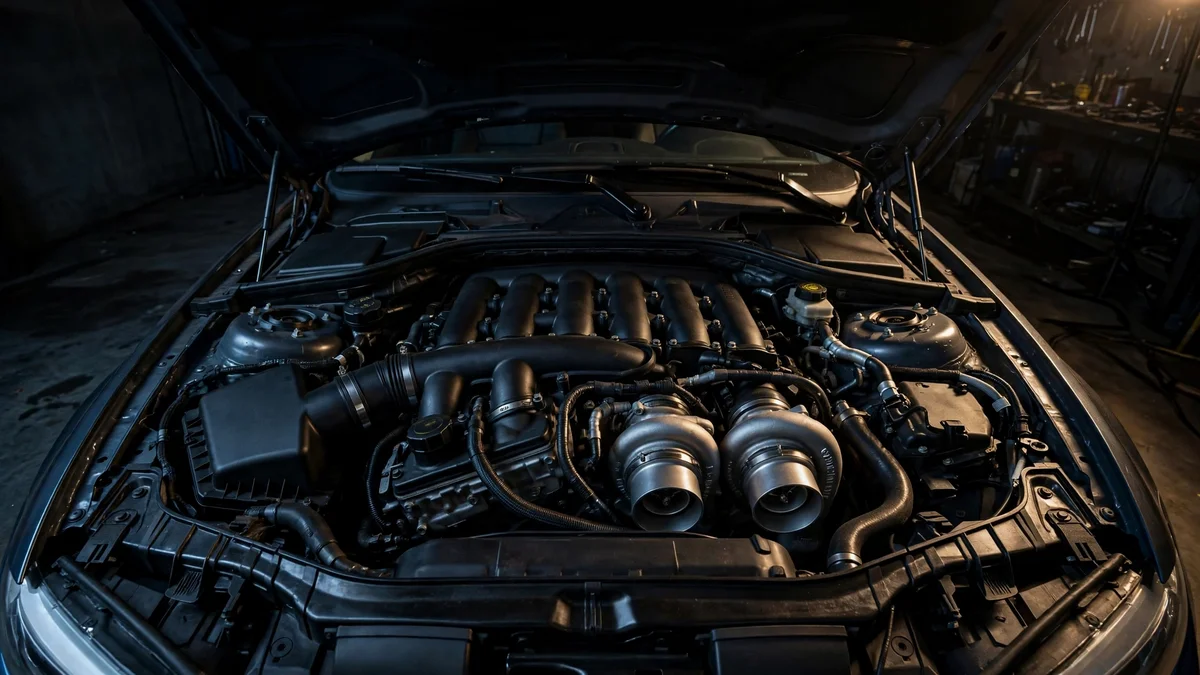
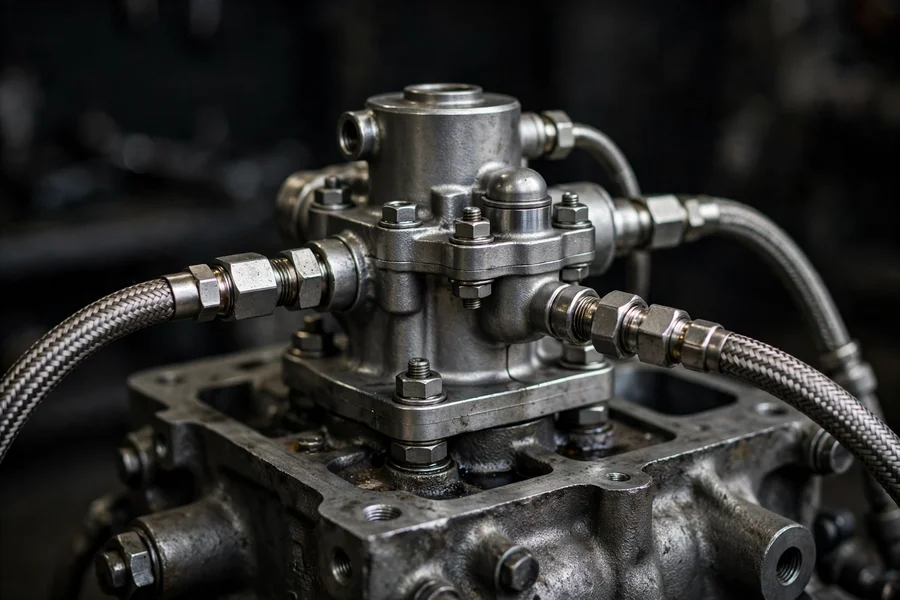
“HPFP failure” is overwhelmingly an N54 story — with an N55 twist. The N54 (2007–2010 335i/135i/535i) uses a Continental rotary-style pump on the cylinder head, buried under the intake manifold — the pump at the center of the class action, the warranty extension, and nearly every long-crank thread ever posted. But early N55 cars (E-series, 2011 through early/mid 2012) carried over the same HPFP as the N54, per consistent owner and parts-catalog reporting — so a 2011 335i can fail exactly the way a 2008 does.
Then BMW redesigned the pump: owner consensus and parts catalogs point to a mid-2012 changeover — all F30 cars and E92/E93s built after roughly March 2012. The later N55 pump is a different, non-interchangeable design, and post-redesign N55 failures are described as markedly less frequent. Where each car stands:
| Engine / era | HPFP design | Failure character |
|---|---|---|
| N54 (2007–2010) | Original Continental rotary-style pump; under intake manifold | The notorious one. Long crank → limp mode → no-start is the textbook arc; codes 2FBF/29DC/29F1/29F2. |
| N55 early (2011–early 2012, E-series) | Same pump as the N54 (carryover) | Fails the same way the N54 pump does. A 2011 335i with a long crank deserves the full HPFP workup. |
| N55 late (mid-2012+, incl. all F30) | Redesigned pump; different, non-interchangeable design | Failures occur but are markedly less frequent. Don’t assume an N54-style diagnosis fits without confirming codes and rail pressure. |
The practical consequences: a 2011 335i deserves the same cold-start long-crank check on a test drive as a 2009 (our used 3 Series buying guide walks through that process). On a late N55 with fuel-pressure symptoms, verify with codes and rail pressure rather than assuming the pump — the redesign changed the odds. Our reliability-by-year guide puts the N54’s problem years in broader context.
The 10-year/120,000-mile warranty — and why it’s gone
This section exists to save you a phone call. Yes, there was an extended warranty on the N54 HPFP. No, it doesn’t cover your car anymore — here’s the history, stated plainly.
In October 2010, Kershaw, Cutter & Ratinoff filed a class action (No. CV10-2257 SI, N.D. Cal.) alleging BMW concealed N54 HPFP defects — widely reported at the time, including by Autoblog. BMW’s response was not a recall (no NHTSA recall was ever issued for the HPFP) but a voluntary emissions-warranty extension: service bulletin SI B13 03 09, covering MY 2007–2010 N54 vehicles (335i, 535i, 135i, Z4 sDrive35i, X6 xDrive35i) for 10 years/120,000 miles — transferable, valid in all 50 states, with terms documented in the NHTSA-hosted TSB record.
The arithmetic is unforgiving: ten years from MY 2010 ran out in 2020, and every covered car has aged out. No verified HPFP extension exists for N55 cars — the bulletins found all specify N54 MY 2007–2010. Related history: Service Action 566 (SI B13 09 10) was a DME reflash for N54 cars built 02/2006–03/2010, a software mitigation for 2FBF complaints, not coverage. And part number 13 51 7 613 933, sometimes cited as “the improved pump,” is the 2009–2010 bulletin-era part — superseded many times since, so don’t order by it.
Bottom line: if a 2012 forum thread tells you to “just take it to the dealer, the HPFP warranty covers it” — the coverage is gone. Your options today are the ones below: DIY, independent specialist, or dealer, paid out of pocket.
Long-crank diagnostic picker
Answer the three questions and the picker will point at the most likely cause — HPFP, low-pressure side, EKPM module, or battery/starter — with the correct next step. It encodes this guide’s diagnostic forks, including the 2AAF guard.
What is your 3 Series doing?
Set all three dropdowns — change any answer and the verdict updates.
Set the three dropdowns above to get a verdict.
A guide, not a diagnosis. Rail-pressure live data plus a BMW-capable scan is the definitive test; when in doubt, pay a specialist for an hour of diagnostic time before buying parts.
Replacement costs: DIY, independent shop, dealer
An honest cost table needs a caveat: documented, itemized HPFP invoices are scarce. What is documented: pump prices from ~$400 (2010 forum-era) to ~$571 (engine-specs.com via The Drive’s N54 guide, 2026), and an Alldata book time of 2.7 hours for an ’08 335i. The shop bands below are built from those anchors plus typical labor rates — informed estimates, not quotes. Get a written estimate before authorizing anything.
| Route | Cost band | What it includes |
|---|---|---|
| DIY (parts only) | $450–$600 | HPFP itself (~$400–$571 documented); genuine/OEM recommended — this is not a part to buy on price alone |
| DIY (all-in) | $450–$650 (estimate) | Pump plus incidentals: new seals/gaskets disturbed during intake removal, fuel-line seals, shop supplies |
| Independent BMW specialist | $800–$1,200 (estimate) | Pump (~$500–$600) plus ~2.5–3 hours at $120–$150/hr; includes code clearing and adaptation reset |
| Dealer | $1,200–$1,800 (estimate) | OEM pump at list price plus dealer labor rates ($200+/hr in many markets); includes ISTA/P programming if required |
Cost comparison: who pays what
Midpoint of each band above. Independent and dealer bands are estimates.
Book labor time: 2.7 hours (Alldata, ’08 335i). The dealer’s premium is parts-at-list plus the highest labor rate — not a different procedure.
Two decisions deserve a word. First, parts quality: the HPFP is a precision component running at 200 bar, and cheap aftermarket pumps aren’t worth the gamble to save $100 — genuine BMW or the OEM (Continental) unit is the specialist-standard choice. Second, intake-manifold gaskets: on the N54 the pump sits under the manifold, so budget for fresh gaskets rather than reusing old ones, and inspect the charge pipe and vacuum lines while everything is apart (a cracked charge pipe causes boost leaks that mimic fuel-system hesitation). Fold the job into your car’s broader maintenance schedule — intake-off access is the expensive part, so anything else due in that area adds little labor.
DIY repair: difficulty, tools, and safety
Difficulty: intermediate. Book time is 2.7 hours; a first-timer should budget a full day. The challenge isn’t complexity — the pump is a few bolts and two fuel lines — it’s access. On the N54, BMW’s procedure (REP 13 51 017) removes the cowl panel, intake ducting, charge pipe, and throttle body, and calls for intake-manifold removal; at least one documented DIY treats the manifold as optional, working around it with long tools. Either way you’re deep in the bay, working blind in places, around pressurized fuel lines. If you’ve done intake-manifold-level work (valve cover gasket territory), this is the same league; if your biggest job has been an oil change, pay a specialist.
Documented tool list: a 17mm flare/line wrench for the high-pressure line union (a regular open-end risks rounding it), a long 5mm Allen key, 10mm and 11mm sockets, and a T30 Torx — plus trim tools for cowl clips and, non-negotiable, a BMW-capable scan tool to clear HDP codes and reset adaptations afterward. The dealer procedure may include DME reprogramming with ISTA/P; the pump itself needs no coding (unlike injectors, which must be coded to the DME).
Safety is not optional — these points come from BMW’s own procedure: disconnect the negative battery terminal first (the electric LPFP primes when a door opens); work only with coolant below 40 °C; wear a face guard and gloves; expect fuel to spray from the high-pressure line at high speed when cracked; keep absolute cleanliness (cap every opening immediately, fluff-free cloths); don’t let fuel touch the ignition coils (it degrades their silicone insulation). Ventilate, keep ignition sources away, and have a fire extinguisher within reach.
Two things not to do. First, no torque specs appear here because none could be verified — inventing them would be worse than omitting them, so use a BMW repair manual (or ISTA) for your car. Second, treat the ~$20 seal-repair kits on video platforms with heavy skepticism: rebuilding a 200-bar pump with an X-ring kit is community experimentation, not a repair, and a seal failure at rail pressure sprays atomized fuel across a hot engine bay. A new pump is the repair; a seal kit is a science project.
BMW HPFP failure FAQ
What are the first symptoms of BMW HPFP failure?
A long crank is almost always first: six or more seconds of normal-speed cranking that won’t catch, most noticeable on cold starts. Later stages include a check-engine light with reduced engine performance (limp mode) under load, hesitation or stumbling at higher rpm, and eventually a no-start or stalling while driving.
Which fault codes indicate a failing BMW HPFP?
The key codes are 2FBF (fuel pressure too low — the long-crank code), 2FBE, 29DC (injection cutout), and 29F1/29F2 (pressure plausibility). 2AAF stored alone is usually benign and lives on the low-pressure side — do not replace the HPFP for it.
Is the BMW HPFP covered under warranty?
No — not anymore. BMW’s SI B13 03 09 extended the N54 HPFP emissions warranty to 10 years/120,000 miles for 2007–2010 cars, but the 10-year clock ran out around 2020 and every covered car has aged out. There was never an NHTSA recall for the HPFP, and no verified extension exists for N55 cars. Replacement is out-of-pocket today.
Can I drive with a failing HPFP?
Early on, short trips at light throttle may be possible — but it’s not advisable. Once the pump can’t meet demand under load, limp mode arrives without warning, and a failing pump can leave you with a no-start or a stall in traffic. A lengthening long crank means weeks, not months — schedule the repair before it strands you.
How much does BMW HPFP replacement cost?
The pump runs roughly $450–$600; DIY all-in is about $450–$650. An independent specialist typically charges an estimated $800–$1,200, a dealer $1,200–$1,800. Book time is 2.7 hours. Shop bands are estimates — get a written quote, as rates vary by region.
The HPFP is the N54’s most infamous failure, but one system in a car full of them. If your problem turned out to be cranking rather than fuel, our won’t-start guide covers the battery and starter side; if a check-engine light sent you here, the check-engine-light guide maps the other common causes. For the full picture of how these systems fit together, see the complete BMW 3 Series guide.