BMW ‘Transmission Fault’ Warning? What to Do Next
Short answer: A BMW transmission fault warning means the transmission control module detected a gearbox problem and usually engaged limp mode — locking the car into one gear to protect itself. The most common causes are mechatronic valve-body faults (worn solenoids, failed seals), degraded or low transmission fluid, and electrical issues like a weak battery or corroded connectors — not a dead gearbox. Restart the car once; if the warning returns, drive gently to a BMW specialist for a transmission-specific scan. Realistic repair costs run from a $100–$200 diagnostic and $300–$600 fluid service up to $2,500–$5,000 for mechatronic replacement.
The gear icon lights up on the cluster, iDrive shows transmission fault or transmission malfunction, and suddenly your BMW feels like it is stuck — because it is. Limp mode has locked the gearbox into a single gear to protect the transmission from further damage. It is one of the most alarming warnings a BMW can throw, and the internet will tell you it always means a new transmission. It usually does not.
Before going further, a quick boundary check: this guide covers the transmission-specific warning — the one pointing at the gearbox itself (mechatronic, fluid, solenoids, transmission electronics). BMW’s broader drivetrain malfunction warning is a different animal: a powertrain catch-all that most often comes from the engine side (boost leaks, wastegate wear, VANOS, misfires, weak battery) rather than the gearbox. If your message says “drivetrain malfunction” with no mention of the transmission, start there. If it says transmission fault, malfunction, or failsafe — stay here.
What follows is a documentation-based guide: what the warning means mechanically, a drive-or-tow decision table for the first ten minutes, the four cause families mapped against real fault codes, honest US cost bands, and a triage tool that narrows your case before a shop quotes you a new gearbox.
In this guide
- What the warning actually means (and what limp mode does)
- The first 10 minutes: drive, limp, or tow?
- Symptom finder: your symptom → likely cause family
- The four cause families, explained
- Fault codes your scan may show
- Interactive: transmission fault triage
- Repair cost bands (honest numbers)
- What to ask for at the shop
- Preventing the next fault
- Frequently asked questions
What the warning actually means (and what limp mode does)
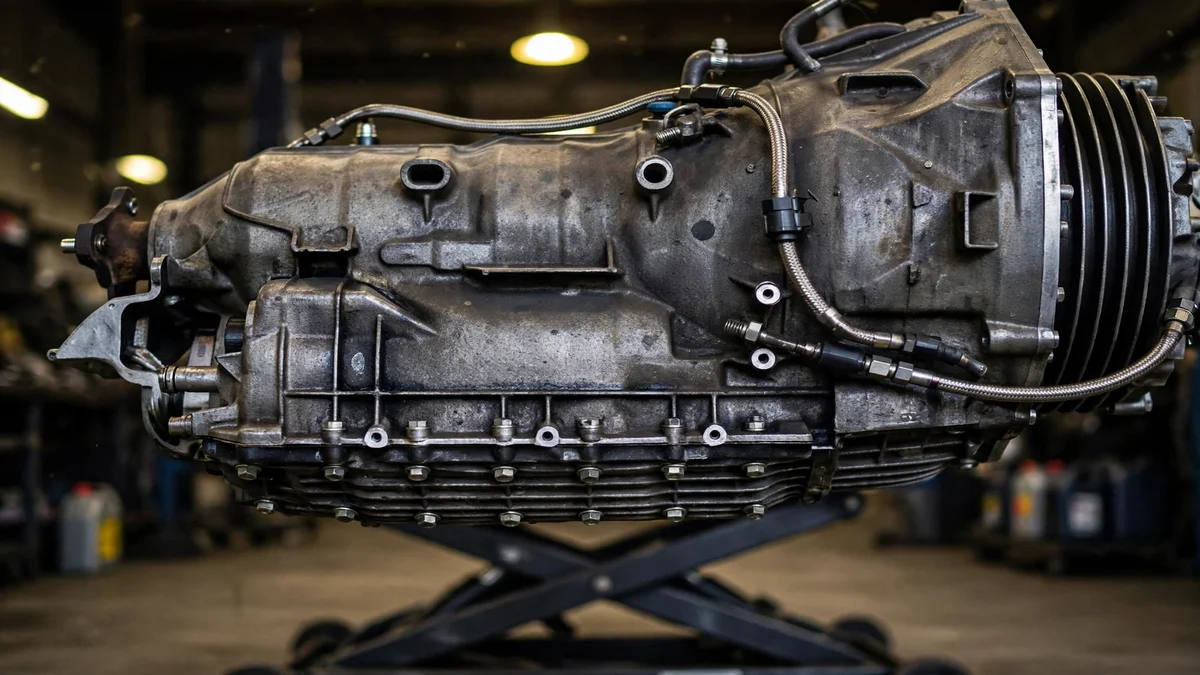
Modern BMW automatics — the ZF 6-speed in E90-era cars and the ZF 8-speed in F30/G20-era cars — are controlled by a computer called the EGS (transmission control module), which on the 8-speed lives inside the gearbox as part of the mechatronic unit: a valve body with the control module bolted directly to it. The EGS constantly compares what it commanded (a gear, a shift, a clutch pressure) against what the sensors report (input speed, output speed, gear ratio, solenoid current). When the measured result drifts outside tolerance — a clutch slips, a solenoid sticks, a sensor goes quiet — it sets a fault and flips the transmission into failsafe, or limp mode.
Limp mode is not the transmission dying in front of you; it is the transmission protecting itself. The EGS shuts down the electronic shift solenoids and defaults the hydraulic system to full line pressure, which locks the gearbox into a single gear — usually 3rd or 4th — and limits engine RPM. Full line pressure means the clutches cannot slip, so whatever is wrong cannot get much worse while you drive to safety. The tradeoff: acceleration from a stop is sluggish, highway cruising runs at high RPM, and you have no other gears. That is the entire design intent — get the car to the next safe stopping point or a shop, not continue a road trip.
The warning itself tells you almost nothing about the cause. A slipping clutch, a $15 seal, a weak battery, and a failed control module can all light the same gear icon. That is why guessing at the cause — or authorizing a repair — before a BMW-specific scan is the most expensive mistake owners make with this warning. A generic OBD2 reader often reads only the engine module; the transmission faults live in the EGS, which requires BMW-capable software (ISTA or equivalent) to see.
The first 10 minutes: drive, limp, or tow?
You are on the road when it happens. Judge by what the car is doing, not by how scary the message looks:
| What you observe | Verdict | Why |
|---|---|---|
| Warning appeared, but the car shifts and drives normally | Drive gently; book a scan within days | Likely a transient plausibility fault — but the fault is stored with freeze-frame data, so it needs reading |
| Locked in one gear, sluggish from stops, but steady | Limp to safety or a nearby shop at moderate speed | Classic failsafe — controlled protection, not active destruction; keep speeds moderate and avoid hard acceleration |
| Burning smell, smoke, or fluid visibly leaking underneath | Stop as soon as safe; arrange a tow | Active fluid loss or overheating will destroy clutches fast — driving further multiplies the repair bill |
| Loud mechanical banging, grinding, or no drive in any gear | Stop and tow | Internal mechanical failure — continuing to drive risks scattering debris through the whole unit |
| Car will not come out of Park or shows “transmission not in range” | Stop and tow | Shift-lock or park-interlock fault — forcing it can damage the parking pawl mechanism |
One controlled experiment is allowed: pull over safely, switch off, wait a full minute, and restart. Many intermittent faults — especially voltage-related ones — clear on restart and the car drives normally. That does not mean the problem is gone: the fault remains stored in the EGS, and if it was a real mechanical or hydraulic issue it will return, usually under load. One restart to see what you are dealing with; then drive gently and book the scan. Do not keep clearing and driving for weeks — a slipping clutch that sets a fault every hard shift is wearing itself out every time.
Symptom finder: your symptom → likely cause family
Match what the car is doing to the most likely cause family before the shop sees it. This is triage, not a diagnosis — but it tells you whether the first quote you hear makes sense.
| Symptom | Most likely family | Typical trigger |
|---|---|---|
| Harsh or delayed shifts, flare between gears, 2–1 clunk at stops | Mechatronic / hydraulic | Sticking solenoid, worn valve-body bore, pressure loss past seals |
| Warning appears under hard acceleration, clears on restart | Fluid / hydraulic | Clutch slip from low or degraded fluid under load; ratio-monitoring faults |
| Warning came on with other random warnings, or after the car sat / battery work | Electrical | Low system voltage; the EGS is voltage-sensitive and throws plausibility faults first |
| Stuck in one gear every drive; restart does not help for long | Mechatronic / internal | Hard fault: failed solenoid, pressure leak, or clutch wear beyond adaptation range |
| Will not come out of Park; shifter or dash gear display misbehaves | Electrical / mechatronic | Park-interlock solenoid, gear-selector switch, or EGS communication fault |
| Slipping that gets worse as the car warms up | Fluid / internal | Thin, overheated fluid or worn clutch packs losing hold as temperatures rise |
The four cause families, explained
Nearly every transmission fault on a BMW 3 Series falls into one of four families. Understanding which family your symptoms and codes point to is what separates a $600 seal repair from a $5,000 mechatronic replacement you did not need.
1. Mechatronic: the valve body and its solenoids
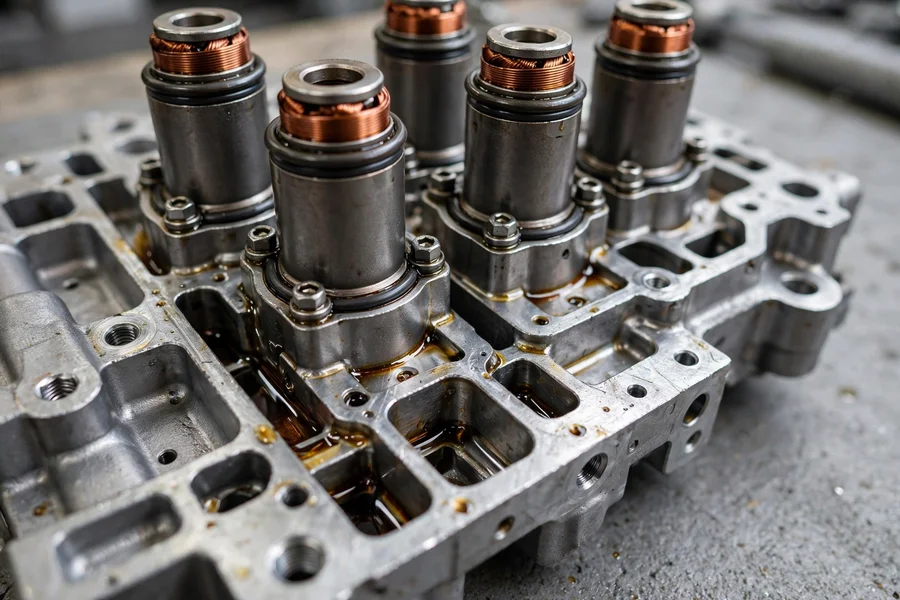
The mechatronic is the transmission’s hydraulic brain — a precision valve body with electronically pulsed solenoids that route pressurized fluid to each clutch and brake, plus the transmission computer bolted on top. On the ZF 8-speed found in 2012+ 3 Series cars, every shift is one clutch opening and another closing under mechatronic control, and the fluid is the hydraulic medium doing the actual work. When solenoids get lazy or stick, shifts turn harsh, delayed, or flared (RPM briefly rising between gears). When the valve body’s internal seals harden, pressure bleeds past where it should hold, and the EGS sees the wrong gear ratio for the commanded clutch.
Two well-documented failure patterns matter here. First, the bridge seal / adapter seal between the mechatronic and the transmission housing: BMW issued Service Information bulletin B24 01 08 for the ZF 6-speed generation after finding that a cracked rectangular seal lets internal pressure leak away, setting ratio-monitoring fault 4F81 and forcing failsafe. The same seal family exists across ZF units, and independent specialists still find it as the root cause of ratio faults on higher-mileage cars — a cheap part with expensive symptoms. Second, the mechatronic sealing sleeve where the wiring enters the transmission: when its seal fails, transmission fluid wicks up into the electrical connector, and ATF on the pins produces exactly the kind of intermittent faults and warning lights that look electronic but are hydraulic in origin.
Fixes range from a seal-and-sleeve service (a few hundred in parts at an independent, more with labor) to solenoid replacement, to a remanufactured mechatronic unit that must be coded to the car. Coding is not optional — the EGS is matched to the vehicle — which is why this job belongs at a BMW specialist or dealer, not a general repair shop.

2. Fluid and hydraulic health
Transmission fluid in a ZF unit does three jobs at once: it is the hydraulic medium that applies every clutch, the coolant that carries heat out of the friction interfaces, and the lubricant for the planetary gearsets and bearings. BMW markets the fill as “lifetime,” but ZF — the company that designed and built the gearbox — recommends refreshing the oil every 100,000 km (about 62,000 miles) or 8 years at the latest under demanding conditions, per its TE-ML 11 lubricant guidance. Old fluid thins, oxidizes, and loses the friction characteristics the clutch adaptations were calibrated around; low fluid from a weeping pan or seal starves the pump under load.
The signature of a fluid problem: the warning appears under hard acceleration or on hot days and clears on restart, with ratio-monitoring codes pointing at specific clutches. A fluid-and-filter service (the filter is built into the plastic pan on the 8-speed, so the pan is replaced as a unit) with fresh adaptations is the cheapest meaningful intervention, and it resolves early-stage shift-quality complaints — but it will not rescue clutches that are already mechanically worn. Our full ZF 8HP transmission fluid change guide covers intervals, the correct fluid, and what a proper service includes.
3. Electrical: voltage, connectors, and communication
The EGS is one of the most voltage-sensitive modules in the car. A weak or aging battery — extremely common on BMWs with heavy parasitic draw — causes the transmission module to log plausibility and communication faults that clear the moment system voltage is healthy again. Community reports consistently describe transmission faults that vanished permanently after a battery replacement and registration, and technicians advise verifying a fully charged, healthy battery before any deeper transmission diagnosis. If your warning arrived alongside other random warnings, after the car sat for weeks, or right after battery or charging-system work, start with the battery, not the gearbox. Our battery keeps dying guide and increased battery discharge guide cover the checks.
Beyond the battery: corroded ground points, damaged wiring to the transmission connector, and lost communication with the TCM (code U0101 in community-documented cases) all produce transmission warnings with no mechanical fault at all. The gear-selector switch and park-interlock solenoid are also electrical — a shifter that will not release from Park is often a $100-scale electrical repair, not a transmission rebuild.
4. Internal mechanical wear
The least common but most expensive family: worn clutch packs, damaged planetary gearsets, or a failed torque converter. The tell is progression — slipping that gets worse as the fluid warms, multiple ratio-monitoring codes across several clutches, metal debris in the pan at service, and faults that return immediately after clearing. Single-clutch ratio codes on a well-maintained car often trace back to families 1 or 2 (seals, fluid, solenoids); codes across several clutches with metallic debris point here. At this stage the honest options are a rebuild by a ZF specialist or a replacement unit — and a second opinion before authorizing either.
Fault codes your scan may show
These are the transmission-module codes that appear most often alongside the warning, with their documented meanings. A BMW-capable scan reads these from the EGS; a generic reader usually cannot.
| Code | Meaning | Points toward |
|---|---|---|
| 4F81 | Ratio monitoring, clutch A | Low fluid or internal pressure leak — BMW’s B24 01 08 bulletin names the mechatronic adapter (bridge) seal as a documented cause on ZF 6-speed cars |
| 4F82 / 4F97 | Ratio monitoring, clutch B / clutches B–D | Clutch slip: fluid condition, solenoid performance, or clutch wear — investigate cheapest causes first |
| 56C5 | Shift valve B stuck in off position | Mechatronic solenoid/valve fault — seal and solenoid service territory |
| 56BF | Clutch (gears 1–4) failed neutral test | Internal hydraulic fault in the lower gears — specialist diagnosis before authorizing a rebuild |
| 420012 | Park interlock fault | Documented in independent-tech cases as resolved by solenoid replacement — electrical/mechatronic, not a dead gearbox |
| 507B / 507C / 507D | Parking gear sensor implausible / incorrectly disengaged | Listed alongside 4F81 in BMW’s B24 01 08 — check fluid level and the mechatronic seal area first |
| U0101 | Lost communication with transmission control module | Electrical: wiring, connectors, grounds, or module power — verify voltage and connections before condemning the unit |
Read codes as a pattern, not a verdict. One ratio code after 100,000 miles on original fluid says “service me.” Several ratio codes plus debris says “rebuild me.” A communication code with a five-year-old battery says “check the electrics.” The code tells you where to look; the pattern tells you how far it goes.
Interactive: transmission fault triage
Answer three questions and the triage tool ranks the most likely cause family and your next step. It is a guide for the conversation with your technician — not a diagnosis.
Transmission fault triage
Repair cost bands (honest numbers)
Costs below are approximate US bands drawn from independent-specialist pricing and owner-reported repair bills — they vary by region, model, and whether you use a dealer or an independent BMW shop. Treat any quote far outside these bands as a signal to get a second opinion.
| Repair | Independent specialist | Dealer | Difficulty / notes |
|---|---|---|---|
| BMW-specific diagnostic scan (EGS code read) | $100–$200 | $180–$300 | Essential first step; generic readers miss EGS faults |
| Fluid + filter/pan service with adaptation reset | $300–$600 | $600–$900 | Moderate DIY possible; correct fluid and fill procedure matter |
| Mechatronic seal & sleeve kit installed (bridge seal, sealing sleeve, pan/filter) | $600–$1,200 | $1,200–$2,000 | Advanced; valve body drops out — often the real fix behind ratio codes |
| Solenoid set replacement | $800–$1,800 | $1,500–$2,800 | Advanced; independent-tech cases show this resolving hard park-interlock and shift faults |
| Remanufactured mechatronic unit, installed & coded | $2,500–$4,500 | $3,000–$6,000 | Specialist job; coding to the vehicle is mandatory — owner-reported dealer bills cluster in the $3k–$6k range |
| Full transmission rebuild | $2,000–$4,000+ | — | ZF specialist work; industry sources put typical rebuilds in this band, more with hard-part damage |
| Replacement transmission (new unit, dealer) | $4,000–$7,000 | $7,000–$9,000+ | Owner-reported dealer quotes reach $9k; the last resort, not the first quote |
Read the table bottom-up when a shop quotes you: if the first recommendation is a new transmission or full mechatronic, ask what ruled out the rows above it — fluid service, seals, solenoids. Each lower row is cheaper and, for ratio-monitoring and solenoid faults, frequently the actual fix. A shop that cannot explain why it skipped them has not finished diagnosing.
What to ask for at the shop
Walk in with the right requests and you will get a diagnosis instead of a parts cannon:
- Ask for the exact EGS codes, not the warning text. “Transmission fault” is the symptom; 4F81 or 56C5 is the lead. Get the codes printed or photographed.
- Ask for freeze-frame data. The EGS records the conditions (gear, load, temperature) when the fault set — load-only faults point at fluid/pressure; cold-start faults point at electrical.
- Ask them to check battery voltage and the transmission connector first. It takes minutes and rules out the cheapest family before anything is unbolted.
- Ask what the pan inspection showed. A fluid service that reveals clean fluid with no debris is reassuring; metallic debris changes the whole conversation toward rebuild.
- Ask whether adaptations were reset after any repair. The EGS learns clutch fill times; after seals, solenoids, or fluid, stale adaptations cause harsh shifts that mimic a failed repair.
Preventing the next fault
Most transmission faults are the bill coming due for deferred maintenance, not bad luck. Three habits keep the EGS quiet:
- Service the fluid on ZF’s schedule, not BMW’s “lifetime.” ZF recommends refreshing the oil every 100,000 km (about 62,000 miles) or 8 years at the latest under demanding conditions. On a 3 Series that tows, sees track days, or lives in hot climates, earlier is better. One proper service costs a fraction of one solenoid job.
- Keep the battery healthy. Transmission modules throw the first faults when voltage sags. Replace an aging battery proactively and register it to the car — unregistered batteries chronically undercharge, and the transmission is often the first system to complain.
- Fix leaks early and never ignore new shift behavior. A weeping pan seal today is low fluid under load tomorrow. Flare on upshifts, a 2–1 clunk at stops, or a delay engaging Drive are the mechatronic asking for attention months before it sets a fault — a fluid service at that stage often resolves what a fault-stage repair cannot.
And one thing to avoid: do not let anyone sell you a “transmission flush” with a machine on a high-mileage, never-serviced unit as a cure for an existing fault. A proper service is a pan drop, filter replacement, and measured refill with the correct fluid — aggressive flushing of a worn box can dislodge debris into places it should not go. If the fault is already set, diagnose first, then service.
Frequently asked questions
The transmission fault warning feels catastrophic and is usually anything but — provided you diagnose before you authorize. Get the exact EGS codes, work up from the cheapest cause family, and make any shop explain what ruled out seals, solenoids, and fluid before it quotes you a mechatronic or a gearbox. For the broader powertrain warning, see our drivetrain malfunction guide, and for the full ownership picture, the complete 3 Series guide.