Are Wheel Spacers Safe on a BMW? Sizing & Fitment Guide
Short answer: BMW wheel spacers are safe when three things are right: the spacer is hub-centric (machined to your car’s exact bore), it matches your generation’s hardware — E90 and F30 use a 5×120 bolt pattern with a 72.56 mm bore and M12×1.5 bolts, the G20 uses 5×112 with a 66.6 mm bore and M14×1.25 bolts — and you run longer wheel bolts that keep thread engagement at or above one bolt diameter. Universal spacers, stock bolts with thick spacers, or a bore mismatch are where spacers get dangerous.
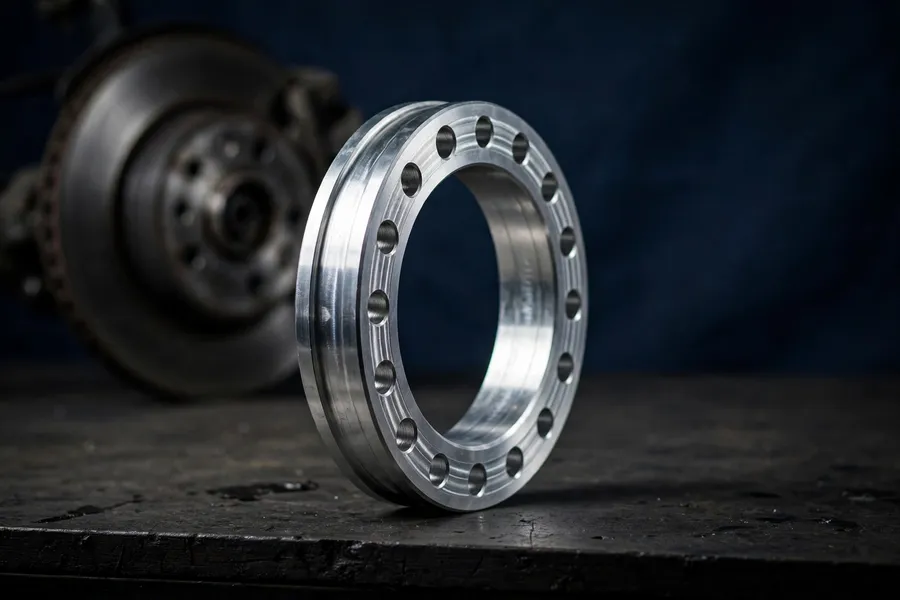
A wheel spacer is a machined disc — usually 6061-T6 aluminum — that sits between your hub and your wheel, pushing the wheel outward by its thickness. Owners fit them for two reasons: looks (a flush wheel-to-fender stance) and clearance (big brake kits that need a few millimeters of room). Spacers don’t change your offset on paper, but they change the effective offset by exactly their thickness: a 15 mm spacer on an ET34 wheel behaves like an ET19 wheel at the fender.
Just as important is what spacers don’t do. They don’t fix a wheel with the wrong offset — if a wheel needs a 25 mm spacer to clear your suspension, the wheel itself is wrong for the car. They don’t add grip by themselves; a wider track can sharpen turn-in slightly, but tire compound and alignment still decide cornering. And they don’t change your bolt pattern. A 5×120 spacer on a G20’s 5×112 hub is a paperweight, not an adapter — adapters are a separate, thicker, bolt-on part with their own compromises, and this guide doesn’t cover them.
The reason spacers have a scary reputation is simple — most failures trace back to one of three avoidable mistakes: the wrong bore, bolts that are too short, or cheap cast spacers that crack. This guide covers the 3 Series generations E90 (2005–2013), F30 (2012–2019), and G20 (2019–present), and stays out of the way of our BMW 3 Series wheel fitment guide, which covers factory offsets, tire sizing, and cross-generation wheel swaps in detail.
Know Your 3 Series Hardware Before Shopping
Spacers must match three numbers on your car, and one of them changed with the G20 generation. Get the bore or bolt pattern wrong and the spacer physically won’t fit — or worse, it’ll seem to fit and center the wheel on the bolts instead of the hub.
| Generation | Bolt pattern | Center bore | Wheel bolt thread | Spacer spec to buy |
|---|---|---|---|---|
| E90 / E91 / E92 / E93 (2005–2013) | 5×120 | 72.56 mm | M12×1.5 | 5×120, 72.56 mm bore |
| F30 / F31 (2012–2019) | 5×120 | 72.56 mm | M12×1.5 | 5×120, 72.56 mm bore |
| G20 / G21 (2019–present) | 5×112 | 66.6 mm | M14×1.25 | 5×112, 66.6 mm bore |
The G20 switch to 5×112 and 66.6 mm is the trap: spacers sold for “BMW 3 Series” without a generation attached are usually the E90/F30 5×120 version. If you own a G20, confirm 5×112 and M14×1.25 hardware before ordering anything. (A wheel-industry reference worth bookmarking is the APEX bolt pattern and centerbore guide, which documents the E/F versus G chassis split.)
Hub-Centric vs Universal Spacers: the Safety Decision
This is the single most important choice in the whole article. BMW wheels are hub-centric by design: the raised lip on the hub centers the wheel, and the lug bolts only clamp it down. A hub-centric spacer extends that lip through the spacer so the wheel still centers on metal, not on bolts. A universal (lug-centric) spacer has no lip — the wheel hangs on the bolts, which were never meant to carry shear and bending loads on their own.
| Hub-centric (with extended lip) | Flat hub-centric (no lip) | Universal / lug-centric | |
|---|---|---|---|
| How the wheel centers | Hub lip carries through the spacer | Factory hub lip still exposed (only under ~10 mm) | Lug bolts only |
| Highway vibration risk | Low — if torqued correctly | Low under 10 mm; high at 10 mm+ where the lip disappears | High — the classic cause of spacer vibration complaints |
| Bolt loading | Correct: clamping only | Correct under 10 mm | Wrong: bolts take shear and bending |
| Typical use | The right choice for any spacer 5 mm and up | Thin shims (3–5 mm) only | Not recommended for a BMW |
| What to look for | Vehicle-specific bore (72.56 or 66.6 mm), extended lip | Exact bore match, deburred faces | Avoid — or add hub rings, which just makes it hub-centric anyway |
Notice the middle column: flat spacers have a legitimate but narrow job. Below about 10 mm the factory hub lip still sticks out past the spacer, so the wheel stays hub-centric. At 10 mm and above the lip disappears inside the spacer — without an extended lip of its own, the spacer becomes lug-centric by accident. That is exactly why the interactive checker below flags flat spacers at 10 mm and up.
What Each Spacer Width Actually Changes
Spacer thicknesses aren’t prescriptions — 3, 5, 10, 12, 15, 20, and 25 mm are simply the sizes the market commonly sells. What matters is what each width does to your car. Track width grows by twice the spacer thickness (one per side), and the same number of millimeters comes off your fender clearance.
| Spacer thickness | Track gain per axle | Hub-lip situation | Hardware needed |
|---|---|---|---|
| 3 mm | +6 mm | Lip fully exposed | Longer bolts recommended (+3 mm) |
| 5 mm | +10 mm | Lip fully exposed | Longer bolts (+5 mm) |
| 10 mm | +20 mm | Lip swallowed — needs spacer with its own lip | Longer bolts (+10 mm), hub-centric lip spacer |
| 12 mm | +24 mm | Lip swallowed — needs spacer with its own lip | Longer bolts (+12 mm), hub-centric lip spacer |
| 15 mm | +30 mm | Lip swallowed — needs spacer with its own lip | Longer bolts (+15 mm), or bolt-on style |
| 20 mm | +40 mm | Lip swallowed — needs spacer with its own lip | Bolt-on style preferred; extended bolts at their limit |
| 25 mm | +50 mm | Lip swallowed — needs spacer with its own lip | Bolt-on style only (extended bolts not advised) |
Two geometry notes. First, scrub radius: pushing the wheel outward moves the tire’s contact patch away from the steering axis, which slightly increases scrub radius. In practice that means marginally heavier steering feel off-center and a touch more tramlining on grooved roads — noticeable, but not a handling transformation, and your alignment specs don’t change. Second, fender clearance: measure at full lock and over bumps before you buy. The tire you have determines how much room a spacer can take; aggressive tires on stock wheels often leave less than 10 mm to play with. One reassurance for xDrive owners: spacers don’t change rolling diameter, so equal-thickness spacers on all four corners don’t disturb the front-to-rear speed balance the transfer case expects — just keep the setup square rather than staggering spacer thicknesses.
Choosing a Thickness for Your Actual Goal
Most spacer purchases start with a goal, not a number. Here’s how the common goals map to sensible thicknesses — as starting points for measuring, not as prescriptions.
- Flush stance on stock wheels (the most common reason): most factory 3 Series wheels sit 10–15 mm inside the fender. A 10 or 12 mm spacer per side usually gets the tire face flush with the arch on stock tire sizes. Go thicker and the tire starts to poke — fine for some looks, illegal in some regions, and a rubbing risk on big bumps.
- Clearing big brakes: this is a millimeters game. Measure the gap between the caliper and the wheel spoke, add 3 mm of safety margin, and buy the thinnest spacer that clears. Brake-clearance spacers are often 3–5 mm — thin enough that the hub lip still centers the wheel.
- Winter wheel setup: a 5 mm spacer can let a narrower winter wheel clear suspension components it would otherwise touch, but check the full-lock clearance with the winter tire’s taller sidewall — it flexes more than a summer tire.
- Fixing a sunken aftermarket wheel: if your new wheels sit too far inboard, a 10–15 mm spacer corrects the stance. But if the offset is more than ~15 mm off what the car wants, the honest fix is different wheels, not thicker spacers — you shouldn’t need 25 mm of correction on a wheel that was supposedly made for the car.
Whatever the goal, the process is the same: measure the gap you have, subtract the clearance you want to keep (5 mm minimum at the fender, 3 mm at the caliper), and buy the thinnest spacer that does the job. Thinner is always the safer, cheaper, and easier-to-torque choice.
The Longer-Bolt Rule (Don’t Skip This)
BMW 3 Series wheels are held on by lug bolts threaded into the hub — there are no studs and nuts like on many Japanese cars. A spacer sits between the hub face and the wheel, so it steals thread engagement millimeter-for-millimeter. The widely cited engineering rule of thumb is that a bolt needs thread engagement of at least one bolt diameter — 12 mm of engagement for the M12 bolts on an E90/F30, 14 mm for the M14 bolts on a G20. In practice this is often expressed as roughly 6–8 full turns of the bolt. Treat that as workshop guidance, not a factory specification: BMW doesn’t publish an “acceptable turns” number, and the honest way to check is to count the engagement you actually have.
Stock BMW bolts are sized for zero spacer. A 10 mm spacer on stock bolts leaves roughly 10 mm less engagement — potentially below the one-diameter rule. The fix is longer bolts: stock shank length plus the spacer thickness, with the same thread pitch and the same seat (BMW uses a ball/radius seat — conical-seat bolts will not seat correctly). Buy the bolts with the spacers as a kit whenever possible; mismatched seats are a quiet, common failure.
At 15–20 mm you have two architectures. Extended bolts keep the stock one-bolt-per-hole layout and are fine up to about 20 mm. Bolt-on (adapter-style) spacers bolt to the hub with short bolts and carry their own pressed-in studs for the wheel — the better answer at 20 mm and up, and the only sensible answer at 25 mm, because very long bolts flex and fatigue. Note the catch: bolt-on spacers need roughly 15 mm of thickness to physically house the stock bolt heads, so they don’t exist in thin sizes.
How do you actually verify engagement in your driveway? With the wheel off, thread one of the new longer bolts into the hub by hand until it seats, then mark the shank at the hub face and measure how much disappeared inside — that’s your engagement. Compare it against the bolt diameter (12 mm for M12, 14 mm for M14). If you’re close to the line, go one bolt size longer rather than arguing with the margin; bolts are cheap, wheels are not.
Spacer safety & sizing checker
Answer six questions about your car and the spacers you’re considering. The checker works through every combination — spec match, spacer design, bolt hardware, and clearance — and gives a verdict with the reasoning.
What Spacers Cost (and Where the Money Goes)
Spacer pricing is one of those places where cheap is genuinely risky. A spacer is a structural part that lives between your wheel and your hub — cast, no-name spacers with sloppy bores are the ones that crack or vibrate. Budget for a machined 6061-T6 aluminum set from an established brand (named in plain text here since we don’t link vendors: Eibach, H&R, and Burger Motorsports are the commonly cited names in the BMW community), and buy the longer bolts as a kit with the spacers.
| Setup | Typical parts cost (set of 4) | Shop install labor | Notes |
|---|---|---|---|
| Thin hub-centric shims (3–5 mm) + longer bolts | $60–$140 | $80–$150 | Sold per axle; bolts add ~$30–$60 |
| Quality hub-centric spacers (10–15 mm) with bolts | $150–$300 | $100–$180 | The sweet spot for most 3 Series stance setups |
| Bolt-on style spacers (20–25 mm) | $200–$400 | $120–$200 | Own studs; re-torque both interfaces after 50 miles |
| Budget universal spacers (not recommended) | $30–$80 | $80–$150 | Cheap now, vibration and rework later |
Prices are US bands as of 2026 and move with brand and thickness; European buyers typically pay a bit more for TÜV-documented kits. If you’re paying a shop, the job is under an hour — it’s four wheels off, spacers on, wheels back on, torqued in a star pattern. The labor line that actually matters is the re-torque: any reputable shop will tell you to come back after 50 miles, and that check is often free.
What separates a good spacer from a risky one isn’t the logo — it’s the machining. Look for spacers CNC-machined from 6061-T6 or 7075-T6 aluminum (not cast), with a bore machined to your exact hub size rather than a sloppy universal fit, deburred edges, and an anodized or coated finish for corrosion resistance. The kit should include the longer bolts matched to the spacer thickness — buying bolts separately is where seat-shape and length mistakes happen. Avoid any spacer with visible casting porosity, a bore you can wobble on the hub, or no stated aluminum grade.
Installing Spacers Safely: DIY Walkthrough
Difficulty: 2 out of 5 — one of the easier jobs on a 3 Series, but it demands a torque wrench and patience. Budget about an hour for all four corners the first time. You’ll need a jack and stands (see our guide to jacking up a 3 Series safely), a torque wrench, a wire brush, and brake cleaner.
- Clean the hub face. Wire-brush the hub and the back of the wheel until both mating faces are bare metal. Rust and scale here are a leading cause of post-spacer vibration — the spacer must sit perfectly flat.
- Dry-fit the spacer. Slide it onto the hub by hand. A hub-centric spacer should slip on with light resistance and sit flush with no rocking. If it won’t go on or it wobbles, the bore is wrong — stop.
- Check bolt engagement. Thread one longer bolt in by hand with the wheel off and count the turns, or measure: you want engagement of at least one bolt diameter (12 mm on M12, 14 mm on M14).
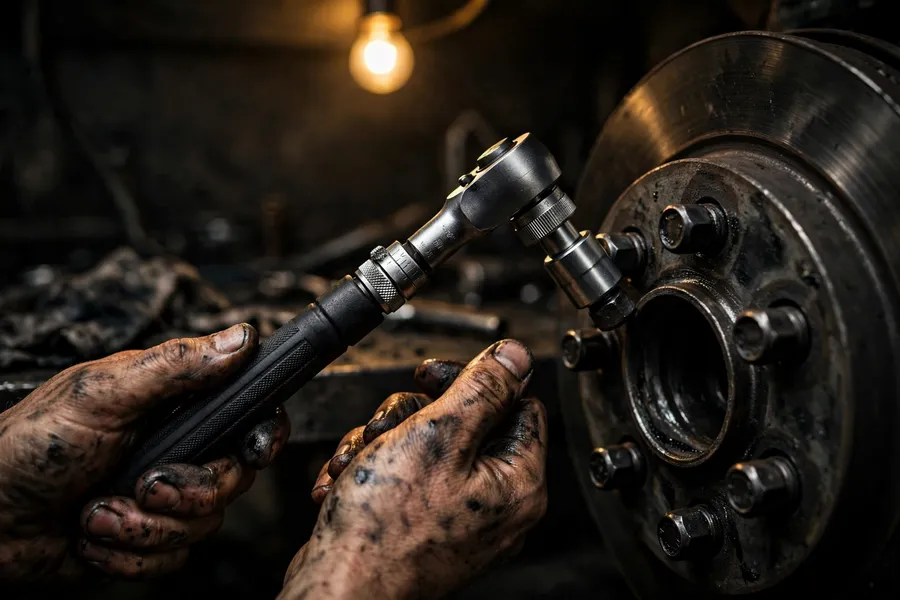
- Mount the wheel, hand-tighten in a star pattern. Never run bolts down with an impact gun for the final torque — uneven torque is another classic vibration source.
- Torque to the owner’s manual spec. BMW manuals for these cars specify 120 Nm (89 lb-ft) for the wheel bolts. Torque in three passes using a star pattern, with the car’s weight on the wheels for the final pass.
- Re-torque after 50 miles. This is non-negotiable with spacers, and doubly so with bolt-on style (check both the spacer-to-hub and wheel-to-spacer interfaces). Most vibration and loosening stories start with a skipped re-torque.
Spacer Safety Checklist
Run through this list before the wheels go back on. If any box fails, fix it before driving — not after.
- Bore matches your car exactly: 72.56 mm (E90/F30) or 66.6 mm (G20) — no slop, no forcing.
- Bolt pattern matches: 5×120 (E90/F30) or 5×112 (G20).
- Spacer is hub-centric with an extended lip (or a sub-10 mm flat shim on a clean hub).
- Bolts are longer by the spacer thickness, same thread and ball seat as factory.
- Thread engagement ≥ one bolt diameter, verified by hand.
- Hub face and spacer faces are clean bare metal; spacer sits flush, no rocking.
- Torqued to the owner’s manual spec in a star pattern; re-torqued after 50 miles.
- No contact at full steering lock, and no rubbing over bumps with passengers in the car.
- TPMS still reads all four corners after the swap (see TPMS reset if a sensor drops out).
- No new vibration at 60–80 mph — if there is, recheck centering and torque before blaming balance (a failing wheel bearing can masquerade as spacer vibration).
When Spacers Are the Wrong Answer
Spacers are a good tool with clear limits. Reach for a different solution in these cases:
- Never stack spacers. Two 10 mm spacers do not equal one 20 mm spacer — stacked interfaces can shift, and no bolt length is engineered for the sandwich. If you need 20 mm, buy a single 20 mm spacer.
- Don’t spacer your way out of the wrong wheels. More than ~15 mm of correction means the wheel’s offset was never right for the car. Sell the wheels and buy the right offset — it’s cheaper than the bearing and geometry compromises.
- Skip used or damaged spacers. Aluminum fatigues and corrodes. A spacer with gouged faces, a wallowed bore, or unknown history isn’t a bargain — it’s the one part you never want failing at speed.
- Track use needs a rethink. Spacers survive street duty easily, but sustained track heat cycles and curb strikes punish every interface. If you track the car regularly, properly sized wheels with the right offset beat spacers every time.
- Damaged hubs or stripped threads must be fixed first. A spacer can’t compensate for a hub face that isn’t flat or bolt holes that won’t hold torque.
Legal and Insurance Notes (Check Your Local Rules)
Spacer legality is genuinely regional — there is no universal rule, and anyone quoting you a statute number on a forum is guessing. The patterns below are general; confirm the specifics where you register the car.
- Germany and much of the EU: modifications generally need type approval paperwork (ABE or TÜV component approval) carried in the car. Buy kits that ship with the documentation; undocumented spacers can fail inspection.
- United Kingdom: spacers aren’t specifically banned, but the car must remain roadworthy at MOT — no tire contact with bodywork, no compromised fixings. Insurers expect to be told.
- United States: rules vary by state. Some states restrict how far tires may protrude past the fenders; others say little about spacers specifically. There is no federal approval process for them.
- Insurance everywhere: spacers are a modification. Most insurers don’t refuse them, but failing to disclose a modification is the classic reason a claim gets disputed. A two-minute call or policy update before you fit them is cheap protection.
- Warranty: spacers won’t void your whole warranty, but a dealer can reasonably decline a wheel-bearing or suspension claim if the failure traces to altered loading. Keep the stock bolts and spacers’ receipts so you can return the car to stock for a visit.
One more honest note: the “increased bearing wear” argument is real but usually overstated. Moving the wheel out 10–15 mm adds leverage to the wheel bearing, and bearings do wear with mileage anyway — our brake rotor replacement guide covers the hub-area work where you’d spot a tired bearing. For street-driven cars with sensible thicknesses, premature bearing failure from spacers alone is uncommon; it’s the 25 mm-plus, track-abused setups where it shows up.
5 spacer myths: true or false?
Tap True or False on each claim. Score and explanations appear as you go.
Frequently Asked Questions
Are wheel spacers safe for daily driving on a BMW 3 Series?
Yes, when they’re hub-centric, match your generation’s bolt pattern and bore (5×120 / 72.56 mm on E90 and F30; 5×112 / 66.6 mm on G20), and are fitted with longer bolts torqued to the owner’s manual spec. The failures you read about are almost always universal spacers, stock bolts with thick spacers, or skipped re-torques.
Do I need longer wheel bolts with 5 mm spacers?
Yes. Any spacer reduces thread engagement by its full thickness, and the widely cited rule is engagement of at least one bolt diameter. Fit bolts 5 mm longer than stock, with the same M12×1.5 (E90/F30) or M14×1.25 (G20) thread and factory ball seat.
Will spacers cause vibration at highway speed?
Properly fitted hub-centric spacers shouldn’t. Vibration after fitting spacers usually means a lug-centric or wrong-bore spacer, dirty hub faces, or uneven torque — recheck those before paying for a rebalance.
Can I use E90/F30 spacers on a G20?
No. The G20 changed to a 5×112 bolt pattern, 66.6 mm bore, and M14×1.25 bolts, so E90/F30 5×120 spacers won’t fit. This is the most common ordering mistake — always buy spacers specified for your generation.
Do spacers affect alignment or tire wear?
They don’t change your alignment settings, but pushing the wheels outward slightly increases scrub radius and bearing leverage. With sensible thicknesses (15 mm or less per side) on a street car, measurable extra tire or bearing wear is uncommon.