BMW ‘Increased Emissions’ Warning: 9 Causes, Ranked
Short answer: A BMW increased emissions warning means the engine computer has detected a fault in the emissions system — it is BMW’s check-control phrasing for what most cars call the check engine light. The causes, ranked from cheapest to most expensive, are a loose or damaged gas cap, a failing oxygen sensor, worn spark plugs or a weak ignition coil, a vacuum or intake-air leak, and finally a failing catalytic converter. Start with the free fix: tighten the gas cap until it clicks, then drive normally for a few days — the message often clears on its own. If it comes back, scan the fault codes before buying any part; the code, not the message, tells you which system failed.
In this guide
- What the “increased emissions” warning actually means
- The 5-minute checks to do first
- Causes ranked: gas cap to catalytic converter
- The “what to check first” ranked checker
- Fault codes that trigger the warning
- When it’s safe to keep driving vs. when to stop
- Repair costs and honest DIY difficulty
- The golden rule: the catalytic converter is diagnosed last
- Increased emissions warning FAQ
What the “increased emissions” warning actually means
On a BMW, “increased emissions” is not a separate problem from the check engine light — it is the check engine light, translated into BMW’s own language. BMW’s Check Control system converts raw OBD-II faults into plain-text messages in the instrument cluster (and, on iDrive cars, a fuller explanation in the vehicle-status menu). When the engine computer (DME) detects an emissions-related fault that would illuminate the malfunction-indicator lamp on any other car, many 3 Series models show “Increased emissions!” alongside the familiar service-engine-soon / check-engine lamp instead of leaving you to guess from an icon alone.
That phrasing is precise, and worth taking literally. The DME is telling you that the engine is currently producing more pollution than its certification allows — or that it can no longer verify that emissions are under control. On the E90 generation the message appears as text between the gauges; on the F30 and G20 it can pop up as an iDrive check-control message with a “continue driving possible” or similar qualifier. The wording varies slightly by model year and market (“Engine fault! Increased emissions,” “Increased emissions,” “Emissions warning”), but the trigger is the same: a stored emissions-relevant fault code.
One thing the message does not tell you is which part failed. It covers everything from a loose gas cap to a failing catalytic converter, because all of those faults share one trait: they push exhaust output outside the window the DME is required to police. The message also sometimes arrives with company — a hard misfire can trigger both “increased emissions” and “drivetrain malfunction,” since a misfiring cylinder dumps unburned fuel into the catalyst. A lone warning on a car that drives perfectly usually points at the quiet end of the spectrum: EVAP leaks, lazy oxygen sensors, or a merely inefficient catalyst.
The practical consequence: never let the message pick the repair. Two owners can see the identical warning and need completely different fixes. The message names the category; the fault codes name the system; your eyes, ears, and a scan tool name the part — in that order. Our check engine light causes guide maps the full family of warnings this one belongs to.
The 5-minute checks to do first
Before you book a diagnostic appointment or order a single part, work through these checks in order. They are free, they take minutes, and the first two resolve the warning outright often enough that skipping them is the most common mistake owners make.
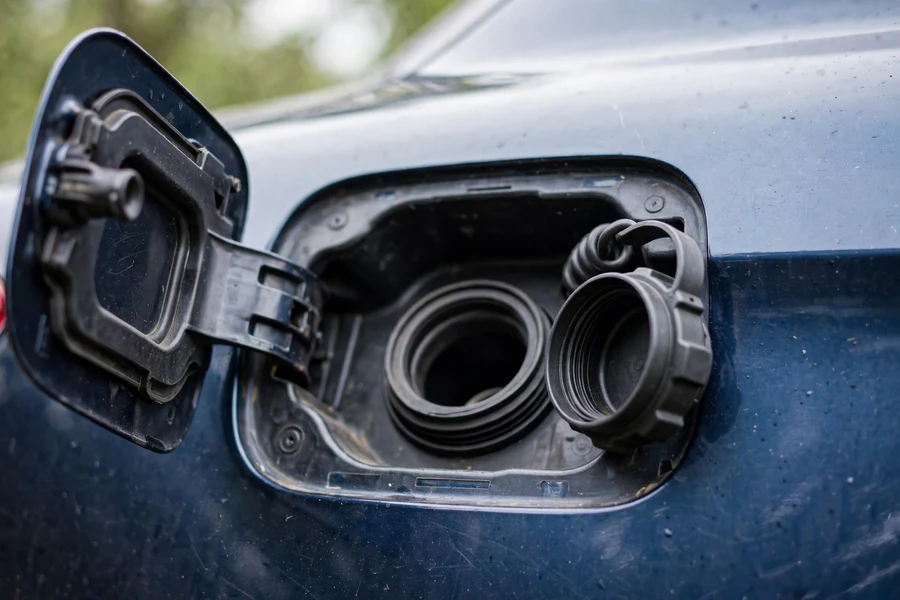
- Tighten the gas cap — properly. Remove it, wipe the rubber seal with a clean rag, and refit it until it clicks at least three times. A cap left loose after refueling is the single most common trigger for this warning, because the evaporative-emissions system runs a pressure self-test and a loose cap fails it. If the cap’s seal is cracked, flattened, or the tether is damaged, plan on a replacement cap — it is one of the cheapest parts on the car.
- Think about timing. Did the warning appear within a day of refueling? That points squarely at the evaporative system — cap, purge valve, or a small leak. Did it appear after a cold snap? Rubber intake boots and vacuum hoses shrink and crack in cold weather, and secondary-air faults only appear on cold starts. After engine-bay work? A disconnected breather hose or pinched intake boot is likely.
- Assess how the car feels. Start the engine and let it idle for a minute. A steady, smooth idle with no new noises means the fault is probably in the monitoring hardware (gas cap, oxygen sensor, catalyst efficiency) rather than something mechanically wrong. A rough, hunting, or stumbling idle — or shaking under acceleration — means a misfire or air leak, and that moves ignition and intake components to the front of the line.
- Use your nose. A strong fuel smell around the car (especially near the rear) suggests an evaporative leak — cap, purge valve, or charcoal canister lines. A rotten-egg or sulfur smell from the exhaust suggests the catalytic converter is struggling or being poisoned by unburned fuel. No unusual smell at all is itself information: it argues against a raw-fuel problem.
- Look at the exhaust on a cold start. Brief white vapor that disappears in a minute is normal condensation. Blue-tinged smoke means the engine is burning oil — and chronic oil burning contaminates oxygen sensors and catalytic converters, turning a simple warning into a recurring one. Black soot on the tailpipes suggests the engine has been running rich.
- Read the codes. Plug an OBD-II scanner into the port under the dashboard and record every code, pending and stored, before clearing anything. The code family tells you which table row to start on below. If you don’t own a scanner yet, our BMW OBD2 scanner guide covers what actually works with BMW’s DME — but even a basic generic reader is enough for the first pass, because the emissions codes behind this warning are standard OBD-II.
One patience note: the warning won’t vanish the instant you tighten the cap. The DME needs several normal drive cycles — a few days of ordinary driving with cool-downs between trips — to re-run the evaporative self-test and clear the message on its own. Don’t clear the codes manually after the gas-cap fix; let the car confirm the repair. Cleared for a week? Case closed.
Causes ranked: gas cap to catalytic converter
The table below ranks the realistic causes of a BMW increased emissions warning by the order a competent technician would investigate them: cheapest and most likely first, most expensive last. “Likelihood” reflects what actually shows up in 3 Series diagnostics — the boring small parts fail far more often than the expensive ones, which is exactly why the catalytic converter sits at the bottom of the check order, not the top.
| Check order | Cause | Typical sign | Typical total cost (independent shop, US) | DIY difficulty |
|---|---|---|---|---|
| 1 | Loose or damaged gas cap / EVAP leak | Warning appears shortly after refueling; fuel smell; car drives perfectly | $0 (tighten) – $60 (new cap); $120–$300 if the purge valve is the leak | Easy — no tools |
| 2 | Oxygen (O2) sensor — slow or dead | Worse fuel economy, lazy throttle response; often no drivability symptom at all | $150–$350 per sensor | Moderate — O2 sensor socket, penetrating oil, access can be tight |
| 3 | Spark plugs or ignition coil — misfire | Rough idle, shaking under load, flashing warning in severe cases | $200–$450 (plugs or coil set) | Moderate — plugs are straightforward; coils are plug-and-play once exposed |
| 4 | Vacuum or intake-air leak | High or hunting idle, lean codes (P0171/P0174), hissing from the engine bay | $100–$400 (boot or hose); $400–$900 if the crankcase vent valve is involved | Moderate to hard — finding the leak is the work, not the part |
| 5 | Mass airflow (MAF) sensor — dirty or failing | Hesitation, stalling after startup, lean or rich fuel-trim codes | $150–$400 | Easy to moderate — cleaning is 10 minutes; replacement is one connector and two screws |
| 6 | Catalytic converter — degraded efficiency | P0420/P0430, sulfur smell, gradually worsening fuel economy; car usually drives fine | $1,200–$2,500+ per side | Hard — exhaust work, rusted fasteners, emissions-legal parts required |
| 7 | Secondary air injection fault | Warning appears only on cold starts; loud pump noise or none at all | $300–$800 | Moderate — diagnosis first, then pump or valve replacement |
The cost bands are typical US totals at an independent BMW specialist, parts and labor included — a dealer runs 30–60% higher, a DIY job drops to the parts price. What doesn’t move with engine or market is the order: nobody who diagnoses these cars for a living replaces a catalytic converter before checking the gas cap.
The “what to check first” ranked checker
Tell the checker what the car is doing and what code your scanner reported. It returns a prioritized check order — the sequence a specialist would follow — so you rule out the cheap causes before spending on expensive ones. A triage aid, not a substitute for reading your actual fault codes.
Increased-emissions check-order finder
Answer two questions — get the diagnostic sequence.
Triage aid only. The code table below decodes every family listed here — read your full code list before buying parts.
Fault codes that trigger the warning
The message is the category; these codes are the diagnosis. All are standard OBD-II, so any generic scanner reads them. Record every code before clearing anything, because the combination often matters more than any single entry: a P0420 alongside a P0303 is a misfire problem wearing a catalyst disguise, and fixing the catalyst first would be an expensive mistake.
| Code family | Meaning | Usual check order |
|---|---|---|
| P0420 / P0430 | Catalyst system efficiency below threshold, bank 1 / bank 2 | Verify with O2 live data; rule out exhaust leaks and lazy sensors; catalyst last |
| P0130–P0167 | Oxygen sensor circuit faults (slow response, no activity, voltage issues) | Wiring and exhaust leaks, then the sensor itself |
| P0030–P0064 | Oxygen sensor heater circuit faults | Fuse and wiring first; heater failure usually means a new sensor |
| P0300–P0306 | Misfire detected — random (P0300) or specific cylinder (P0301–P0306) | Coil swap test, spark plugs, then fueling/air |
| P0442 / P0456 / P0455 | Evaporative system leak — small / very small / large | Gas cap, purge valve, smoke test |
| P0171 / P0174 | System too lean, bank 1 / bank 2 | Intake boots and vacuum hoses, MAF, then fuel pressure |
| P0172 / P0175 | System too rich, bank 1 / bank 2 | Leaking injector, faulty MAF, stuck-open purge valve |
| P2096 / P2098 | Post-catalyst fuel trim too lean, bank 1 / bank 2 | Exhaust leak after the catalyst, lazy downstream O2 sensor |
| P0410 / P0411 | Secondary air injection system fault / incorrect flow | Cold-start pump test, changeover valve, hoses |
| P0101 | Mass airflow sensor range / performance | Clean the MAF, check intake for leaks, replace if persistent |
BMW’s factory codes map onto these same families — a dealer printout and your generic scanner describe the same faults in different dialects. If your scanner shows manufacturer-specific codes, write them down verbatim for a specialist to translate; don’t guess from the number alone. And the rule never changes: diagnose the cheapest code family first. A P0455 stored with a P0420 usually means one fault is real and the other is a downstream consequence.
When it’s safe to keep driving vs. when to stop
Not every warning carries the same urgency. Be honest about which level matches your car:
- Keep driving, diagnose soon — steady warning, car feels normal. This is the most common case: the message is on, the service-engine lamp is steady, and nothing about the drive has changed. The car is safe to drive to work and to a shop. Book diagnosis within days, not weeks — the underlying fault can quietly worsen, and a car with an illuminated malfunction lamp will fail an OBD-based emissions inspection in any state that uses one.
- Drive gently, minimize the trip — rough running, but no flashing lamp. A lumpy idle or mild hesitation with a steady light means something is actively wrong but not yet destructive. Avoid hard acceleration, high RPM, and long highway runs; get it diagnosed promptly. Short, calm trips are the compromise, not a cure.
- Stop — flashing lamp, severe shaking, or a second red warning. A flashing check-engine lamp means a severe misfire is occurring right now, dumping unburned fuel into the catalytic converter. Minutes of this can overheat and destroy a catalyst, turning a coil or plug job into a four-figure exhaust repair. Reduce load immediately, pull over safely, and shut it down. A tow is cheaper than a catalytic converter. The same applies if the emissions message arrives alongside a red drivetrain or temperature warning — at that point the emissions message is the least of your problems.
Two cautions for the “keep driving” group. First, chronic misfires dilute engine oil with unburned fuel, accelerating wear — even a mild misfire has a clock on it. Second, these faults snowball: a lazy upstream sensor runs the engine rich, the rich mixture overheats the catalyst, and the degraded catalyst sets its own codes. Each stage costs more than the last — the real argument for diagnosing early.
Repair costs and honest DIY difficulty
Below are typical US totals at an independent BMW specialist — parts plus labor — with the DIY alternative where one honestly exists. Dealers run 30–60% higher; your engine and local labor rate move the numbers within the bands.
| Repair | Independent shop (US typical) | DIY difficulty | DIY reality check |
|---|---|---|---|
| Gas cap replacement | $25–$60 | Easy | Five minutes, no tools. Buy the correct cap for your model — the seal profile matters. |
| EVAP purge valve | $120–$300 | Easy–moderate | Usually accessible; one connector and two hose clamps. Confirm it’s the leak source first. |
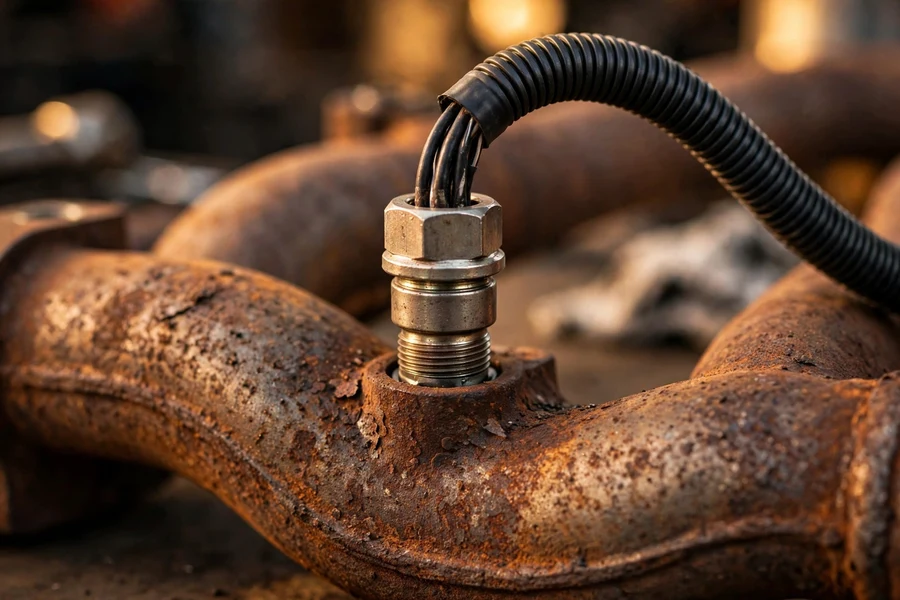
| Oxygen sensor (per sensor) | $150–$350 | Moderate | Needs an O2 sensor socket and penetrating oil. Heat-seized sensors in the manifold are the risk; downstream sensors are usually easier. |
| Spark plugs (full set) | $200–$450 | Moderate | Straightforward with a torque wrench and thin-wall socket — but the N20/N26 plugs sit deep, and cross-threading an aluminum head is a costly error. Our spark plug replacement guide covers the interval and procedure. |
| Ignition coil (single or set) | $200–$450 | Easy–moderate | Plug-and-play once the engine cover is off. Replace the failed coil; replace the set if mileage is high and budget allows. See our ignition coil failure guide for the swap test. |
| Intake boot / vacuum hose | $100–$400 | Moderate | The part is cheap; finding the crack is the job. A smoke test at a shop is money well spent before you start replacing hoses by guesswork. |
| Crankcase vent valve / oil separator | $400–$900 | Hard | Buried under the intake manifold on the N52/N54 — this is a weekend job even for experienced DIYers. Shop territory for most owners. |
| MAF sensor | $150–$400 | Easy | Cleaning takes 10 minutes with MAF cleaner. Replacement is one connector and two screws — but only after the intake is confirmed leak-free. |
| Secondary air pump / valve | $300–$800 | Moderate | Diagnosis first (cold-start test, power and ground at the pump). The pump itself is usually accessible. |
| Catalytic converter (per side) | $1,200–$2,500+ | Hard — shop job | Exhaust work with rusted fasteners, plus emissions-legal parts requirements that vary by state. Not a driveway job for most owners. |
That table is the diagnostic philosophy in miniature: every row above the converter is cheaper than the converter, and several can cause the converter row. A gas cap, an oxygen sensor, or a coil pack can each produce a P0420 — which is why the code alone never justifies a converter replacement.
One more suspect for direct-injection cars (N54/N55/N20): leaking fuel injectors. An injector that dribbles after shutdown washes the cylinder, triggers rich codes and misfires, and poisons the catalyst over time. Diagnosis needs professional leak-down testing, and on the N54/N55 it can overlap with the high-pressure fuel pump issues in our HPFP failure guide — worth reading if your warning comes with long cranking.
The golden rule: the catalytic converter is diagnosed last
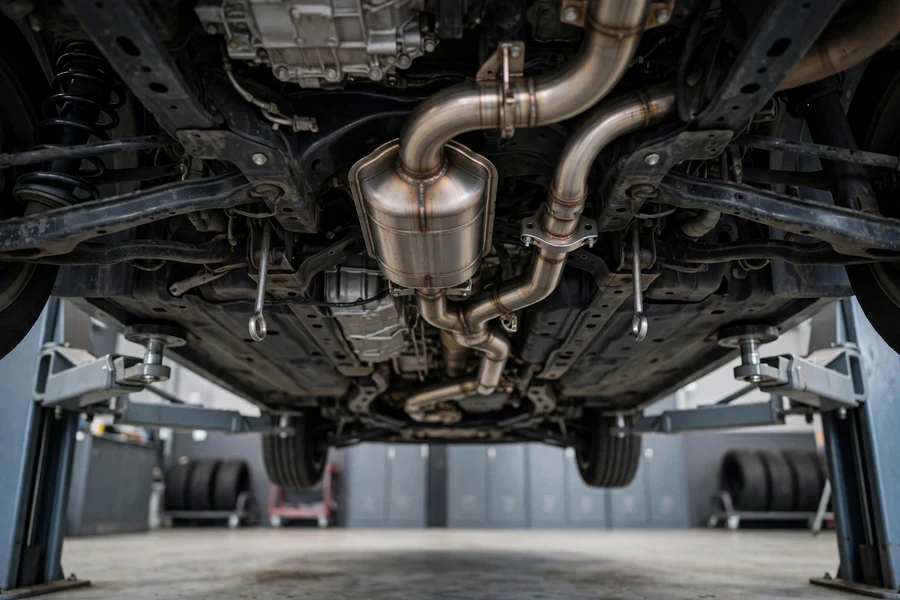
The most expensive misdiagnosis in emissions work is a catalytic converter replaced for a fault that lived upstream of it. The converter is usually the victim, not the criminal: chronic misfires, a lazy oxygen sensor, oil burning, or a leaking injector spent months feeding it what it was never designed to process. Bolt a new converter onto the same unresolved problem and you’ve bought the same failure twice.
The verification sequence before any converter is condemned: first, compare upstream and downstream O2 signals. A working catalyst makes the downstream signal lazy and flat; a downstream signal that mirrors the upstream means the catalyst has genuinely lost conversion ability. Second, rule out exhaust leaks ahead of the downstream sensor — entering air fakes a catalyst failure. Third, confirm the upstream sensor is healthy, since a lazy one corrupts the comparison. Only when all three agree is the converter actually the problem.
And if the converter is genuinely degraded, the job isn’t done when the new one is bolted on — the upstream cause still needs repair, or the new converter starts dying on day one. Oil burning is a frequent silent killer: it coats the catalyst substrate until conversion stops, and the warning returns within months. If your 3 Series uses oil between changes, read our oil consumption guide before authorizing converter work. For the maintenance picture that keeps the emissions system healthy, see the complete 3 Series guide.
Increased emissions warning FAQ
Can I still drive with the BMW increased emissions warning on?
Usually yes, if the warning is steady and the car drives normally — drive to a diagnostic appointment within days and avoid hard acceleration and long trips in the meantime. Stop driving if the check-engine lamp is flashing, the engine is shaking badly, or a second red warning appears; a flashing lamp means an active severe misfire that can destroy the catalytic converter within minutes.
Will tightening the gas cap really clear the warning?
Often, yes — a loose cap is the single most common trigger, because the evaporative self-test fails on the pressure leak. Remove the cap, inspect the seal for cracks, refit until it clicks three times, then drive normally for several days. The DME needs multiple drive cycles with cool-downs to re-run the test and clear the message. If the seal is cracked or flattened, replace the cap.
Does P0420 always mean I need a new catalytic converter?
No — P0420 means measured catalyst efficiency is low, not that the catalyst is dead. Exhaust leaks, lazy oxygen sensors, misfires, and rich running can all set it on a healthy converter. Verify by comparing upstream and downstream O2 signals: a downstream signal mirroring the upstream means a genuinely degraded catalyst; a lazy, flat downstream signal means the fault is elsewhere. Never authorize replacement on the code alone.
Why does the warning come and go on its own?
The DME runs each emissions self-test only under specific conditions — certain temperatures, speeds, and fuel levels — so a marginal fault passes sometimes and fails others. Intermittent warnings are typical of O2 heater issues, small EVAP leaks, or cold-start-only secondary air faults. An intermittent warning is still a stored fault: scan the codes even while the message is off, because history codes remain.
Will the warning make my BMW fail an emissions inspection?
Wherever OBD-based emissions testing is used, yes — an illuminated malfunction lamp is an automatic failure, and incomplete readiness monitors (what you get right after clearing codes) can fail you too. Don’t clear codes the week of your test; drive normally for a week or more after the repair so monitors complete, then verify with a scanner that no codes are stored and all monitors read ready.