BMW 3 Series Complete Guide: Every Generation, Engine & Known Issue
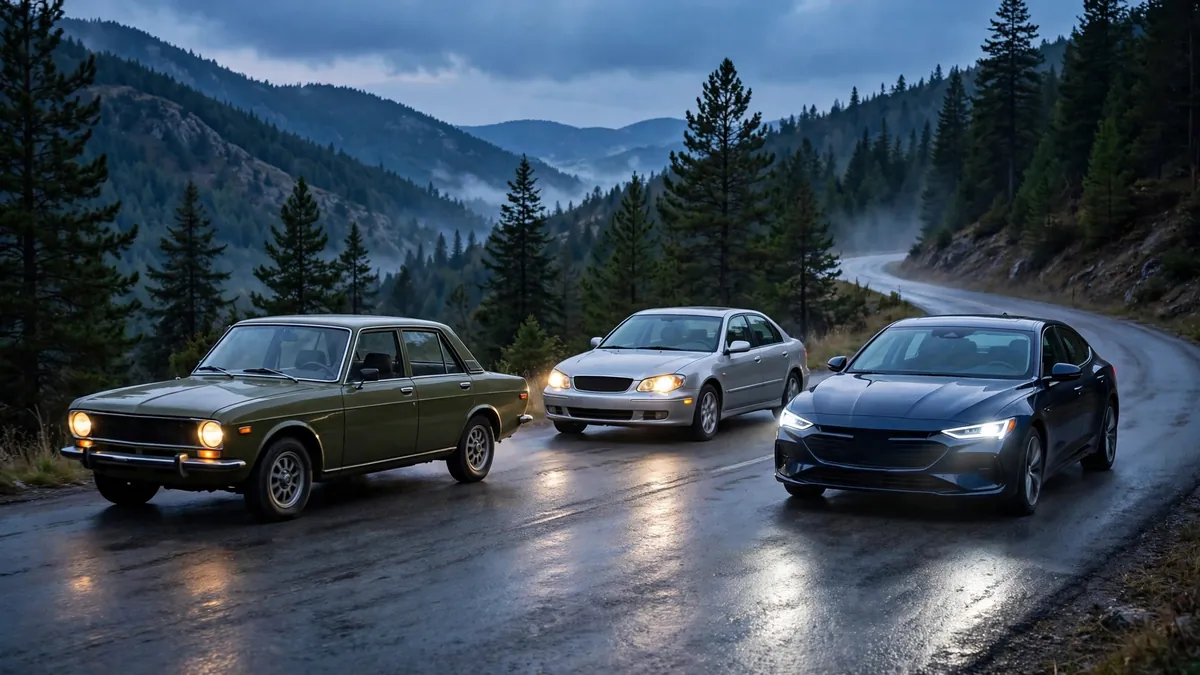
The bmw 3 series generations span half a century — from the 1975 E21, a compact two-door that replaced the beloved 2002, to today’s tech-laden G20, with an all-electric eighth generation already in preparation. Seven generations, seven chassis codes, and one unbroken thread: rear-wheel-drive balance, a driver-angled cockpit, and the benchmark every sports sedan is measured against. This guide walks through every one of them.
Below you’ll find each generation’s production years, body styles, headline engines, and the known issues that matter when buying used — plus links into our detailed maintenance, troubleshooting, buying, and comparison guides.
The short answer
The bmw 3 series generations are E21 (1975–1983), E30 (1982–1994), E36 (1990–2000), E46 (1997–2006), E90 (2004–2013), F30 (2011–2019), and G20 (2018–present). For most used buyers the sweet spots are a well-kept E46 or N52-powered E90 for character, a post-2016 F30 330i/340i for a modern daily, and the G20 for the current benchmark.
- Generations at a glance
- The classic era: E21–E46
- E90 deep dive (2004–2013)
- F30 deep dive (2011–2019)
- G20 deep dive (2018–present)
- Engines by generation
- Common issues by generation
- Our BMW 3 Series guides
- Verdict: which generation to buy
- Frequently asked questions
BMW 3 Series generations at a glance
Every 3 Series generation has an internal chassis code — E21, E30, E36, E46, E90, F30, G20 — and enthusiasts use those codes the way the rest of us use model years. The year ranges below are production years as published by BMW Group Classic; US model years typically lag by about a year, which is why you’ll sometimes see the E90 listed as 2006–2011 or the F30 as 2012–2018 in American sources. Both are right — they’re just measuring different things.
| Generation | Years | Body styles | Headline engines | Character in one line |
|---|---|---|---|---|
| E21 (1st) | 1975–1983 | 2-door sedan, Baur convertible | M10 four-cyl; M20 six from 1977 | The origin — light, simple, and now a blue-chip classic |
| E30 (2nd) | 1982–1994 | Sedan, coupé, convertible, Touring, M3 | M20 six; S14 in the first M3 | The icon — gave the world the M3 and the yuppies their car |
| E36 (3rd) | 1990–2000 | Sedan, coupé, convertible, Touring, Compact, M3 | M50/M52 sixes; S50/S52 M3 | The grown-up — multilink rear suspension, still affordable |
| E46 (4th) | 1997–2006 | Sedan, coupé, convertible, Touring, Compact, M3 | M54 six; S54 in the M3 | The sweet spot — BMW’s best-selling model ever |
| E90 (5th) | 2004–2013 | Sedan, Touring, coupé, convertible, M3 | N52 six; N54/N55 turbos; S65 V8 M3 | The turning point — first turbo 3 Series |
| F30 (6th) | 2011–2019 | Sedan, Touring, Gran Turismo | N20/N26, N55, B48, B58; 330e hybrid | The digital one — all-turbo, first hybrid |
| G20 (7th) | 2018–present | Sedan, Touring, M3 | B48, B58; 330e plug-in hybrid | The benchmark, restored |
The classic era: E21, E30, E36, E46 (1975–2006)
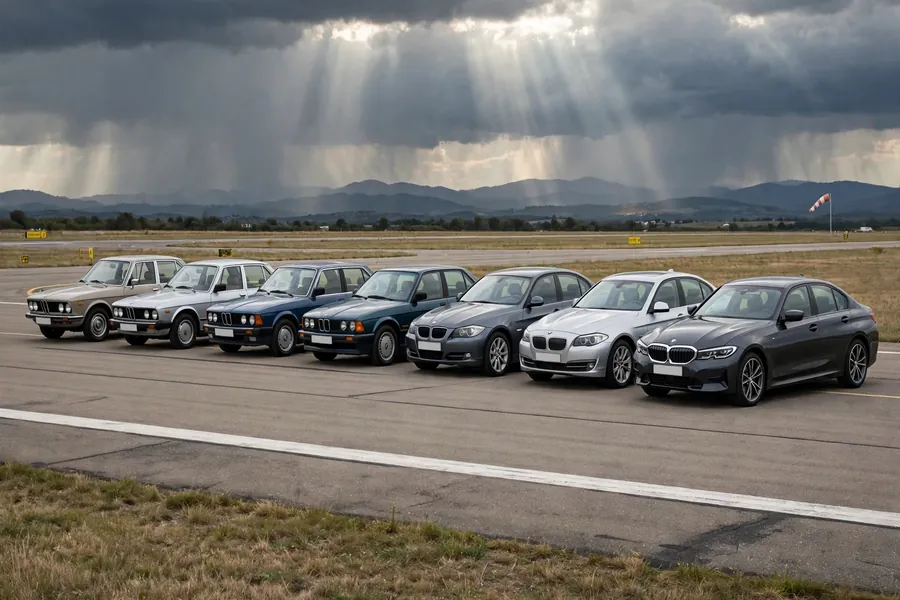
The first four generations are the analog heart of the 3 Series story — naturally aspirated engines, hydraulic steering, and interiors you can take apart with basic tools. They’re covered briefly here because this cluster’s focus is the modern cars, but each one still has a loyal following. Select a generation for the essentials.
Years: 1975–1983 (unveiled July 1975 at Munich’s Olympic Stadium).
Body styles: 2-door sedan; Baur Topcabriolet convertible (4,595 built).
Headline engines: M10 four-cylinders (316, 318, 320, 320i); BMW’s M20 straight-six arrived in 1977 with the 320 and 323i. Fuel injection appeared on the 320i from late 1975.
Why it matters: Designed by Paul Bracq, the E21 introduced the driver-angled dashboard that became a BMW signature, and it sold around 1.36 million units — establishing the 3 Series as BMW’s core model.
Watch out for: everything you’d expect from a 40-plus-year-old car — rust, perished rubber, tired electrics. Good survivors are collector-priced, not cheap transport.
Buy it if: you want a blue-chip classic and have the skills (or budget) to maintain one.
Years: 1982–1994 (US model years 1984–1991).
Body styles: 2- and 4-door sedan, convertible, Touring wagon (from 1987), and the M3 as coupé and convertible.
Headline engines: M10/M40 fours (316i, 318i, 318is); M20 sixes including the fuel-sipping 325e “eta” and the 325i/325is; the S14 2.3L four in the first M3 (up to 238 hp); the 324d brought the first diesel, and the 325iX brought the first all-wheel drive in 1988.
Why it matters: The E30 is the generation that made BMW a cultural force — the first M3, the first Touring, the first diesel, the first AWD. More than 2.3 million were built.
Watch out for: rust is the deal-breaker; also budget for a full refresh of 40-year-old suspension, brakes, and fuel components. The M20’s timing belt is a service item, not a lifetime part.
Buy it if: you want the icon and accept that clean ones now cost real money.
Years: 1990–2000.
Body styles: sedan, coupé, convertible, Touring, 3-door Compact hatch (from March 1994), and the M3 as sedan, coupé, and convertible.
Headline engines: M40/M42/M43 fours (316i, 318i, 318is, 318ti); M50/M52 straight-sixes (320i, 323i, 325i, 328i); S50/S52 in the M3 (282–321 hp); TD/TDS diesels.
Why it matters: The E36 brought the Z-axle multilink rear suspension — a genuine dynamic leap — plus the first Compact. Around 2.67 million were built, and it’s still the cheapest entry to the lineage.
Watch out for: cooling-system plastics are the known weakness; otherwise it’s age-related wear — bushings, shocks, interior trim. Check rear arches and jacking points for rust.
Buy it if: you want an affordable, DIY-friendly classic with modern-ish road manners.
Years: 1997–2006.
Body styles: sedan, coupé, convertible, Touring, Compact, and the M3 as coupé and convertible.
Headline engines: M52TÜ/M54 straight-sixes (323i, 325i, 328i, 330i) — the silky naturally aspirated sixes enthusiasts revere; the S54 3.2L in the M3 (333–343 hp); M47/M57 diesels; four-cylinder 316i/318i and 320d for economy buyers.
Why it matters: With 3,266,885 units, BMW calls the E46 the top-selling BMW model of all time. Many consider it the perfect balance of analog feel and modern usability.
Watch out for: the well-documented issues — rear subframe cracks (especially early cars; get it inspected), cooling system (expansion tank, water pump, thermostat around 100k miles), VANOS seals, window regulators, and front control-arm bushings.
Buy it if: you want the enthusiast sweet spot — but only with subframe and cooling service history in hand.
E90 (2004–2013): the turbocharged turning point
The fifth generation — sedan (E90), Touring (E91), coupé (E92), and convertible (E93) — is where the modern 3 Series story really begins. Revealed at Geneva in March 2005 and later named World Car of the Year, the E90 brought iDrive, push-button start, and run-flat tires to the 3 Series. The 2007 335i then introduced BMW’s first turbocharged gasoline 3 Series engine, the twin-turbo N54 — a tuning legend that still has a cult following.
For used buyers, the E90 splits into two personalities. The naturally aspirated N52 cars (325i, 328i, 330i) are among the most dependable modern BMWs — smooth, simple, and relatively cheap to keep. The turbo N54/N55 335i cars are faster and far more tunable, but they demand a bigger maintenance budget and a pre-purchase inspection by someone who knows the platform.
| E90 generation summary | |
|---|---|
| Production | 2004–2013 (revealed 2004; on sale from 2005; US sedan model years 2006–2011, coupé/convertible to 2013) |
| Body styles | Sedan (E90), Touring (E91), coupé (E92), convertible (E93); M3 as sedan, coupé, convertible |
| Key engines | N52 3.0L NA six (325i 215 hp / 328i 230 hp / 330i 255 hp); N54 twin-turbo (335i, 300 hp); N55 single twin-scroll turbo (later 335i); S65 4.0L V8 M3 (414 hp); diesels incl. 335d |
| Known issues | Electric water pump + thermostat; oil filter housing gasket leaks; N54 high-pressure fuel pump, injectors, wastegate rattle, plastic charge pipe |
| Buy it if | You want maximum character per dollar — pick an N52 328i/330i for reliability or a sorted 335i for speed |
Our verdict on the E90: it’s the last generation with hydraulic steering and naturally aspirated six-cylinder options, which is exactly why enthusiasts keep coming back to it. Just go in with eyes open on the N54’s appetites — our E90 vs F30 comparison walks through how it stacks up against its successor.
F30 (2011–2019): the digital, all-turbo generation
The sixth generation — sedan (F30), Touring (F31), and the tall-roof Gran Turismo (F34) — was a clean break: every engine turbocharged, electric power steering standard, and the coupé and convertible spun off into the new 4 Series. Bigger, quieter, and more efficient than the E90, the F30 is the 3 Series as a modern executive car rather than a raw sports sedan.
The 2016 facelift (LCI) is the dividing line that matters for buyers. It replaced the N20 four-cylinder with the B48 (330i) and the N55 six with the B58 (340i) — two engines widely regarded as BMW’s best modern designs. Early N20/N26 cars (2012–2015) carry the generation’s biggest red flag: premature timing-chain and guide wear, which BMW covered under an extended 7-year/70,000-mile warranty that has now expired on most cars.
| F30 generation summary | |
|---|---|
| Production | 2011–2019 (BMW lists 2011–2018 for the core range; US sedan model years 2012–2018; Gran Turismo ran longer) |
| Body styles | Sedan (F30), Touring (F31), Gran Turismo (F34); M3 sedan only (F80) |
| Key engines | N20/N26 2.0L turbo (320i/328i); N55 3.0L turbo (335i); B48 2.0L turbo (330i, from 2016); B58 3.0L turbo (340i, from 2016); diesels; 330e plug-in hybrid |
| Known issues | N20/N26 timing-chain guide wear (2012–2015); oil filter housing and valve-cover gaskets; plastic charge pipes on tuned cars |
| Buy it if | You want a refined modern daily — strongly prefer 2016+ LCI cars (330i/340i) over early N20 models |
Our verdict on the F30: buy the facelift. A 2016–2018 330i or 340i gives you the B-generation engines at the bottom of their depreciation curve. See our F30 vs G20 and N20 vs N26 comparisons before you choose a four-cylinder car.
G20 (2018–present): the current benchmark
The seventh generation — sedan (G20), Touring (G21), and M3 (G80 sedan, G81 Touring) — arrived in 2018 as a 2019 model with a clear mission: win back the enthusiasts the F30 had left cold. A stiffer chassis, retuned steering, and the B48/B58 engine family did exactly that, and reviewers widely called it a return to form. The 2022 facelift added the curved dual-screen display with iDrive 8 (upgraded to 8.5 from 2024) and sharpened the styling.
Powertrains are the strongest part of the story: the B48 four in the 320i/330i, the B58 six in the M340i (382 hp), the S58 in the M3, plus an improved 330e plug-in hybrid. The B58 has been named to Ward’s 10 Best Engines list four times (reported across 2016–2020; single source) — which tells you how highly the industry rates this engine family.
| G20 generation summary | |
|---|---|
| Production | 2018–present (launched as a 2019 model; facelift/LCI from 2022) |
| Body styles | Sedan (G20), Touring (G21); M3 as sedan (G80) and Touring (G81) |
| Key engines | B48 2.0L turbo (320i/330i); B58 3.0L turbo (M340i, 382 hp); S58 twin-turbo (M3); 330e plug-in hybrid; diesels outside the US |
| Known issues | No established pattern failures yet — early reports center on software and 12V-battery/electronics niggles rather than engines |
| Buy it if | You want the current car with a warranty — new or certified pre-owned is the smart play |
Our verdict on the G20: it’s the complete package and the safest used buy in the lineup, with the caveat that long-term data is still maturing. Check EPA figures for your exact model on fueleconomy.gov before comparing running costs across generations.
BMW 3 Series engines by generation
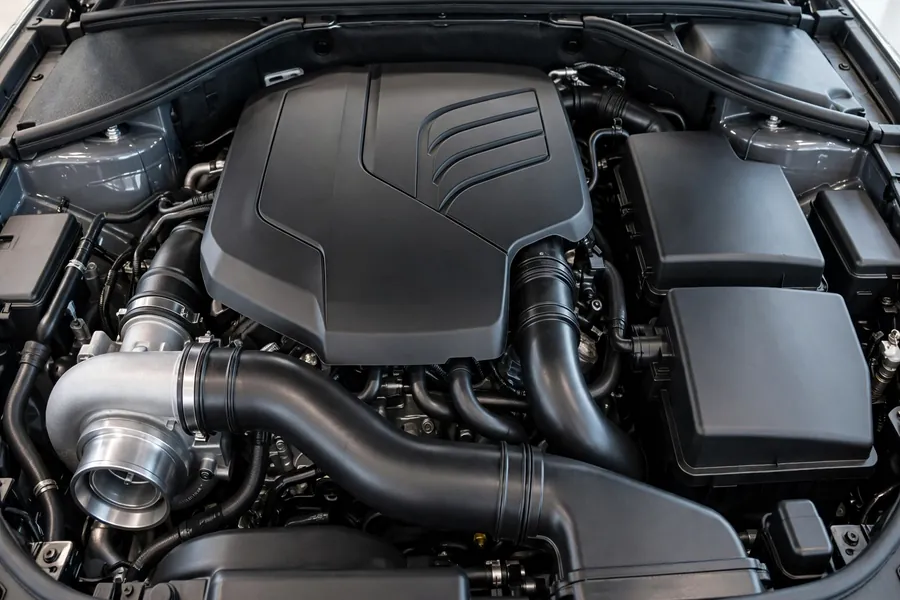
If there’s one thread running through 50 years of 3 Series history, it’s the straight-six. From the M20 in the E21 to the B58 in the G20, BMW’s inline-six has been the engine the car is judged by. Here’s the headline powerplant story per generation — the engines that define each era and the ones buyers actually ask about.
| Generation | Headline petrol engines | Diesels / hybrids | The one to know |
|---|---|---|---|
| E21 (1975–1983) | M10 four (316–320i); M20 six (320, 323i) | — | M20 — BMW’s first 3 Series six |
| E30 (1982–1994) | M10/M40 fours; M20 six (325e/325i); S14 (M3) | M21 (324d) | S14 — the first M3 engine |
| E36 (1990–2000) | M40/M42/M43 fours; M50/M52 sixes; S50/S52 (M3) | TD/TDS | M52 — the sweet, simple six |
| E46 (1997–2006) | M52TÜ/M54 sixes; S54 (M3) | M47/M57 | M54 — the enthusiast benchmark |
| E90 (2004–2013) | N52 NA six; N54/N55 turbos; S65 V8 (M3) | M57/N47 (335d/320d) | N52 — the last great NA six |
| F30 (2011–2019) | N20/N26 turbo four; N55 turbo six; B48 (330i); B58 (340i) | B47/N47; 330e PHEV | B58 — the modern benchmark |
| G20 (2018–) | B48 turbo four; B58 turbo six; S58 (M3) | B47; 330e PHEV | B58 — now in its most refined form |
The pattern is clear: naturally aspirated sixes through the E90, then turbo fours and sixes from the F30 onward. If reliability is your priority, the N52 (E90) and B48/B58 (F30 LCI onward, G20) are the engines with the strongest reputations.
Common issues by generation
No 50-year model run is trouble-free, and the 3 Series has its well-known weak spots — most of them thoroughly documented by owners and independent BMW specialists. This table summarizes the headline issues per generation; treat it as a starting checklist for any pre-purchase inspection, not a reason to avoid a generation outright. Well-maintained examples of every generation exist.
| Generation | Headline issues | What to check before buying |
|---|---|---|
| E21 / E30 | Age-related: rust, perished rubber and bushings, tired electrics and fuel systems | Rust underneath and around arches; service history; originality |
| E36 | Cooling-system plastics; general age-related wear (suspension, trim) | Cooling refresh done? Rear arches and jacking points for rust |
| E46 | Rear subframe cracks (esp. early cars); cooling system (expansion tank, water pump, thermostat ~100k mi); VANOS seals; window regulators | Subframe inspection; cooling system overhaul records |
| E90 | Electric water pump + thermostat; oil filter housing gasket; N54: HPFP, injectors, wastegate rattle, charge pipe | Water pump/thermostat replaced? N54 service records and receipts |
| F30 | N20/N26 timing-chain guide wear (2012–2015 cars especially); oil filter housing / valve-cover gaskets | Cold-start rattle? Prefer 2016+ B48/B58 cars |
| G20 | No established pattern failures; early reports focus on software and 12V-battery/electronics niggles | Software up to date; battery health on a diagnostic scan |
A note on the G20: it’s still young enough that long-term pattern data is limited. The B48/B58 engines have excellent reputations so far, but treat any ‘most reliable generation’ claim about the G20 as provisional — the data simply hasn’t matured yet.
Two of the most-searched 3 Series problems have dedicated guides in this cluster: the increased battery discharge warning (affects E90, F30, and G20 cars) and the battery that keeps dying, which walks through parasitic-drain diagnosis step by step.
Our BMW 3 Series guides
This page is the hub of our 3 Series cluster — every guide below links back here, and each one goes deep on a single topic. Start with the section that matches what you’re trying to do.
Maintenance & DIY
- Reset the BMW service light — clear the oil-service and inspection reminders yourself after a service.
- BMW 3 Series coolant type (G48 vs HT-12) — which antifreeze your generation actually needs, and why mixing matters.
- How to jump start a BMW 3 Series — the correct under-hood terminal procedure that protects the electronics.
- BMW battery registration guide — why a new battery must be registered to the car, and how to do it.
- BMW 3 Series brake fluid reset — reset the brake-fluid service interval after a flush.
- BMW 3 Series maintenance schedule & annual cost — CBS intervals and what E90, F30, and G20 ownership really costs per year.
- ZF 8HP transmission fluid change — why “lifetime fill” is a myth, ZF’s real interval, and F30 vs G20 service differences.
- BMW 3 Series oil change interval & specs — LL-01 vs LL-04 vs LL-17 FE+, per-engine capacities, and the interval BMW won’t tell you.
- BMW 3 Series brake job cost — dealer vs indy vs DIY prices by generation, pads-only vs pads+rotors.
- BMW 3 Series TPMS reset — E90, F30, and G20 each reset differently; the correct method per generation.
Troubleshooting
- BMW increased battery discharge warning — what the warning means and the most common causes across E90, F30, and G20.
- BMW 3 Series battery keeps dying — step-by-step parasitic drain diagnosis when a new battery doesn’t fix it.
- BMW 3 Series low coolant warning — safe checks, likely leak points, and when to stop driving.
- BMW drivetrain malfunction — what the warning really means, first-10-minutes triage, and cause families by engine.
- BMW 3 Series oil leaks — find OFHG, valve-cover, and oil-pan leaks before they turn expensive.
- BMW 3 Series check engine light causes — steady vs flashing triage, codes by engine, and your first 30 minutes.
- BMW 3 Series won’t start — clicks, silence, or cranks: the decision-tree diagnostic that pinpoints it in minutes.
Buying
- Used BMW 3 Series buying guide — the full pre-purchase checklist: inspections, paperwork, and negotiation.
- BMW 3 Series reliability by year — which model years to target and which to approach with caution.
Comparisons
- BMW E90 vs F30 — analog character against modern refinement: engines, steering, tech, and running costs.
- BMW F30 vs G20 — whether the newer generation is worth the premium over a late F30.
- BMW N20 vs N26 — the two F30 four-cylinders compared, including the timing-chain question.
- BMW xDrive vs RWD — the true cost of all-wheel drive: sticker premium, fuel penalty, tire rules, and who should buy which.
- BMW 330i vs M340i — is the B58 worth the premium? An ownership comparison on reliability, fuel, insurance, and running costs.
Looking beyond the 3 Series? Browse the full BMW models hub for guides across the BMW range.
Verdict: which 3 Series generation should you buy?
After fifty years and seven generations, there’s no single ‘best’ 3 Series — only the best one for your budget and tolerance for maintenance. Here’s how we’d split it:
- Maximum character, minimum money: a well-documented E46 330i — but only with subframe inspection and cooling-system history.
- The enthusiast’s used sweet spot: an N52-powered E90 (328i/330i) — the last naturally aspirated six with hydraulic steering.
- The smart modern daily: a 2016–2018 F30 330i or 340i — B48/B58 engines past the steepest depreciation.
- The safe bet: a G20 330i or M340i, ideally certified pre-owned — the current benchmark with warranty cover.
- The collector: E21 or E30 — buy on condition and originality, not mileage.
One thing to watch: BMW has confirmed an eighth generation is in preparation, with a fully electric 3 Series due to ramp up at Plant Munich from the second half of 2026. If you’re buying new today, that future is worth factoring into your timing — and your resale math.
Frequently asked questions
How this guide was built: generation years, body styles, and production milestones are taken from BMW Group Classic and BMW Group press materials; engine details cross-checked against BMW engine documentation and contemporary launch reporting; common issues compiled from long-running owner communities (Bimmerforums, E90Post) and independent BMW specialist guides. Where BMW’s own sources differ (production years vs US model years), both are noted. Single-sourced claims are flagged inline. Last verified: September 2026.